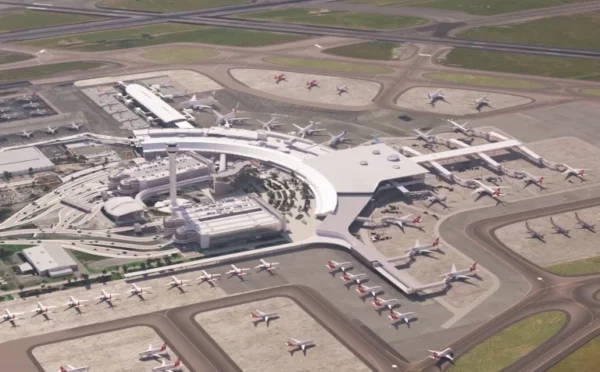
Perth Airport has selected DXC Technology as the Master Systems Integrator for its new terminal development, advancing a major transformation designed to improve the passenger experience and strengthen Western Australia’s role as an international tourism gateway. The new terminal facilities are scheduled to open in 2031 as part of Perth Airport’s multi-billion-dollar One Airport vision, which will bring commercial airline operations into a single central location.
The partnership places technology at the center of the airport’s redevelopment. DXC will design, integrate, test and commission more than 70 information technology and operational systems across the new terminal facilities. The program includes artificial intelligence, cloud solutions and cybersecurity, alongside passenger-processing platforms, baggage tracking and reconciliation, advanced security-screening integration, digital signage, wayfinding, public Wi-Fi, building management, automation and operational control systems.
For travelers, the project is intended to create a more connected airport journey from arrival to boarding. Better coordination between systems can support smoother passenger processing, clearer navigation and more reliable airport operations during busy travel periods.
One Airport Vision Brings Airline Operations Together
Perth Airport’s One Airport strategy is designed to centralize flight services within the Airport Central precinct. The broader development program includes new terminal facilities, a parallel runway, two multi-storey car parks with associated roadworks, an upgrade of Terminal 2 and the airport’s first hotel.
The consolidation is expected to improve efficiency for airlines and make transfers and airport access easier for passengers. Qantas and Jetstar services are planned to relocate to the new terminal when it opens in 2031. The Airport Central precinct is already connected to the city by rail, strengthening the airport’s accessibility for visitors arriving in Western Australia.
The wider redevelopment will involve more than AUD 5 billion in investment and enable an additional 4.4 million seats to and from Perth by the time the new terminal opens. That added capacity could support stronger inbound tourism, new route development and greater choice for domestic and international travelers.
Smart Systems Support a More Seamless Passenger Experience
DXC’s role extends beyond the installation of individual systems. The company will oversee interoperability across platforms used by airlines, ground handlers, retailers and government agencies. This is important because airport journeys depend on many organizations working together in real time.
Passenger-processing technology can help support efficient check-in and boarding flows. Baggage tracking and reconciliation systems can improve visibility across luggage handling operations. Security-screening integration can help terminals respond more effectively to passenger volumes, while digital wayfinding and signage can make the airport easier to navigate.
Public Wi-Fi and connected terminal systems also matter for modern travelers. Visitors increasingly rely on mobile devices to review flight information, contact hotels, arrange transport and manage travel plans. A more digitally integrated terminal can make the arrival experience more convenient, particularly for international passengers entering an unfamiliar destination.
Tourism Growth Creates Long-Term Opportunities
Perth Airport expects its annual passenger numbers to reach around 30 million by 2046. Its Master Plan forecasts that direct and indirect jobs supported by the airport will rise to more than 75,000, while the airport’s annual contribution to the Western Australian economy is projected to reach AUD 17 billion.
These figures underline the redevelopment’s importance for tourism. Perth is a gateway not only to the city but also to Western Australia’s beaches, wine regions, wildlife experiences and regional destinations. Increased aviation capacity can help attract more visitors, encourage airlines to expand services and support hotels, restaurants, tour operators and local businesses.
The new parallel runway is expected to open in 2028, supporting further domestic and international growth ahead of the terminal’s planned opening. The wider program also includes a 237-room airport hotel, giving travelers another accommodation option close to the terminals.
Perth Positions Itself for the Future of Aviation
The DXC partnership marks a key step in Perth Airport’s long-term modernization. By integrating cloud solutions, cybersecurity, AI-enabled systems and smart terminal infrastructure, the airport is preparing for rising passenger demand while focusing on a more reliable and connected journey.
For travelers, the changes promise a more streamlined gateway to Western Australia. For the tourism economy, the project creates a stronger platform for route growth, visitor spending and regional development. As the One Airport vision takes shape, Perth is positioning itself as a more competitive and technology-enabled aviation hub for the decades ahead.
For more travel news like this, keep reading Global Travel Wire