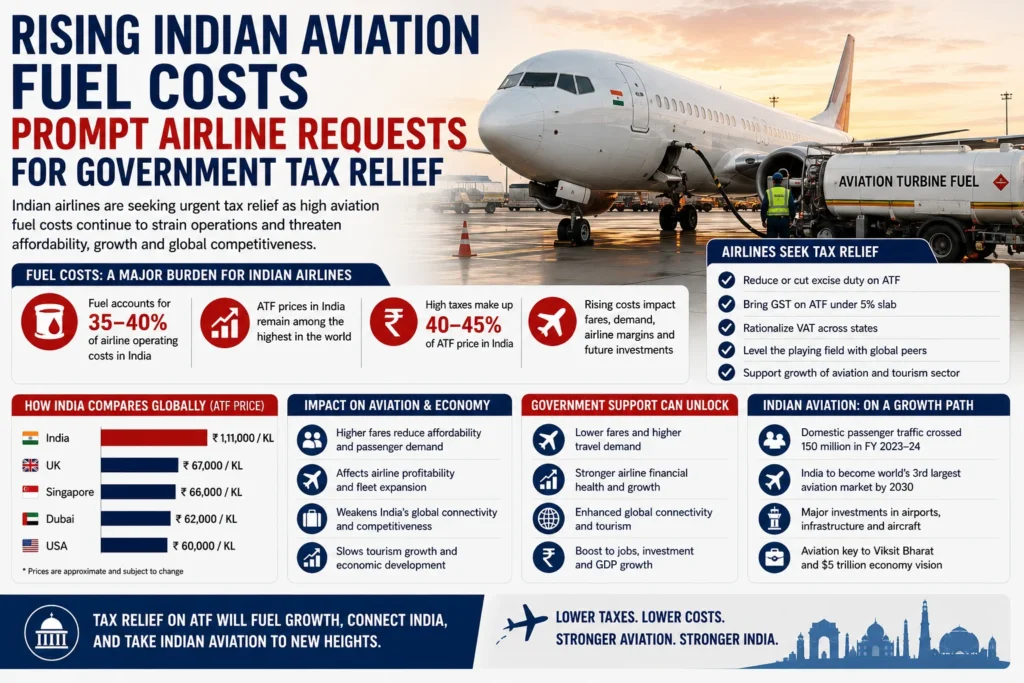
India’s commercial aviation sector is navigating heightened financial pressures as domestic air carriers raise formal concerns regarding escalating Aviation Turbine Fuel (ATF) expenses. With fuel accounting for up to 40 percent of an airline’s overall operating expenditures, continuous price hikes are creating significant margin strain across domestic and international route networks.
Representing major domestic carriers, leading industry bodies have submitted formal representations to the Ministry of Civil Aviation, detailing operational challenges stemming from volatile fuel pricing mechanisms and requesting policy interventions to maintain flight schedules.
Industry Appeals for Tax Restructuring and Excise Duty Deferment
In their official communications to the Union Government, Indian air carriers have outlined specific measures to mitigate rising operational overheads. A primary request centers on a temporary deferment or reduction of the 11 percent central excise duty currently levied on Aviation Turbine Fuel.
Airlines are also encouraging the Ministry of Civil Aviation to coordinate with state governments to rationalize Value Added Tax (VAT) rates on jet fuel. Across Indian states and union territories, local VAT rates on ATF vary substantially—ranging from up to 25 percent in major hub regions down to 1 percent in states that have previously adjusted tax structures to promote regional air connectivity.
Industry representatives emphasize that establishing a uniform, predictable fuel pricing model across both domestic and international flight operations is essential for stabilizing airfares. A streamlined tax framework would allow passenger carriers to absorb global energy market shocks while protecting capacity across core domestic travel corridors.
Global Energy Volatility and Airspace Adjustments Drive Overhead
The surge in domestic aviation fuel costs is closely tied to broader international energy market developments. Heightened geopolitical instability in West Asia and operational disruptions along vital maritime corridors—such as the Strait of Hormuz—have contributed to global crude oil price fluctuations and increased refining margins.
Simultaneously, international airspace advisories and regional routing restrictions have forced commercial airlines to operate extended flight paths between India, Europe, and North America. Flying longer circuitous routes increases total flight duration, resulting in significantly higher fuel burn per flight leg.
Long-haul international routes remain particularly sensitive to fuel price fluctuations. The combination of elevated spot prices for jet fuel and currency exchange rate shifts has added substantial operational overhead, impacting both passenger transport margins and air freight operations.
Impact on Domestic Tourism and Regional Air Connectivity
The financial health of the aviation industry carries direct implications for India’s broader travel and hospitality ecosystem. Commercial air transport serves as a critical engine for regional economic development, connecting major metro gateways with emerging tourist destinations across the country.
Should airlines be forced to curtail scheduled flight frequencies or consolidate routes due to unviable fuel expenses, regional tourism corridors could experience reduced visitor arrivals. Major tourism sectors—including hotel hospitality, cultural heritage sites, eco-tourism, and MICE (Meetings, Incentives, Conferences, and Exhibitions) events—rely on predictable flight availability to sustain leisure and corporate travel growth.
To protect regional connectivity, the Ministry of Civil Aviation and state tourism departments have previously leveraged policy frameworks, such as the Regional Connectivity Scheme (UDAN), to reduce landing fees and lower fuel taxes at regional airports. Industry stakeholders advocate extending similar relief measures to primary metro airports during periods of acute energy market volatility.
Government Policy Response and Long-Term Sector Outlook
In response to fluctuating global energy markets, the Union Government and the Ministry of Finance have actively monitored domestic petroleum supply security. Public policy mechanisms, including fortnightly reviews of Special Additional Excise Duty on fuel exports, have been adjusted periodically to prioritize domestic fuel availability and safeguard national supplies.
Government authorities and civil aviation regulators remain in active consultation with airline executives to evaluate cost-relief options. Potential policy interventions being reviewed include temporary reductions in airport user charges, streamlined air traffic management protocols to optimize flight paths, and renewed engagements with state governments regarding jet fuel tax rationalization.
Maintaining a resilient, cost-competitive aviation ecosystem remains a strategic priority for national infrastructure development. By addressing fuel tax structures and supporting domestic carriers through temporary energy market disruptions, public leadership aims to ensure that air travel remains accessible, flight schedules remain stable, and India’s vibrant tourism economy continues its long-term growth trajectory.
For more travel news like this, keep reading Global Travel Wire