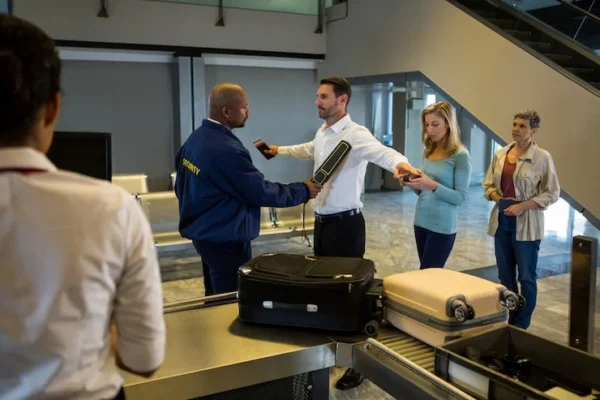
The Transportation Security Administration is marking its 25th anniversary while advancing technology and passenger-focused initiatives across America’s transport network.
Established in November 2001 following the September 11 attacks, TSA has become central to US airport operations. Its anniversary highlights how screening has changed and where further improvements could shape future journeys.
Priorities include advanced detection equipment, international security cooperation, remote screening and dedicated arrangements for different passenger groups.
For travellers, the practical significance lies in simpler checkpoint procedures and potentially smoother connections. However, improvements depend on airport infrastructure, staffing and the availability of individual programmes.
The agency is also addressing cybersecurity and drone-related risks affecting the wider transportation system.
A Quarter-Century of Transport Protection
TSA’s creation introduced a federally managed approach to passenger screening across the United States.
Previously, private contractors largely conducted airport screening under airline arrangements and federal regulations. The new agency established more consistent responsibilities across the commercial aviation network.
Over subsequent decades, its officers became a familiar part of domestic and international airport journeys.
Its responsibilities also extend beyond aviation, including security coordination involving railways, public transport and other transportation systems.
For the tourism industry, this wider role matters because holidays frequently involve several transport modes. Reliable connections between airports, trains and local networks help visitors complete their journeys.
The anniversary therefore reflects both checkpoint operations and broader efforts to protect travel infrastructure.
Screening Technology Changes Passenger Procedures
Advanced screening equipment is an important component of TSA’s modernisation agenda.
Newer systems help officers examine baggage and identify potential threats using capabilities beyond those available during the agency’s early years.
The anniversary material also highlights changes to routine shoe-removal procedures, illustrating efforts to reduce familiar checkpoint inconveniences.
For passengers, streamlined preparation can make security easier to navigate, particularly when travelling with children or additional belongings.
Nevertheless, equipment alone cannot determine the speed of an airport journey.
Queues also depend on flight schedules, passenger volumes, checkpoint layouts and staffing. Travellers should continue allowing appropriate time rather than assume technology guarantees immediate passage.
For airports, the challenge is to integrate detection systems with clear instructions and effective passenger management.
International Cooperation Could Simplify Connections
TSA’s One Stop Security initiative focuses on reducing unnecessary repeat screening for eligible international connecting passengers.
Where participating airports and authorities meet the relevant arrangements, passengers may use designated transfer processes without repeating certain checks.
The approach depends on cooperation, recognised security standards and suitable airport facilities.
For holidaymakers making onward connections, fewer repeated procedures could make transfers less complicated.
Airlines and connecting hubs could also benefit from more efficient passenger movement through arrival and transfer areas.
However, the initiative does not apply automatically to every international itinerary. Passengers should check arrangements for their actual route and connecting airport.
Its broader significance lies in demonstrating how cooperation between authorities can improve journeys while maintaining security requirements.
Remote Screening Offers Operational Flexibility
Remote screening represents another area of experimentation within airport security.
The supplied anniversary information describes a pilot introduced at Boston Logan International Airport in June 2026.
Such systems can allow authorised officers to review screening images away from the physical checkpoint, depending on the operational design.
This could provide greater flexibility in allocating staff and reviewing baggage images.
However, a pilot does not establish that the same system will become standard across US airports.
Evaluation remains necessary before wider benefits, limitations and deployment decisions can be determined.
For travellers, any eventual advantage would depend on whether operational changes improve checkpoint flow in practice.
Different Travellers Have Different Needs
Dedicated family and military-focused lanes form another part of the passenger-service approach described in the anniversary programme.
Family lanes aim to make screening more manageable for parents and children. Military arrangements address the needs of eligible personnel and their families.
Availability and eligibility vary, so passengers should confirm local arrangements before relying on a particular lane.
These measures recognise that passengers arrive with different assistance requirements, belongings and levels of familiarity with screening.
Clearer organisation can help travellers prepare while supporting more orderly checkpoint operations.
Security Beyond the Checkpoint
Cyber threats and unauthorised drones add complexity to protecting modern transport networks.
Addressing these risks requires coordination between authorities, infrastructure operators and industry partners.
For tourism businesses, the importance extends beyond shorter queues. Secure, reliable transport systems support airline schedules, visitor confidence and access to destinations.
As TSA enters its next quarter-century, its modernisation efforts will be judged through practical outcomes: effective protection, accessible procedures and dependable journeys across the United States.
For more travel news like this, keep reading Global Travel Wire