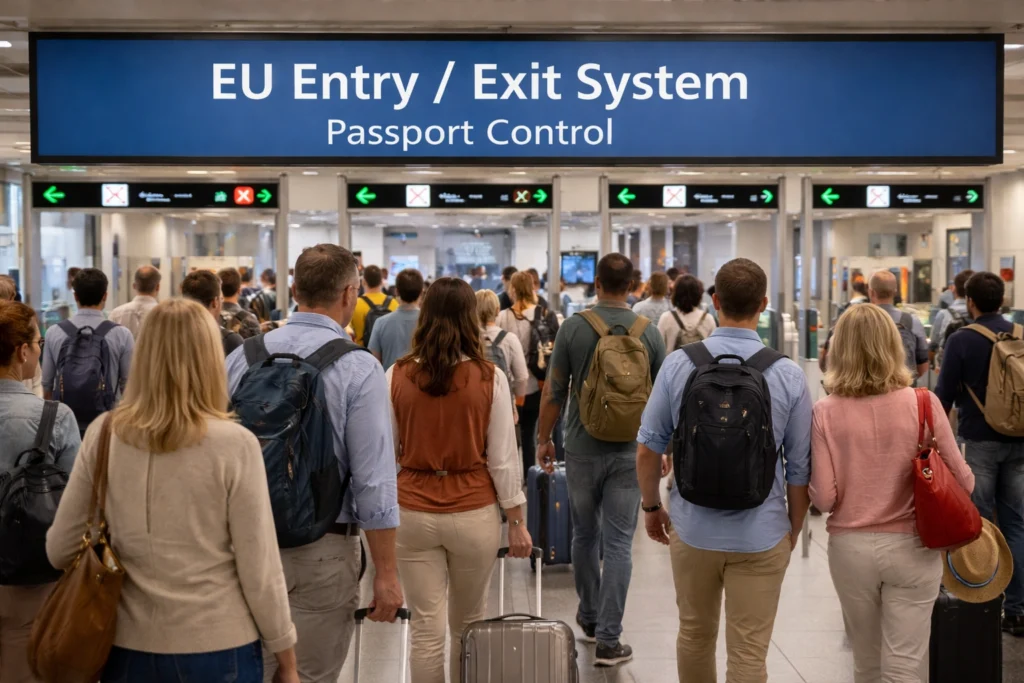
Major airlines including TUI, easyJet, Jet2, and British Airways are urging passengers to arrive earlier than usual for flights to Europe after the rollout of the European Union’s new Entry/Exit System triggered long queues, border delays, and disruption at several airports.
The new digital border process requires non-EU travelers, including UK passengers, to register biometric details such as fingerprints and facial images when entering the Schengen area for the first time. While the system is designed to modernize border checks and strengthen security, its early implementation has increased processing times and added pressure at already busy terminals .
Why the New System Is Causing Delays
The Entry/Exit System replaces manual passport stamping with a digital traveler record. On a passenger’s first visit after implementation, border authorities must capture biometric information and create a new profile before entry can be completed.
That extra step has slowed processing at some airports, particularly during peak departure periods and at destinations popular with UK holidaymakers. Longer lines at immigration points have created knock-on effects across terminals, with some travelers reporting extended waits and concerns about missed flights.
For airports already managing high passenger volumes during the spring and summer travel season, the additional border formalities have become a major operational challenge.
Airlines Issue Early Arrival Warnings
In response, airlines are advising customers to build in more time before departure. TUI, easyJet, Jet2, and British Airways have all updated guidance to help passengers navigate the new procedures.
The common message is clear: arrive early, move quickly through check-in and security, and expect longer waits at passport control.
This advice is particularly important for families, first-time EES users, and passengers traveling during school holidays or weekend peaks when queues are likely to be longest.
TUI Tells Holidaymakers to Prepare
TUI has warned customers that some airports may experience extended delays linked to biometric processing. The airline has advised passengers to carry essential medication in hand luggage, remain hydrated, and proceed directly to passport control after baggage drop.
For package holiday travelers, avoiding unnecessary delays at the terminal is especially important, as missed flights can disrupt hotels, transfers, and other pre-booked arrangements.
easyJet and Jet2 Highlight Border Wait Times
easyJet has also cautioned that passport control may take longer than normal due to face and fingerprint scans. Travelers are being encouraged to arrive as soon as check-in opens and move to security promptly afterward.
Jet2 has issued similar advice, noting that although the biometric registration itself may only take a short time per traveler, queues can still build rapidly depending on airport traffic levels.
For low-cost carriers operating frequent short-haul schedules, on-time boarding depends heavily on passengers reaching gates without delay. Any slowdown in terminal processing can increase stress for travelers and pressure for airport teams.
British Airways Sets Clear Timings
British Airways has recommended that passengers flying on European short-haul routes arrive two hours before departure, while long-haul customers should allow three hours. Domestic UK travelers are being advised to arrive at least one hour before departure.
The airline has also emphasized that once travelers complete their first biometric registration, the digital record remains valid for future journeys for several years, meaning later trips should be faster and easier.
What Travelers Should Expect
For first-time users, the new system typically involves visiting a designated kiosk or border desk where biometric details are captured. After registration, travelers proceed through normal passport checks.
Although the process adds time initially, authorities expect it to streamline future crossings by reducing manual checks and improving data accuracy.
Still, during the transition phase, travelers should plan for uncertainty, especially at airports with limited space or heavy demand.
Impact on Tourism and Holiday Travel
The timing of the rollout is significant for Europe’s tourism industry. Airlines, hotels, resorts, and destinations rely heavily on smooth passenger flows during busy seasons. Delays at airports can affect traveler confidence, arrival times, and overall holiday satisfaction.
Popular sun destinations in Spain, Portugal, Greece, Italy, and France may feel the greatest impact if border queues remain lengthy during summer peaks. Travel companies will be watching closely to ensure disruptions do not affect bookings or customer sentiment.
Practical Tips for a Smoother Journey
Travelers heading to Europe can reduce stress by checking airline updates before departure, arriving earlier than usual, keeping documents ready, and packing essentials in hand luggage. Mobile boarding passes, online check-in, and prompt movement through the airport can also save valuable time.
Families with children or passengers needing assistance should consider allowing extra time beyond standard airline recommendations.
What Happens Next
As staff gain experience and travelers become familiar with the process, waiting times are expected to improve. Airports are also likely to adjust staffing, signage, and passenger flows to reduce bottlenecks.
For now, however, early arrival remains the best strategy. With millions expected to travel across Europe in the coming months, preparation and patience will be essential as the new border system settles into daily operations.
For more travel news like this, keep reading Global Travel Wire