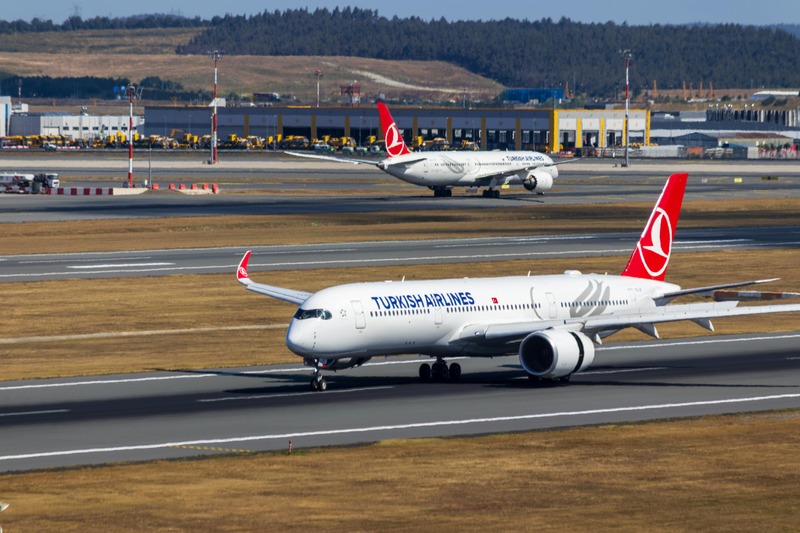
The Turkish carrier has decided to reduce its flying capacity on several of its regional and long-haul routes in response to increased operational challenges, fuel supply issues, and unstable market conditions across the global aviation sector in 2026. Some of the changes will impact destinations within the Balkan states, Eastern Europe, Africa, and some Middle Eastern countries.
Based on the announced schedule changes, Turkish Airlines is set to operate reduced frequencies on its routes between Istanbul and other destinations, including Sarajevo, Ljubljana, Pristina, and Zagreb. In the city of Sarajevo, the airline intends to reduce its scheduled winter flights from 14 weekly services to 12.
The move reflects broader challenges affecting the global aviation sector, including rising jet fuel costs, concerns over route profitability, operational disruptions, and ongoing geopolitical instability that is affecting international air travel. Aviation analysts believe airlines are increasingly focusing on optimizing network efficiency by prioritizing high-demand routes while temporarily reducing frequencies on less-profitable or strategically weaker routes.
Industry reports indicate that jet fuel shortages and concerns surrounding fuel availability have become major operational considerations for airlines globally. Several aviation companies have recently adjusted schedules, suspended routes, or delayed expansion plans due to rising fuel costs and broader market uncertainty stemming from tensions in the Middle East and disruptions to global energy supply chains.
Turkish Airlines, which currently serves more international destinations than any other airline in the world, appears to be strategically consolidating parts of its network while redirecting aircraft and operational resources toward stronger-performing routes. Despite the recent reductions, the airline continues to expand in other markets, increasing frequencies to major Asian destinations such as Shanghai, Beijing, and Guangzhou, and launching new European routes to London Stansted and Tirana.
The Balkan aviation market has been particularly affected by airline restructuring and capacity adjustments throughout 2026. Several regional carriers and European airlines have recently reduced services, suspended routes, or entered into wet-lease agreements to manage costs more efficiently amid ongoing turbulence in the aviation market. Lufthansa, Croatia Airlines, Pegasus Airlines, and Qatar Airways have all announced operational changes impacting parts of Southeast Europe over the past few months.
Aviation experts believe the current airline adjustments are not necessarily signs of reduced travel demand but rather part of a broader industry-wide shift toward operational optimization. Airlines are increasingly analyzing route profitability, passenger load factors, airport costs, crew expenses, and fuel consumption to maximize financial stability amid volatile global operating conditions.
Despite the schedule reductions, Turkish Airlines operations remain among the strongest globally. The carrier currently operates flights to more than 130 countries with a rapidly expanding fleet strategy aimed at long-term growth. Industry data show the airline has over 400 aircraft in operation while continuing to place major orders with Airbus and Boeing as part of its long-term expansion vision through 2036.
Tourism authorities and airport operators across the Balkans are closely monitoring the changes, particularly because regional tourism economies rely heavily on international air connectivity during peak travel seasons. However, aviation analysts note that most of the current reductions remain moderate frequency adjustments rather than complete route cancellations, limiting the overall impact on regional tourism flows for now.
Meanwhile, travelers across Europe continue to face higher airfares due to rising operational costs, limited aircraft availability, staffing shortages, and increasing demand during the summer travel season. Experts predict airlines will continue to adjust schedules dynamically throughout 2026, depending on fuel prices, geopolitical developments, and passenger demand trends across regions.
In light of one of the most challenging operating environments for global airlines in recent times, Turkish Airlines’ current network changes show how the biggest international airlines are adapting their approach to remain profitable, stable, and competitive.