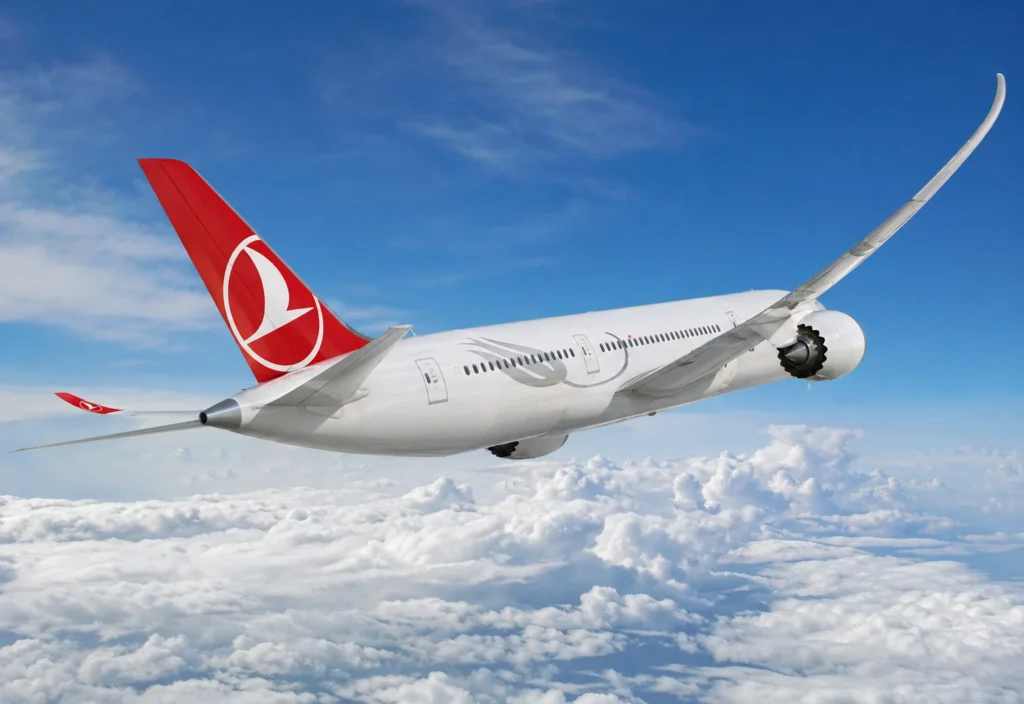
Turkish Airlines is reshaping its international network for 2026 with a strategic schedule update that includes the suspension of 18 overseas destinations while expanding services in stronger-performing markets. The move signals a major operational adjustment for one of the world’s most connected carriers and is likely to influence tourism flows, transit travel, and regional aviation competition throughout the year.
Known for linking more countries than any other airline through its global hub in Istanbul, Turkish Airlines remains in growth mode despite the latest route changes. The carrier continues to invest in fleet expansion, new markets, and increased frequencies on high-demand routes, showing that the latest cuts are part of a broader network optimization strategy rather than a slowdown in ambition.
Turkish Airlines Adjusts International Network for 2026
The airline has confirmed that multiple international routes will be removed from its schedules during the remainder of 2026. The suspended destinations include a mix of leisure, business, and emerging markets across Europe, Africa, Asia, and the Middle East.
Among the destinations affected are Aqaba, Billund, Bissau, Ferghana, Freetown, Havana, Hurghada, Juba, Kinshasa, Kirkuk, Leipzig/Halle, Libreville, Luanda, Lusaka, Monrovia, Najaf, Pointe Noire, and Turkistan.
Several Iranian cities, including Esfahan, Mashhad, Shiraz, and Tabriz, are also expected to see service reductions or suspensions. These changes come at a time when airlines worldwide are reviewing schedules due to geopolitical uncertainty, operating costs, and shifting passenger demand.
For travelers, the update means some direct flight options will disappear, but the airline’s core network remains extensive. Turkish Airlines still offers one of the broadest route maps in global aviation, with hundreds of domestic and international services operating through Istanbul.
What the Route Cuts Mean for Tourism
The route adjustments may affect inbound tourism in smaller or secondary markets that relied on direct access from Istanbul. Turkish Airlines has played an important role in connecting long-haul visitors to destinations that often had limited international service.
For tourism boards and local travel businesses in affected cities, the loss of flights could temporarily reduce visitor convenience and increase dependence on connecting itineraries through other hubs.
However, for major tourism markets, the impact is expected to be limited. Popular destinations across Western Europe, major Asian capitals, and key long-haul markets in North America and beyond remain part of the airline’s network. This suggests Turkish Airlines is protecting routes with stronger demand and higher year-round traffic.
For travelers planning holidays in 2026, the biggest change may simply be the need for alternative connections rather than canceled travel plans altogether.
Why Airlines Are Prioritizing Stronger Routes
Although no detailed public explanation has been issued for each suspended route, industry conditions provide a clear picture of why airlines are becoming more selective.
Fuel costs, staffing efficiency, airport charges, aircraft availability, and demand recovery patterns all play a role in route planning. Long or low-yield routes can become less attractive when costs rise or when aircraft can earn stronger returns elsewhere.
Some of the suspended services were linked sectors or circular routes, where one aircraft served multiple cities on the same journey. While these routes can expand market presence, they are also more complex and expensive to operate.
By simplifying the network, Turkish Airlines can improve scheduling flexibility, reduce operational costs, and focus aircraft on destinations where demand is highest during peak travel periods.
Istanbul Strengthens Its Role as a Global Hub
One of the biggest winners from the network reshuffle could be Istanbul itself. The city’s airport remains a powerful geographic gateway between Europe, Asia, Africa, and the Middle East.
As Turkish Airlines reallocates aircraft capacity, Istanbul is expected to gain even more importance as a transfer hub for global passengers. Instead of serving thinner nonstop routes, the airline can channel travelers through stronger trunk routes with seamless onward connections.
This is particularly important for tourism because Istanbul is not only a transit point but also a destination in its own right. Stopover tourism, city breaks, and multi-country itineraries may all benefit as passenger volumes concentrate through the Turkish gateway.
Travelers connecting via Istanbul can continue to access an enormous range of destinations with competitive connection times and modern airport facilities.
New Routes and Growth Markets Still on the Agenda
Despite the route cuts, Turkish Airlines is also launching and strengthening services in several markets where demand remains strong.
The airline has announced new routes such as London-Stansted, Yerevan, Tirana, and Timisoara. It is also increasing frequencies on major Asian routes including Shanghai, Beijing, and Guangzhou.
This indicates a clear strategy: reduce weaker routes and invest in destinations with stronger tourism, business travel, diaspora demand, or transfer potential.
For the travel industry, that is an encouraging sign. Rather than shrinking overall connectivity, Turkish Airlines is redirecting resources to routes where growth prospects are stronger.
Massive Fleet Plans Support Long-Term Expansion
Turkish Airlines continues to back its future with one of the industry’s most ambitious fleet growth plans. The airline already operates hundreds of Airbus and Boeing aircraft and has a substantial order pipeline for both passenger and cargo jets.
Long-term plans aim for a significantly larger fleet by 2036, reinforcing the airline’s intention to remain a leading global connector.
Fleet growth matters for tourism because more aircraft create opportunities for new destinations, higher frequencies, better schedules, and stronger competition in international travel markets.
Even with short-term route adjustments in 2026, the bigger picture remains expansionary.
What Travelers Should Do Now
Passengers planning travel with Turkish Airlines in 2026 should check schedules regularly, especially for secondary cities and seasonal routes. Booking early, considering flexible fares, and exploring connection options through Istanbul can help travelers secure the best alternatives.
For tourism professionals, the latest changes are a reminder that airline networks constantly evolve in response to economics, demand, and global events.
Turkish Airlines route cuts may headline the news today, but the airline’s larger story is still one of growth, adaptation, and long-term global ambition.