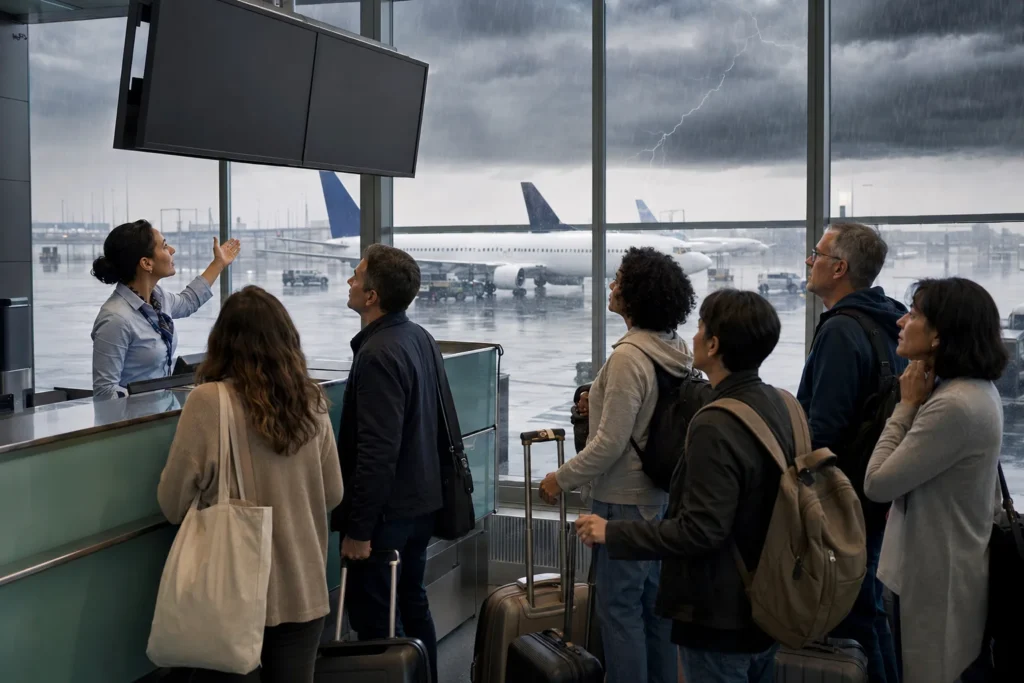
When severe weather systems like Tropical Storm Bertha impact major aviation corridors along the U.S. Gulf Coast, thousands of travelers face flight cancellations, extended airport delays, and sudden travel adjustments. Navigating passenger rights, airline obligations, and federal aviation regulations becomes essential for passengers seeking cash refunds, rebooking options, or travel credits.
According to official guidelines from the U.S. Department of Transportation, federal protections dictate specific rights for air travelers when airlines cancel flights or make significant schedule adjustments, regardless of whether the disruption is caused by extreme weather or operational issues.
Cash Refund Entitlements for Severe Weather Flight Cancellations
The primary protection available to travelers under federal rules is the right to a full cash refund when an airline cancels a scheduled flight and the passenger chooses not to accept alternative travel arrangements. Federal aviation policy mandates that if a carrier cancels a segment and does not rebook the customer, or if the passenger rejects the newly offered itinerary, the airline must refund the unused ticket portion to the original form of payment.
This federal mandate applies to all flights arriving at, departing from, or operating within the United States. Crucially, it covers all fare classes, including basic economy and normally nonrefundable tickets. Travelers who opt to accept a replacement flight or accept alternative travel vouchers waive their entitlement to a cash refund for that canceled segment.
Additionally, federal consumer guidelines state that optional service fees paid for amenities that cannot be utilized—such as advance seat assignment, priority boarding, or prepaid checked baggage charges—must also be refunded to passengers when the underlying flight is canceled.
Carrier Commitments: Weather Disruptions Versus Operational Delays
While rules governing flight cancellations are straightforward, federal standards distinguish between weather-related delays and disruptions within an airline’s control. For delays caused by tropical storms, severe convective weather, or air traffic control holds, federal regulations do not legally obligate airlines to provide emergency lodging, ground transportation, or meal vouchers to stranded passengers.
The U.S. Department of Transportation tracks individual carrier pledges through its official consumer protection resources, distinguishing between controllable disruptions—such as maintenance failures or crew scheduling issues—and uncontrollable weather events. While major carriers voluntarily promise hot meals and hotel accommodations during airline-caused delays, weather-related events like Tropical Storm Bertha are explicitly excluded from these mandatory support pledges.
In the event of a severe weather disruption, carrier obligations are generally limited to rebooking affected passengers on the next available flight in the same cabin class without additional rebooking fees, subject to seat availability. Any additional amenities, such as complimentary hotel vouchers, remain purely at the discretion of individual airline customer service policies.
However, if a storm-related delay becomes prolonged due to subsequent operational issues within the carrier’s control, such as crew duty-time limitations or post-storm repositioning delays, passengers may regain eligibility for carrier-provided assistance under standard customer service commitments.
Travel Waivers and Flexible Rebooking Policy Protections
Ahead of forecasted severe weather events, U.S. airlines routinely issue temporary travel waivers for airports located in the projected path of high winds and heavy rainfall. Published through official carrier travel advisories, these flexible policies allow passengers to modify their travel dates in advance without incurring change fees or paying fare differences, provided the new travel falls within designated rebooking windows.
While travel waivers grant operational flexibility to help passengers avoid storm disruptions, they do not automatically trigger cash refund rights if the flight remains scheduled to operate as planned. Passengers who voluntarily choose to cancel a flight that has not been officially canceled or significantly delayed by the airline remain subject to standard ticket terms, which typically offer future travel credits rather than cash returns.
For travelers holding basic economy tickets, travel waivers offer a rare opportunity to rebook or secure travel credits on non-changeable fares during severe weather windows along impacted coastal regions.
Protections for International Flights and Transborder Routes
For passengers traveling on international itineraries affected by severe weather events, regulatory protections depend on the flight’s point of origin, destination, and the operating carrier. International itineraries touching U.S. soil remain subject to Department of Transportation refund mandates for canceled flights where passengers decline alternative routings.
For long-haul services operated by foreign carriers, foreign regulatory frameworks may also apply. In foreign jurisdictions where passenger rights frameworks exist, severe weather events are routinely classified as extraordinary circumstances beyond the carrier’s control, exempting airlines from paying statutory cash compensation for delays. However, operating carriers may still be required under foreign regulations to fulfill basic duty-of-care obligations, including providing meals and emergency accommodations during extended airport stays.
Best Practices for Documenting Travel Claims and Disputes
To effectively exercise consumer protections during widespread flight disruptions, federal consumer guidelines advise travelers to maintain thorough records of all travel documentation. Passengers should retain boarding passes, confirmation numbers, written cancellation notices, and receipts for necessary expenses incurred during travel disruptions.
If an airline refuses to issue a mandatory cash refund following a weather-related flight cancellation, travelers can submit formal administrative complaints through the Department of Transportation’s Aviation Consumer Protection framework. Official consumer complaints are monitored by regulatory authorities to ensure systemic compliance with federal refund policies. Supplemental coverage, such as independent travel insurance or credit card trip interruption benefits, may also provide secondary financial protection for lodging and meal expenses that airlines are not federally required to cover during natural weather disruptions.
For more travel news like this, keep reading Global Travel Wire