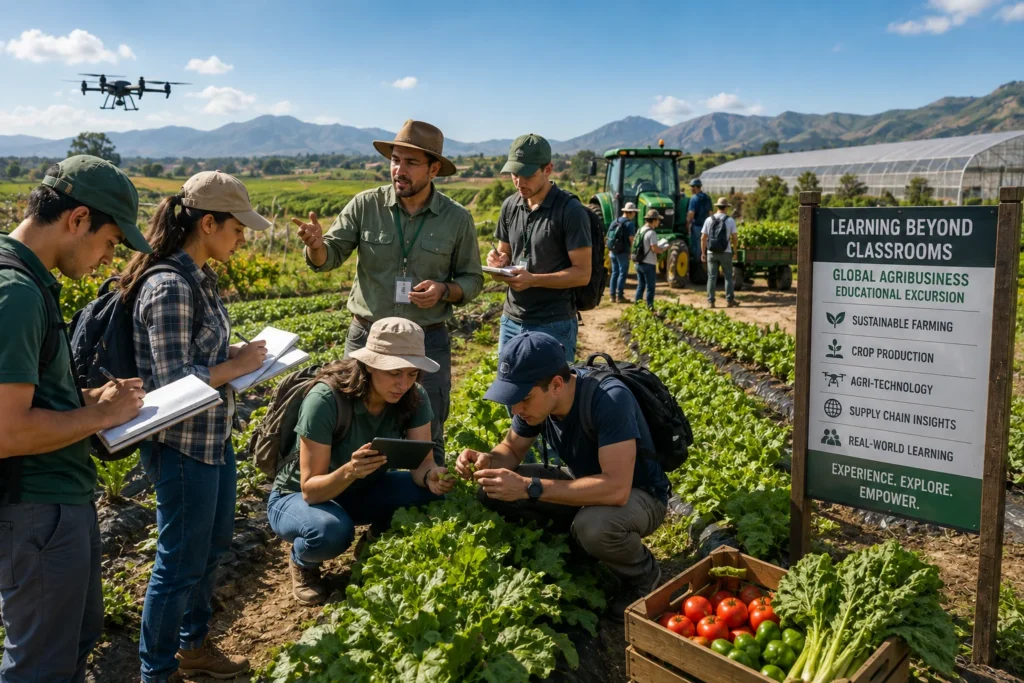
Experiential learning and regional travel programs continue to reshape higher education curriculums, allowing students to gain vital cross-cultural perspectives on food systems, sustainable farming, and local economics. As part of an academic international immersion module under the global agricultural and life sciences curriculum, university students completed a hands-on field study examining traditional food supply chains, regional agricultural policies, and heritage food production in Spain.
The academic excursion provided participants with first-hand exposure to niche agricultural markets, community-centered food networks, and specialized viticulture techniques that sustain regional rural economies. By integrating classroom preparation with direct field study, the educational travel model highlights the vital connection between sustainable farming and regional trade.
Hands-On Fieldwork Across Heritage Markets and Food Cooperatives
Prior to embarking on the field study, course participants spent the initial portion of the academic semester completing comprehensive research profiles on the destination country. The curriculum focused on analyzing the nation’s political structure, educational framework, environmental policies, and primary agricultural sectors to prepare students for field interactions with local producers.
Upon arrival, the educational delegation engaged directly with local agricultural operators, policy experts, and heritage food producers across several key regions:
Centuries-Old Municipal Markets: Students conducted field research at the historic Ordizia market, established over 500 years ago. As the first weekly market in its region, it historically set base pricing for surrounding agricultural goods. Students examined how long-standing municipal mandates requiring consistent market days continue to ensure reliable consumer access and support local seller livelihoods.
Artisanal Cheese Production Facilities: The group toured specialized sheep farming and dairy processing facilities to examine the production and aging processes of traditional regional cheeses, such as Idiazábal, observing how small-scale operations leverage aged product lines to build high-value regional brands.
Integrated Viticulture and Research Centers: Participants visited specialized vine-grafting facilities and viticulture museums. The educational tours detailed how native grape varieties are grafted onto pest-resistant rootstocks—a technique developed to protect vineyards against destructive pests like phylloxera and preserve historical grape production.
These site visits highlighted the structural contrasts between large-scale industrial farming models and localized European agricultural economies, where heritage preservation and direct-to-consumer sales remain central to economic viability.
Comparative Overview of Educational Excursion Focus Areas
| Agricultural Sector | Fieldwork Location | Key Learning Objectives | Economic & Policy Focus |
| Municipal Trade Markets | Ordizia Historic Market | Community market structures & consumer access | Price-setting history & municipal vendor mandates |
| Artisanal Dairy & Cheese | Regional Sheep Facilities | Aged cheese processing & artisanal standards | Niche product branding & local supply chains |
| Viticulture & Plant Science | Grafting Facilities & Vine Museums | Botanical grafting techniques & pest mitigation | Heritage preservation & agricultural resilience |
| Water & Land Policy | Rural Production Sites | Resource management & regional governance | Agricultural policy & environmental sustainability |
Fostering Global Perspectives for Future Agricultural Leaders
Direct exposure to international food systems provides future agricultural educators, extension specialists, and industry professionals with practical insights that extend beyond traditional textbook learning. Interacting with local producers who maintain centuries-old practices helps students evaluate how alternative management approaches can be adapted for domestic application.
Academic specialists emphasize several key takeaways from international agricultural study tours:
Valuing Direct-to-Consumer Supply Chains: Understanding how historic local markets foster community resilience and reduce supply chain vulnerabilities by directly connecting food producers with municipal consumers.
Adopting Specialized Technical Skills: Learning specialized techniques—such as plant grafting and specialized food curing—that can be integrated into future agricultural extension programming, community outreach, and technical research.
Understanding International Policy Frameworks: Gaining a clearer perspective on foreign regulatory systems, environmental policies, and trade mandates, which enables future agricultural leaders to navigate globalized food markets effectively.
By prioritizing field-based learning, university travel programs equip rising professionals with the technical knowledge, cultural literacy, and practical skills necessary to solve complex challenges within modern global agriculture.
For more travel news like this, keep reading Global Travel Wire