European summer leisure patterns are undergoing a fundamental transformation as holidaymakers swap sweltering coastal heatwaves for temperate high-altitude regions. Official tourism statistics and regional transport data highlight a major rise in “coolcation travel”—a movement defined by tourists choosing moderate northern and alpine climates for active outdoor recreation over traditional sun-seeking beach holidays.
Data released by international travel monitoring bodies reveals a year-on-year surge of up to 74 percent in searches for temperate destinations across Western and Northern Europe. With extreme heat altering seasonal travel planning, high-altitude regions offering robust hiking trails, dedicated cycling corridors, and established eco-transport infrastructure are capturing a growing share of summer tourism expenditures.
The Operational Rise of Climate-Conscious Active Travel
The coolcation travel phenomenon represents a structural realignment in European tourism. Rather than spending vacation days indoors avoiding peak daytime temperatures, modern travelers prioritize destinations where ambient summer temperatures naturally support daily physical activity, such as mountain biking, trail running, and alpine trekking.
Industry analyses across 30 prominent European mountain hubs indicate that successful destinations balance natural climate comfort with transit accessibility. Key destination indicators driving visitor growth include average daily temperatures under 25°C, extensive marked trail networks, integrated public transport networks, and structured environmental protection policies.
This climate-driven shift aligns directly with “slow travel” principles. Visitors prioritize multi-day journeys through natural landscapes—whether on foot or by bicycle—over rapid urban sightseeing, relieving pressure on overcrowded Mediterranean hubs while supporting rural mountain economies.
Top European Regions Leading the Coolcation Movement
Alpine nations lead the continental surge in active coolcations, combining high-altitude geography with world-class outdoor infrastructure.
Mont Blanc Region (France)
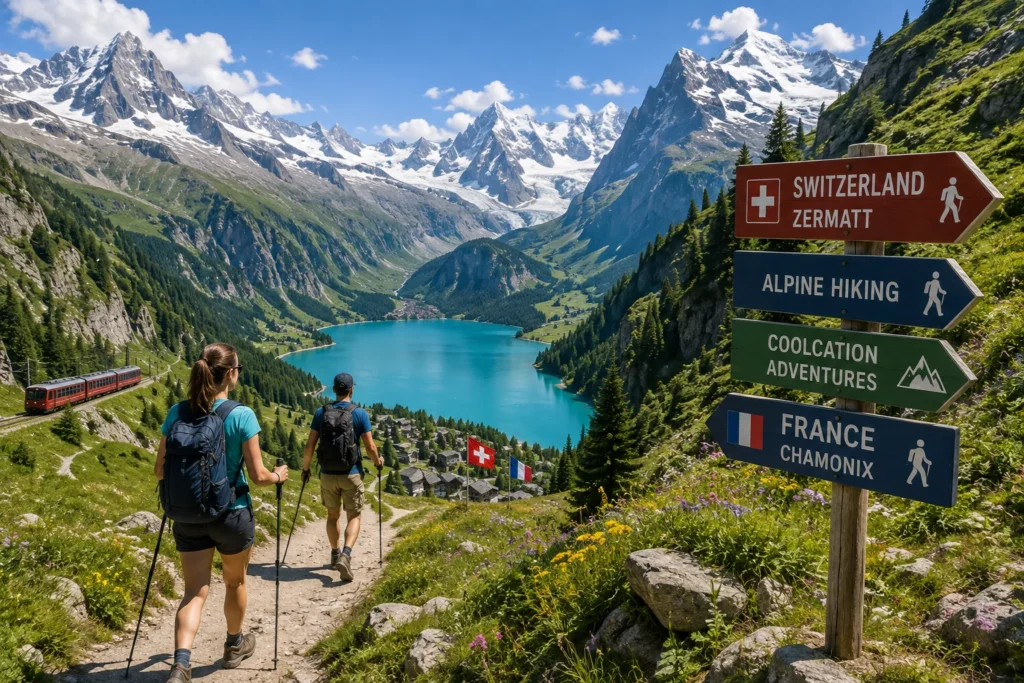
The Chamonix Valley and Mont Blanc massif serve as the epicenter of active outdoor coolcations in Western Europe. Offering hundreds of kilometers of interconnected alpine paths, the region provides seamless transport links from major international transit hubs. A primary driver of high-altitude summer visits remains the Tour du Mont Blanc, an iconic long-distance trekking route spanning France, Italy, and Switzerland that combines physical endurance with mild summer temperatures.
Valais and Graubünden Regions (Switzerland)
Switzerland continues to strengthen its global leadership in luxury sports tourism. The high-altitude Valais region, home to Matterhorn access points near Zermatt, provides natural cooling conditions that make strenuous outdoor activities viable throughout July and August. Concurrently, the Graubünden region—featuring specialized biking hubs such as Lenzerheide—offers expansive trail networks supported by private and public mountain railways, allowing cyclists to reach high-altitude trailheads efficiently while keeping transport emissions low.
Tyrol and Hohe Tauern National Park (Austria)
Austria has successfully expanded its summer sports portfolio by promoting high-altitude valley retreats and mountain bike infrastructure across the Tyrol region. Initiatives focus on “silent tourism”—offering serene alpine environments away from dense coastal resorts. Meanwhile, Hohe Tauern National Park serves as a benchmark for sustainable eco-tourism, enforcing strict habitat protections along low-impact trekking paths.
| Regional Hub | Primary Outdoor Focus | Key Infrastructure Features | Climate Profile |
| Mont Blanc (France) | Alpine trekking & trail running | Tour du Mont Blanc route, valley cable cars | Cool / Alpine |
| Valais (Switzerland) | High-altitude hiking & mountaineering | Integrated public rail, glacier access | Cool / High-Alpine |
| Graubünden (Switzerland) | Mountain biking & gravel cycling | Dedicated bike parks, mountain railways | Moderate / Alpine |
| Tyrol (Austria) | River valley cycling & hiking | Regional cycle paths, eco-lodges | Moderate / Cool |
| Scottish Highlands (UK) | Wilderness trekking & long walks | Marked trail networks, national park routes | Cool / Temperate |
| Lofoten Islands (Norway) | Coastal mountain hiking & sea kayaking | Scenic coastal roads, ferry connections | Cool / Maritime |
Expansion Across the British Isles and Northern Europe
The demand for coolcation travel extends well beyond the Alps. Tourism boards across the British Isles and Nordic nations report increased visitor engagement during peak summer months:
The Scottish Highlands (UK): Offers accessible wilderness trekking and long-distance walking paths, appealing to regional European travelers seeking cool, open-air landscapes without long-haul transit.
Eryri / Snowdonia National Park (Wales): Features high trail density and mountain walking networks, drawing active travelers seeking short-duration hiking breaks in temperate conditions.
Connemara and West Coast (Ireland): Attracts cyclists and leisure walkers through rugged coastal routes and scenic greenways designed for low-impact touring.
Jämtland and Åre (Sweden): Provides extensive northern wilderness trails and lake-based recreation, offering mild daytime temperatures for outdoor enthusiasts.
Economic Outlook and Destination Management Guidelines
To support the rapid expansion of coolcation travel, regional tourism authorities and national environmental ministries are implementing updated destination management guidelines. Public policies focus on maintaining trail integrity, expanding zero-emission electric bus and train links to trailheads, and encouraging responsible wilderness usage.
For travelers planning an active summer getaway, official tourism portals recommend key preparations:
Pre-Book Trail Transit and Lodging: Secure mountain hut reservations and specialized transport passes well in advance, as high-altitude accommodation experiences elevated summer demand.
Verify High-Altitude Trail Status: Check daily regional weather releases and trail condition notices issued by local alpine clubs and park ranger stations before embarking on multi-day treks.
Adhere to Eco-Friendly Travel Standards: Utilize designated public transit networks, stay on marked trails to prevent alpine soil erosion, and follow leave-no-trace protocols across all protected natural zones.
By pairing strict environmental stewardship with upgraded outdoor infrastructure, Europe’s alpine and northern destinations are establishing a sustainable framework for the future of summer travel.
For more travel news like this, keep reading Global Travel Wire