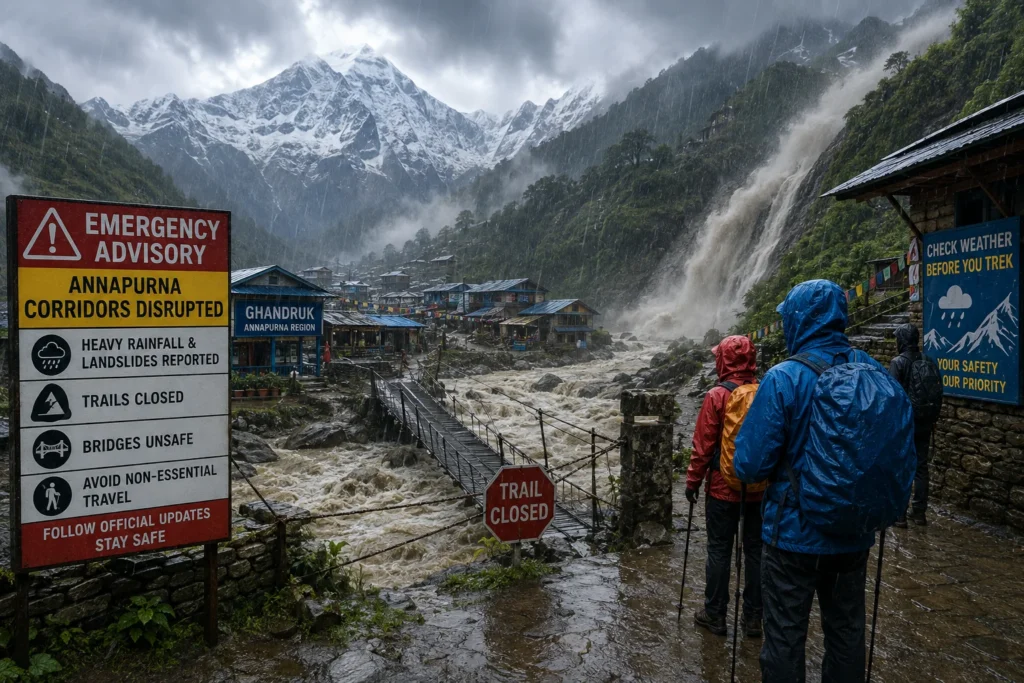
Severe monsoon rainfall and localized flooding in the Modi Khola river basin have significantly damaged critical transportation infrastructure across Nepal’s Annapurna region. The affected transport sectors include key access points connecting Nayapul, Ghandruk, and Muktinath, triggering widespread travel alerts and emergency protocol activations for international adventure travelers.
The Annapurna Conservation Area stands as a central pillar of Nepal’s mountain tourism industry. In response to structural trail damage and heightened landslide risks along high-elevation corridors, regional authorities and the Trekking Agencies’ Association of Nepal (TAAN) have issued mandatory safety advisories. Trekking operators have been instructed to suspend transit through active hazard zones, implement comprehensive safety briefings, and coordinate directly with local search and rescue bodies.
Climate Resilience and the Transition Toward Adaptive Trekking Management
The recent infrastructure disruptions along the Modi Khola basin underscore broader challenges facing high-altitude destination management. Ongoing shifts in seasonal precipitation patterns have exposed the structural vulnerabilities of traditional mountain trail networks, necessitating a transition toward dynamic, real-time travel management.
In response to infrastructure damage near Birethanti and primary access routes, public tourism bodies and agency operators are pivoting toward flexible scheduling models. Rather than adhering strictly to predetermined itineraries, operators now rely on field updates from certified guides, local municipal offices, and the Annapurna Conservation Area Project (ACAP) to re-route trekking groups along lower-risk corridors.
This administrative shift prioritizes safety protocols and structural hazard assessments, ensuring that mountain tourism operations remain viable while minimizing exposure to extreme weather occurrences.
Economic Impacts on Local Mountain Communities
The Annapurna circuit supports a vast micro-economy composed of indigenous host communities, small-scale tea house lodges, porter associations, and local logistics providers. Transport disruptions along major arterial routes directly impact community livelihoods in prominent settlements such as Ghandruk and Jomsom.
| Region / Route Sector | Infrastructure Status | Operational Impact | Recommended Protocols |
| Nayapul to Ghandruk Corridor | Severe road damage via Modi Khola flooding | Vehicle access suspended; trail rerouting active | Re-route via alternative regional paths |
| Birethanti Checkpoint Sector | River overflow; localized trail erosion | High-risk transit zone; strict monitoring | Coordinate with ACAP & Tourist Police |
| Lower Mustang / Muktinath Link | Landslide obstructions along transit links | Intermittent access; transport delays | Verify daily trail status prior to departure |
| Lower Annapurna Valleys | Stable lower-elevation trail networks | Open for managed, low-altitude itineraries | Utilize registered licensed mountain guides |
To preserve these mountain economies, government departments and conservation organizations are focusing recovery efforts on resilient infrastructure restoration. Upgrading trail engineering, reinforcing riverbanks, and modernizing drainage systems along vulnerable corridors aim to ensure long-term trail stability while protecting local cultural heritage.
Essential Safety Protocols and Logistics for Adventure Trekkers
Navigating Himalayan mountain trails during weather recovery phases requires careful logistical planning, strict adherence to government regulations, and reliance on certified local expertise.
Key operational requirements and seasonal recommendations include:
Mandatory Licensed Guide Compliance: Under official Nepal civil tourism regulations, foreign nationals exploring conservation zones must be accompanied by a government-licensed mountain guide. Unlicensed or unguided trekking is strictly prohibited across the Annapurna Conservation Area.
Real-Time Permit Verification: Trekkers must hold valid Annapurna Conservation Area Permits (ACAP), which are verified at active security checkpoints. Guides handle real-time verification to ensure groups avoid compromised trail segments.
Shoulder Season Travel Timing: While peak monsoon months present elevated flood risks, visiting during late shoulder-season periods (late September through November) offers clearer weather windows, stabilized trail conditions, and improved visibility.
Cultural and Regional Etiquette: When visiting cultural centers like Ghandruk or sacred sites near Muktinath, travelers should respect local customs, walk to the right of cultural monuments, and engage respectfully with host communities.
Long-Term Outlook for Sustainable Himalayan Tourism
The future of high-altitude travel in Nepal depends on moving beyond reactive emergency responses toward integrated, data-driven destination management. National tourism boards and environmental agencies are increasingly prioritizing early-warning weather systems, real-time satellite trail monitoring, and eco-friendly trail construction.
By combining strict safety protocols, sustainable infrastructure development, and community-based eco-tourism principles, Nepal continues to safeguard both its international visitors and the mountain populations that sustain its world-renowned adventure travel sector.
For more travel news like this, keep reading Global Travel Wire