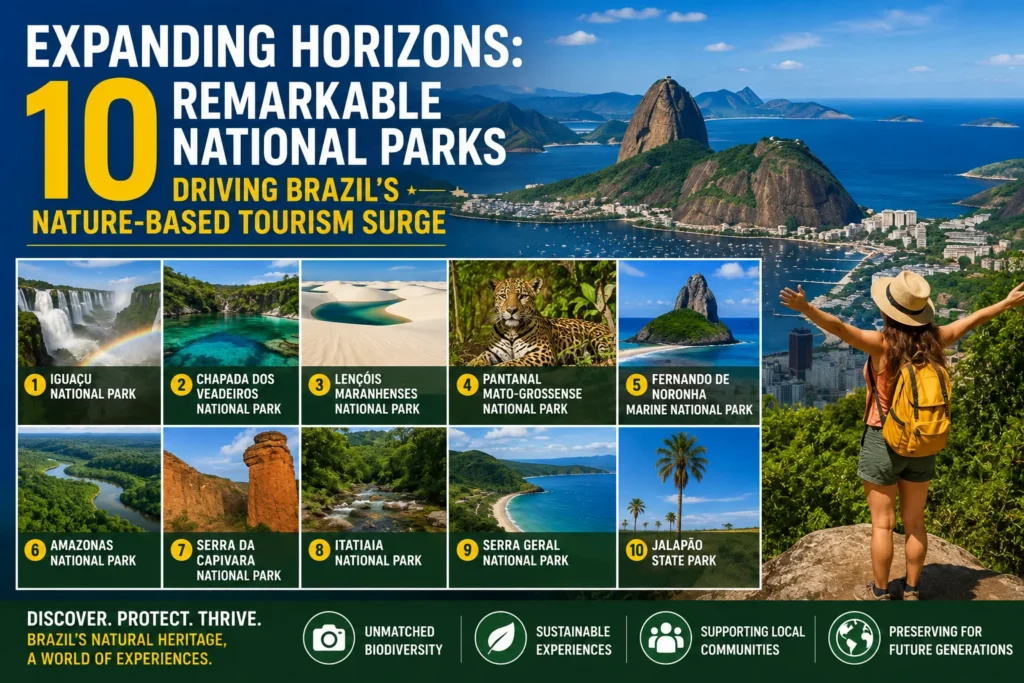
Nature based tourism is experiencing unprecedented growth across South America as international visitors increasingly seek out conservation-led adventures. Official data released by the Ministry of Tourism and Embratur confirms record-breaking international arrival numbers across national gateways, driven in large part by public interest in protected natural areas.
Managed under strict environmental guidelines by the Chico Mendes Institute for Biodiversity Conservation (ICMBio), Brazil’s extensive network of national parks protects extraordinary ecosystems across six distinct biomes. From high-altitude mountain traverses and subterranean caves to flooded Amazonian forests and marine reserves, these ten natural destinations showcase the biodiversity of South America’s largest country.
Volcanic Dunes, Geothermal Springs, and Savannah Waterfalls
1. Lençóis Maranhenses National Park (Maranhão)
Recognized as a UNESCO World Heritage Site, Lençóis Maranhenses combines sweeping white sand dunes with thousands of seasonal freshwater lagoons. Located on the northern coast of Maranhão, primary access points include Barreirinhas, Santo Amaro, and Atins. Trekkers can navigate the vast dune fields on foot or complete multi-day traverses across the park. To protect fragile ecosystems, ICMBio enforces strict visitor regulations, including mandatory accompaniment by accredited local guides and designated vehicle corridors.
2. Jalapão State and Federal Reserves (Tocantins)
Located in the heart of the Cerrado biome, the Jalapão region features dramatic red sand dunes, table-top mountains, and powerful spring-fed natural pools known as fervedouros. Popular activities include white-water rafting on the Rio Novo, rappelling, and cycling. The region also highlights sustainable community practices through local cooperatives in Mumbuca and Prata, where local artisans create traditional handicrafts from golden grass (capim dourado).
Tropical Wetlands and Amazonian River Archipelagos
3. Anavilhanas National Park (Amazonas)
Protecting one of the world’s largest river archipelagos, Anavilhanas spans over 350,000 hectares along the Rio Negro near Novo Airão. The park shelters endangered Amazonian wildlife, including giant otters, pink river dolphins, Amazonian manatees, and jaguars. Visitors explore flooded forests (igapós) by canoe, observe nocturnal wildlife, and participate in scientific eco-tours guided by native riverine communities.
4. Pantanal Mato-Grossense National Park (Mato Grosso / Mato Grosso do Sul)
As the core protected reserve within the world’s largest tropical wetland system, the Pantanal is a world-renowned destination for wildlife photography and safari-style riverboat tours. Protecting over 183,000 hectares of aquatic habitat, the park harbors dense populations of jaguars, marsh deer, capybaras, and giant anteaters. Access is regulated based on seasonal water levels, with official permits required for scientific and recreational entry.
Highland Canyons, Quartz Formations, and Cascading Waterfalls
5. Chapada Diamantina National Park (Bahia)
Situated along the Serra do Sincorá range in Bahia, Chapada Diamantina covers more than 150,000 hectares across Atlantic Forest, Cerrado, and Caatinga biomes. The park is famous for deep canyons, underground rivers with crystal-clear blue waters, and iconic flat-topped mountains like Morro do Pai Inácio. Multi-day treks through the Vale do Pati require careful route planning and accredited local guides due to challenging mountain terrain.
6. Chapada dos Veadeiros National Park (Goiás)
Located on an ancient quartz plateau in central Brazil, Chapada dos Veadeiros safeguards over 240,000 hectares of high-elevation Cerrado. Gateway towns like Alto Paraíso de Goiás and Vila de São Jorge provide access to dramatic waterfalls, quartz crystal fields, and deep canyon formations. Public access rules require visitors to adhere to established trail guidelines to prevent soil erosion and protect endemic flora.
Sub-Tropical Forest Cataracts and Coastal Mountain Crossings
7. Iguaçu National Park (Paraná)
Protecting a vital segment of the Atlantic Forest, Iguaçu National Park is home to the Brazilian side of the famous Iguaçu Falls, a UNESCO World Heritage site. Visitors can view the 275 individual cascades along established boardwalks, join eco-friendly boat excursions near the base of the Devil’s Throat, or walk forest trails to spot toucans, coatis, and rare butterflies.
8. Serra dos Órgãos National Park (Rio de Janeiro)
Located just a short distance from Rio de Janeiro, Serra dos Órgãos covers nearly 20,000 hectares across Teresópolis, Petrópolis, Magé, and Guapimirim. Featuring over 200 kilometers of mapped trails, it is Brazil’s premier mountain climbing destination. Peak attractions include the famous three-day Petrópolis-Teresópolis alpine traverse and views of dramatic granite peaks like the Dedo de Deus (Finger of God).
Oceanic Ecosystems and Marine Species Conservation
9. Fernando de Noronha Marine National Park (Pernambuco)
This volcanic archipelago located 350 kilometers off the northeastern coast offers world-class scuba diving, clear waters, and protected marine life. Sanctuary bays such as Praia do Sancho and Baía dos Porcos enforce daily visitor caps and mandatory environmental conservation fees. Snorkelers and divers routinely swim alongside sea turtles, reef sharks, and resident spinner dolphins.
10. Abrolhos Marine National Park (Bahia)
Established as Brazil’s first marine national park, Abrolhos safeguards five volcanic islands and extensive coral reef structures off the southern coast of Bahia. Between July and November, the warm coastal waters serve as a primary mating and calving sanctuary for an estimated 20,000 humpback whales. Scuba diving operations are closely regulated to ensure zero impact on delicate coral habitats.
| Park Name | Dominant Biome | Key Visitor Activities | Primary Access Hubs |
| Lençóis Maranhenses | Coastal Marine / Cerrado | Dune trekking, lagoon swimming | Barreirinhas, Santo Amaro |
| Jalapão Reserves | Cerrado | Rafting, fervedouro swimming | Palmas, Mateiros |
| Anavilhanas | Amazon Rainforest | Canoe navigation, pink dolphin tours | Novo Airão, Manaus |
| Pantanal Mato-Grossense | Wetland | Jaguar tracking, boat safaris | Cuiabá, Corumbá |
| Chapada Diamantina | Atlantic Forest / Caatinga | Highland trekking, waterfall swimming | Lençóis, Palmeiras |
| Chapada dos Veadeiros | High-Altitude Cerrado | Canyon hiking, waterfall tours | Alto Paraíso, São Jorge |
| Iguaçu | Atlantic Forest | Cataract viewing, forest trails | Foz do Iguaçu |
| Serra dos Órgãos | Atlantic Forest / Montane | Alpine climbing, multi-day trekking | Teresópolis, Petrópolis |
| Fernando de Noronha | Marine Archipelago | Scuba diving, dolphin observation | Recife, Natal |
| Abrolhos | Coral Reef / Oceanic | Humpback whale watching, diving | Caravelas, Porto Seguro |
Sustainable Tourism Framework and Environmental Safety Protocols
To ensure that nature based tourism remains sustainable, ICMBio and the Ministry of the Environment enforce clear operational frameworks across all federal conservation units. Travelers are advised to follow essential safety and environmental guidelines when visiting protected national reserves:
Accredited Guidance: Hire officially registered guides (condutores ambientais) for remote wilderness routes, alpine climbs, and multi-day treks.
Hydration and Safety: Carry minimum water requirements (at least three liters daily in arid sectors like Lençóis Maranhenses) and verify weather conditions prior to entering canyon zones.
Waste and Drone Limits: Follow leave-no-trace principles, pack out all personal waste, and observe strict prohibitions on unauthorized drone usage within wildlife zones.
Official Entry Digital Registration: Complete required digital QR registration and secure park permits well in advance for high-demand reserves like Fernando de Noronha.
By combining rigorous environmental conservation with expanded public access, Brazil continues to strengthen its position as a global leader in sustainable nature based tourism.
For more travel news like this, keep reading Global Travel Wire