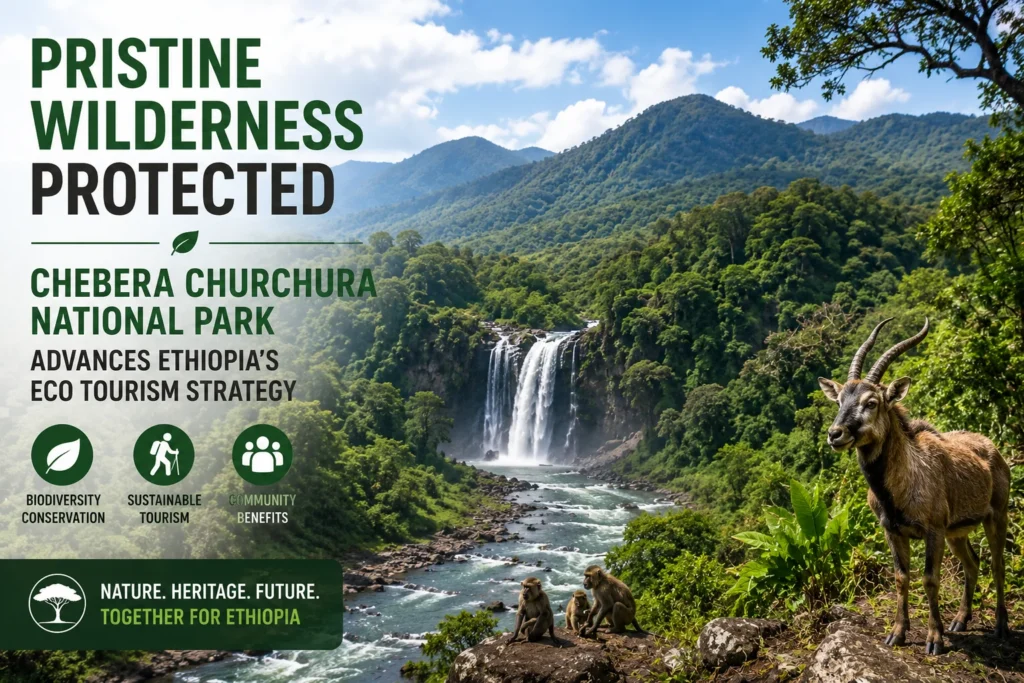
Located in the remote southwestern highlands of Ethiopia, situated between the Dawro and Konta zones within the South West Ethiopia Peoples’ Region, Chebera Churchura National Park stands as one of the country’s most ecologically intact protected natural areas. Expanding across 1,215 square kilometers of untamed terrain, the park provides an essential refuge from heavily commercialized safari circuits, combining scenic river basins, volcanic crater lakes, and dense cloud forests.
Field surveys and official wildlife monitoring records managed by the Ethiopian Wildlife Conservation Authority confirm that this protected sanctuary serves as a vital stronghold for one of Ethiopia’s largest remaining populations of African elephants. By promoting guided foot safaris accompanied by native park scouts and integrating indigenous host communities, the reserve represents a sustainable model of destination development that balances long-term environmental protection with local socio-economic growth.
Untouched Southwestern Reserve Serves as a National Biodiversity Sanctuary
The emergence of undisturbed natural sanctuaries reflects a broader structural shift within global travel demand. Modern eco tourism initiatives increasingly emphasize low-impact, conservation-led exploration over mass-market wildlife viewing.
Geothermal hot springs, unexplored river systems, and a rich native botanical heritage—including wild-growing arabica coffee—attract conscious travelers seeking authentic nature immersion.
| Environmental Zone | Primary Ecological Features | Key Wildlife & Native Flora | Official Visitor Guidelines |
| Highland Cloud Forests | Montane canopy, high humidity | Wild Coffea arabica, Colobus monkeys | Mandatory scout accompaniment |
| Crater Lakes & Springs | Lakes Keriballa and Koka | Waterbucks, rare waterfowl, native fish | Guided volcano hikes & photography |
| Riparian River Valleys | Rivers Zigna and Shoshuma | Elephants (400-700), hippopotamuses | Riverbank game tracking on foot |
| Geothermal Springs | Thermal waters (Toshima, Nechwuha) | Elusive predators, 80+ butterfly species | Geo-tourism walks & hot spring access |
| Highland Grasslands | Rolling savanna and woodland | African buffalo, bushbucks, lions, leopards | Vehicle drives & game viewing |
The park’s high-density biodiversity in uncrowded surroundings offers an exceptional alternative to traditional northern cultural corridors, establishing southwestern Ethiopia as a primary focus for eco tourism expansion.
Wildlife Diversity and State Conservation Programs Protect Native Habitats
Official ecological monitoring confirms that Chebera Churchura National Park safeguards dozens of mammal species and a broad avian population. The resident population of 400 to 700 African elephants represents a primary focus for national conservation directives.
Large herds of African buffalo, waterbucks, and bushbucks roam open savanna sectors, while apex predators including lions, leopards, and serval cats navigate the dense riparian woodlands. The park also protects specialized primate populations, including the rare De-Brazza’s monkey, Colobus monkeys, and Vervet monkeys.
Ornithological records documented by environmental authorities identify over 140 bird species within the park boundaries, including endemic species such as the Thick-billed Raven, Wattled Ibis, Banded Barbet, and White-winged Cliff Chat. Montane forest ecosystems also shelter more than 80 recorded butterfly species.
The protection of these diverse ecosystems delivers positive economic signals throughout sustainable eco tourism supply chains, encouraging travel operators to invest in destinations that enforce strict habitat management protocols.
Volcanic Features, Hydrogeology, and Botanical Endowments
The physical landscape of Chebera Churchura is defined by a complex mosaic of montane cloud forests, wetlands, and volcanic crater lakes such as Keriballa and Koka. Hydrological surveys map more than 45 perennial streams across the park, including the prominent Zigna and Shoshuma rivers. These waterways feed natural thermal hot springs like Toshima and Nechwuha while creating dramatic waterfalls and riverine caves suited for geological research and adventure travel.
Botanically, the park preserves extensive stands of wild Coffea arabica, false banana (Enset), cardamom, and indigenous flora. These native plant species support traditional community gathering practices while offering educational opportunities for specialized botanical walking tours. The combination of geothermal features, crater lakes, and rich plant life creates a multi-faceted destination for travelers seeking wellness, trekking, and environmental study.
Visitor Management, Dry Season Protocols, and Sustainable Travel Impact
To ensure visitor safety and ecological preservation, federal park management mandates specific travel guidelines. The optimal window for visiting coincides with the regional dry season, spanning from November to March. During these months, road accessibility improves across the rugged highland terrain, and wildlife viewing peaks as animal populations gather near major riverbanks.
In accordance with Ethiopian Wildlife Conservation Authority regulations, all park excursions—whether foot safaris, vehicle game drives, or birdwatching treks—require accompaniment by certified park scouts. Infrastructure investments under the government’s national destination development programs, such as the Elephant Paw Lodge project, continue to improve access while maintaining strict environmental standards.
Direct engagement with surrounding host communities ensures that eco tourism revenue directly supports local economic livelihoods, strengthening community-led stewardship across the protected ecosystems of southwestern Ethiopia.
For more travel news like this, keep reading Global Travel Wire