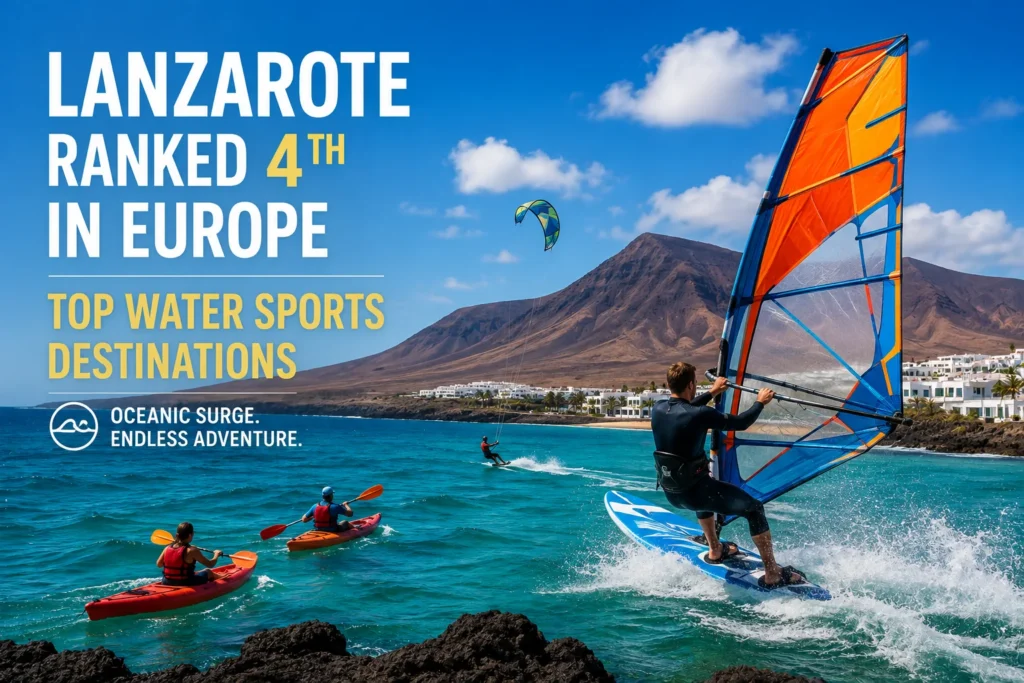
The rapid shift toward experiential travel continues to reshape the global holiday landscape, establishing the Canary Islands as a dominant hub for active coastal exploration. Official marine tourism data and international travel industry metrics place Lanzarote fourth overall among 500 analyzed European islands for water sports performance, signaling a major rise in demand for outdoor athletic adventures.
Driven by strong international interest in the island’s unique volcanic coastline, Lanzarote successfully outperformed numerous established Mediterranean hotspots to claim a top-five ranking on the continental leaderboard. The metrics reflect a fundamental evolution in consumer behavior, where active travel is steadily replacing traditional passive beach holidays across major European markets.
Key Geographical Drivers of Lanzarote’s Aquatic Recognition
Lanzarote’s high continental standing is largely anchored by two distinct coastal environments that cater to specialized segments of the marine sports market:
Famara Beach (North Coast): Known worldwide for its dramatic volcanic cliffs and consistent Atlantic ocean swells, Famara serves as a primary international hub for surfing enthusiasts and professional water sports schools.
Los Ajaches and Papagayo Coastline (South Coast): Featuring sheltered turquoise bays and protected marine environments, the dramatic cliffs of Los Ajaches offer world-class routes for sea kayaking, stand-up paddleboarding, and coastal snorkeling.
Official destination reports highlight that the contrast between the rugged, wind-swept northern beaches and the calmer southern coves provides an ideal environment for both high-intensity wave sports and recreational paddle excursions.
European Leaderboard: Top Islands for Aquatic Travel
The international study analyzed search volume, infrastructure availability, and activity density across hundreds of island destinations. While Lanzarote secured a top-five position, the Canary Islands archipelago overall demonstrated exceptional regional strength, placing three separate islands within the top ten.
| European Island | Primary Activity Focus | Key Coastal Locations | Regional Market Profile |
| Malta | Scuba Diving & Marine Exploration | Ċirkewwa Reefs & Wrecks | Elite Mediterranean Diving Hub |
| Tenerife | Surfing & Snorkeling | Bahía de Abades & Montaña Amarilla | Canary Islands Diversity Leader |
| Madeira | Volcanic Coastline Exploration | Ponta de São Lourenço Reserve | Atlantic Adventure Destination |
| Lanzarote | Surfing & Sea Kayaking | Famara Beach & Papagayo Coves | Premier Active Volcanic Shoreline |
| Fuerteventura | Windsurfing & Kitesurfing | Sotavento & Flag Beach | Trade-Wind Aquatic Playground |
The leaderboard demonstrates the clear dominance of the Atlantic and Mediterranean basins, with islands such as Mallorca, Sicily, Ibiza, and Sardinia completing the top tier of European aquatic destinations.
The Economic Expansion of Sports Tourism
The latest performance data underscores a structural shift in global travel expenditures. Sports tourism and active recreation now account for nearly 10 percent of total global travel spending, with sector growth projected to exceed 17 percent over the coming years.
Public tourism boards and regional economic planners note that active travelers typically generate higher local economic impact. Visitors engaging in sports tourism tend to book longer stays, invest in certified local guides, rent specialized equipment, and patronize local hospitality businesses outside of traditional resort enclaves.
The Canary Islands’ collective performance—featuring Tenerife in second place, Lanzarote in fourth, and Fuerteventura in sixth—solidifies the archipelago’s status as Europe’s foremost year-round destination for ocean-based athletics. Each island serves a targeted athletic demographic, ensuring the region captures a diverse share of international outdoor enthusiasts.
Marine Conservation and Sustainable Growth Strategies
As Lanzarote experiences an influx of active travelers, local public authorities and environmental agencies are increasing their focus on ecological protection. The long-term viability of the island’s marine tourism sector depends directly on maintaining the pristine condition of delicate coastal reserves, including the Los Ajaches protected area and the Chinijo Archipelago marine reserve.
To balance sports tourism growth with environmental preservation, regional tourism initiatives emphasize several sustainable management practices:
Coastal Protection Protocols: Implementing strict access controls and environmental guidelines for sensitive beach zones and volcanic reef systems.
Certified Operator Standards: Supporting local water sports centers that follow verified eco-friendly practices, including eco-guided kayak tours and sustainable dive instruction.
Visitor Education Programs: Providing clear guidelines via official tourism portals to ensure recreational visitors interact responsibly with fragile marine ecosystems and coastal wildlife.
By aligning sports tourism expansion with rigorous environmental stewardship, Lanzarote ensures that its world-class volcanic shores remain protected while continuing to welcome adventure travelers from around the globe.
For more travel news like this, keep reading Global Travel Wire