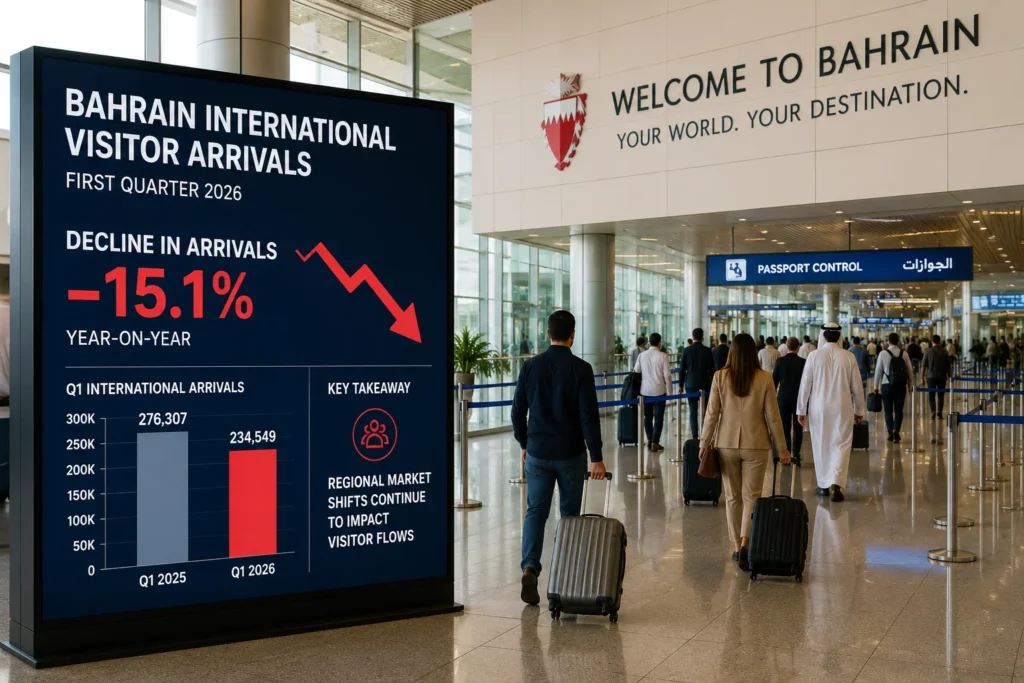
Official tourism tracking indicates a notable operational slowdown for Bahrain’s travel sector during the first quarter of 2026. Data released by global tourism monitoring agencies records a 27.8 percent decline in international visitor arrivals between January and March 2026 compared to the same timeframe in the previous year.
Border registry figures compiled in coordination with international travel dashboards confirm a 27.7 percent drop, representing one of the sharper contractions recorded across the Arabian Gulf region during this period. The shift reflects changing travel dynamics across the Middle East, ongoing regional adjustments, and expanding tourism infrastructure investments by neighboring Gulf Cooperation Council countries.
Analyzing the First-Quarter Tourism Metrics
The first-quarter contraction creates an operational challenge for national economic initiatives designed to expand inbound travel. As international travelers compare regional flight connectivity, accommodation value, and safety perceptions, maintaining consistent arrival momentum remains essential to meeting long-term growth targets.
| Performance Metric | Statistical Details | Primary Drivers and Sector Impact |
| Growth Decline Window | January to March 2026 | First-quarter seasonal slowdown in visitor volume |
| Year-on-Year Drop | 27.8% (27.7% border registry) | Contraction within the regional travel sector |
| Primary Data Authorities | UN Tourism tracking & IGA | Systemic monitoring via official registries |
| Affected Sectors | Leisure, business, hospitality | Lower occupancy in retail, dining, and hotel venues |
| Key Rebound Solutions | BTEA targeted promotion | Market diversification and heritage expansion |
Despite the immediate operational drop, the first-quarter metrics serve as a focal point for national tourism authorities and regional operators to refine travel initiatives, implement targeted promotional outreach, and modernize visitor services.
Regional Market Dynamics and Neighboring Competition
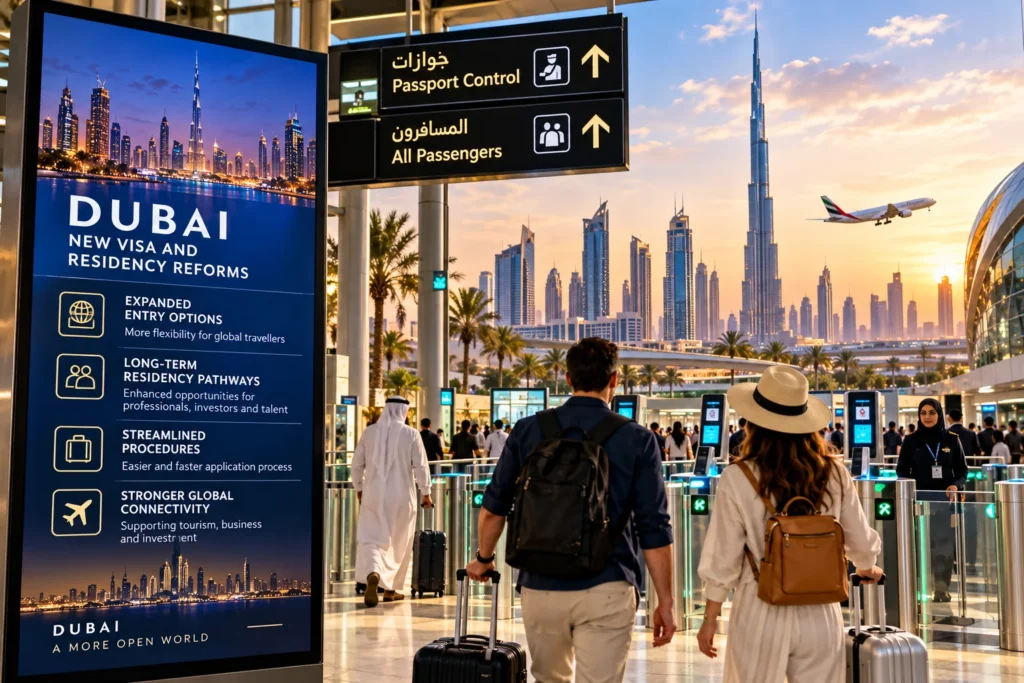
The decline in international visitor arrivals highlights intensifying market dynamics across the Gulf. Surrounding nations continue to allocate significant capital toward expanding luxury resorts, launching entertainment venues, and enlarging national airline networks. Regional destinations like Dubai maintain substantial commercial air traffic, while Saudi Arabia and Qatar continue to expand major infrastructure projects and host international events to attract global travelers.
This competitive environment places increased pressure on smaller island destinations. Bahrain’s tourism sector maintains a strong historical reliance on short-term weekend arrivals from neighboring GCC countries. When broader regional travel shifts occur, immediate changes are felt in local hotel occupancy, retail sales, and restaurant revenues.
To mitigate vulnerability to short-term regional shifts, public tourism strategies prioritize expanding long-haul visitor origin markets, specifically targeting travelers across European and Asian sectors.
Leveraging UNESCO Heritage Assets and Island Tourism
To differentiate its market positioning, the Kingdom of Bahrain continues to emphasize its distinct historical, cultural, and environmental identity. Unlike strictly modern urban landscapes, the island destination features several prominent UNESCO World Heritage sites that highlight its deep pearl-diving and trading history.
Key cultural and eco-tourism assets central to the national tourism framework include:
Qal’at al-Bahrain (Bahrain Fort): An ancient archaeological site and military fort detailing over 4,000 years of regional settlement and maritime history.
The Muharraq Pearling Path: A UNESCO-designated heritage trail celebrating the nation’s historical pearl-diving economy and traditional Gulf architecture.
Marine and Island Excursions: Offshore natural sites like Jarada Island, alongside dedicated marine sanctuaries offering diving, sailing, and eco-tours.
Historic Markets: Traditional commercial districts, including the Bab Al Bahrain souq, preserving regional craftsmanship, local culinary offerings, and authentic cultural hospitality.
By integrating luxury resort hospitality with historic preservation and marine recreation, national strategies aim to position the kingdom as an authentic, relaxed alternative to high-density regional commercial hubs.
Strategic Roadmap for the Tourism Authority and Industry Stakeholders
The Bahrain Tourism and Exhibitions Authority, working alongside government entities, continues to execute strategic measures to rebuild international visitor arrivals and support the national hospitality workforce. Strategic priorities concentrate on improving air connectivity by collaborating with national carrier Gulf Air and international transport partners to increase flight frequencies and introduce competitive fare structures.
Concurrently, public authorities are driving business tourism growth by expanding the schedule of corporate meetings, industry conventions, and international sporting events at venues like the Exhibition World Bahrain. Business travel helps sustain hotel occupancy and commercial activity throughout non-peak seasonal periods.
Investing in local workforce capabilities, upgrading digital booking infrastructures for small hospitality enterprises, and implementing data-driven marketing tools remain central to public tourism initiatives. These combined measures support local businesses, protect hospitality employment, and establish a resilient foundation for long-term sustainable growth.
For more travel news like this, keep reading Global Travel Wire