America’s deadliest flash floods have repeatedly transformed scenic destinations, highways and recreational corridors into disaster zones, leaving a century-long warning for travellers.
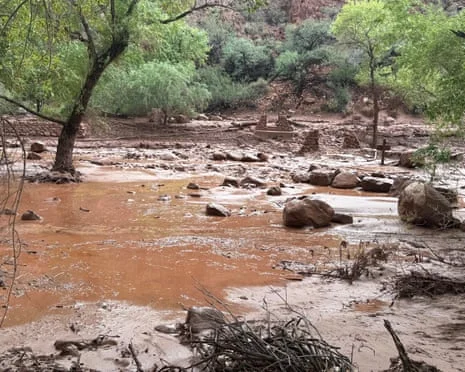
The danger has returned to national attention following significant flooding in Grand Canyon National Park on August 29, 2026. The disaster struck Bright Angel Canyon and the Phantom Ranch area, destroying footbridges, damaging utilities and forcing major visitor closures.
By the morning of August 30, authorities had evacuated 62 people from Phantom Ranch and the lower North Kaibab Trail. Additional evacuations were arranged from Phantom Ranch and Cottonwood Campground.
Recovery operations were also completed for a 46-year-old man near Crystal Rapids along the Colorado River. The National Park Service requested public assistance in accounting for approximately 15 people who may have been missing or unaccounted for following the flood.
The emergency connects one of America’s leading tourism destinations with a historic pattern of deadly floods that includes Rapid City, Big Thompson Canyon, Shadyside and Fort Collins.
Grand Canyon tourism suffers extensive disruption
The Grand Canyon flood began at approximately 2:30 p.m. as powerful runoff moved through the inner canyon. Nearly every footbridge spanning Bright Angel Creek was destroyed, eliminating essential crossings for hikers.
Phantom Ranch, Bright Angel Campground, its canteen and cabins, and the entire North Kaibab Trail were closed indefinitely. The Black and Silver bridges across the Colorado River also closed.
Metal structures and other debris entered the river, forcing a temporary halt to river traffic. Rangers contacted rafting parties already inside the canyon, while visitors with planned trips were advised to consult their operators.
Flooding also damaged the Transcanyon Waterline, which supplies water for park operations. The disruption left the South Rim with limited reserves and triggered Stage 4 water restrictions.
Overnight hotel accommodation inside the park was suspended from August 31. Only dry camping was permitted, while fires were prohibited. The South Rim remained accessible to day visitors, although everyone was asked to conserve water.
Rapid City flood remains a national benchmark
The Rapid City disaster of June 9, 1972, remains among the deadliest flash floods in United States history. Stationary thunderstorms delivered as much as 15 inches of rain near Nemo and Sheridan Lake.
An average of approximately 10 inches fell across 60 square miles. Rapid Creek reached an estimated peak flow of 50,600 cubic feet per second, while water rose as quickly as 3.5 feet in 15 minutes.
The flood killed 238 people and injured approximately 3,000. It destroyed 1,335 homes, about 5,000 vehicles and 15 of the 23 bridges crossing Rapid Creek.
Damage reached around $165 million in 1972 dollars. Beyond the devastating human toll, the destruction demonstrated how flooding can sever roads, overwhelm bridges and isolate visitors before conventional evacuation becomes possible.
Rapid City later developed a floodway and restricted vulnerable development along parts of Rapid Creek. Those measures show how disaster history can reshape urban planning and visitor safety.
Big Thompson Canyon transformed flood awareness
Only four years later, the Big Thompson Canyon flood struck a major recreational and tourism corridor in Colorado.
A nearly stationary storm delivered approximately 12 to 14 inches of rain over parts of the watershed on July 31, 1976. The flood crest travelled about 7.6 miles between Drake and the canyon mouth in roughly 30 minutes.
Water reached approximately 19 feet in places. The flood killed 143 people, injured 150 and caused around $39 million in damage.
United States Highway 34, then the only road leading out of the canyon, was washed away. Many victims were campers positioned near the river, underlining the danger of staying beside waterways during severe weather.
Flash flooding threatens cities and wilderness
The 1990 Shadyside flood in Ohio showed that deadly flash flooding is not confined to western canyons. Around four inches of rain fell in less than two hours, generating a destructive wall of water that killed 26 people.
Fort Collins experienced another costly disaster in 1997. That flood killed five people and caused approximately $190 million in damage.
These events reveal how the tourism impact extends beyond casualties. Floods can damage accommodation, attractions, utilities, bridges and access roads. Even after waters recede, disrupted infrastructure may keep businesses closed and visitors away.
National parks face additional complications because popular trails often cross washes, streams and narrow canyon floors. Emergency access may depend on helicopters, hiking routes or river transport rather than roads.
Remote rainfall can threaten unsuspecting travellers
Grand Canyon authorities warn that flash floods can arrive even when no rain is falling at a visitor’s location. Thunderstorms occurring up to 25 miles away can send runoff through narrow canyons and normally dry streambeds.
The danger becomes particularly acute between July and mid-September, when severe thunderstorms can develop rapidly across northern Arizona.
Travellers should identify higher ground and potential escape routes before entering canyon environments. They should never camp in a dry wash or ignore a closure because skies appear clear.
Vehicles create another major risk. Even shallow moving water can destabilise a person or vehicle, while road surfaces may collapse beneath apparently passable floodwater.
History delivers one continuing travel warning
Technology, forecasting and emergency communication have advanced considerably since the Rapid City disaster. However, steep terrain, narrow valleys and intense rainfall still create physical hazards that warnings cannot remove.
Tourism operators must communicate closures promptly, track visitors and maintain emergency procedures. Hotels, guides and transport providers should also prepare alternatives when weather interrupts planned journeys.
For travellers, flexibility can be lifesaving. Weather alerts and evacuation instructions must take priority over reservations, fixed itineraries or the desire to complete a trail.
From Rapid City and Big Thompson Canyon to the latest Grand Canyon emergency, America’s deadliest flash floods deliver the same lesson: spectacular landscapes can become dangerous within minutes, and responsible travel begins with respecting official warnings.
For more travel news like this, keep reading Global Travel Wire