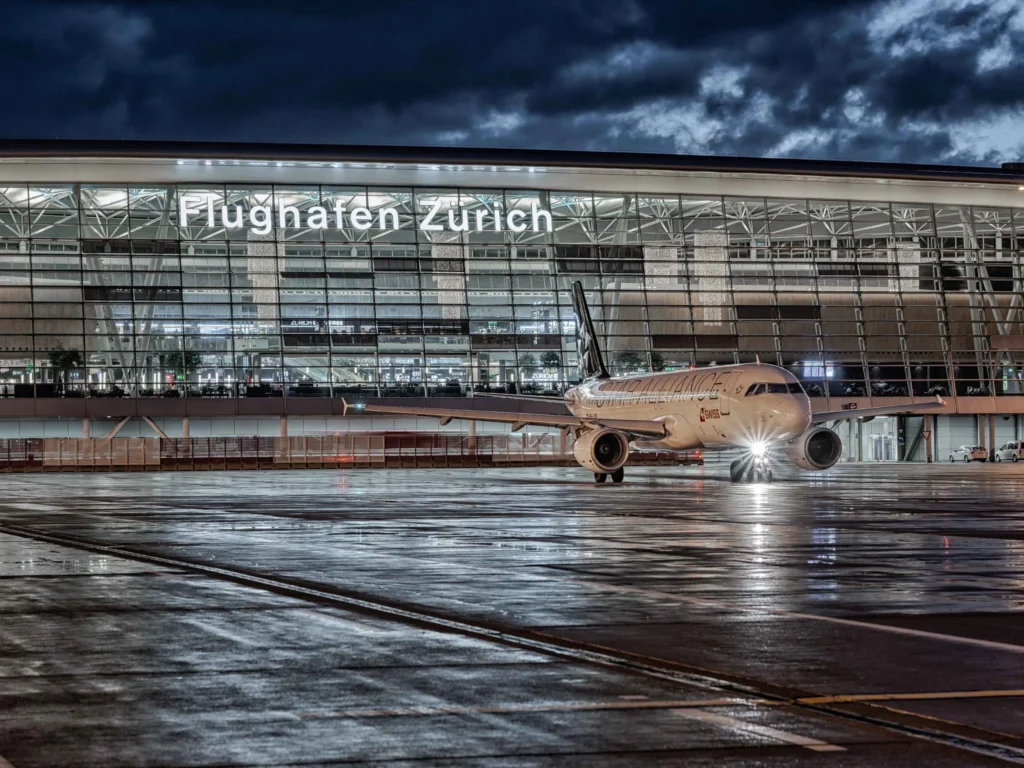
Severe thunderstorms across Switzerland have disrupted flight operations at Zurich Airport, leading to 27 cancellations and delays of up to three hours.
The cancellations affected approximately 3,100 SWISS passengers travelling to or from Zurich on August 28, 2026. The airline warned that further schedule changes remained possible as powerful storm cells repeatedly crossed Switzerland and the Zurich region.
Lightning near the airport forced temporary suspensions of ground handling, preventing aircraft from completing essential turnaround work. Storms also reduced the number of take-offs and landings that could operate safely.
The resulting disruption affected local departures, arriving passengers and international connections through Switzerland’s largest aviation hub. Zurich connects European cities with long-haul destinations across Asia, Africa, the Middle East and North America.
SWISS teams worked with Zurich Airport and Swiss air navigation provider Skyguide to stabilise operations. However, the airline expected recovery work to continue into the night because delays created by handling stops can remain in the schedule after storms move away.
Lightning stops essential apron activity
Zurich Airport applies a handling stop when lightning activity creates unacceptable risks for employees working on the apron.
During this restriction, ground workers must leave exposed areas and maintain a safe distance from aircraft and metal structures. The measure protects teams responsible for baggage, cargo, refuelling and aircraft preparation.
Aircraft cannot be loaded, unloaded or refuelled during a handling stop. Cleaning, catering and other preparation activities may also face interruption, preventing flights from departing on schedule.
A pause may last only a limited time, yet its effects can continue for several hours. Aircraft rely on tightly coordinated turnaround processes, and one incomplete task can delay every activity that follows.
An aircraft departing late from Zurich may then reach another airport behind schedule. This can affect its next service, assigned crew, available gate and passengers waiting elsewhere in the network.
Thunderstorms reduce runway capacity
Severe weather creates challenges beyond the apron. Thunderstorm cells around an airport can restrict available arrival and departure paths, reducing the number of aircraft movements that air traffic controllers can safely manage.
Pilots may need to avoid hazardous cells, while arriving aircraft can enter holding patterns or divert if conditions deteriorate. Departures may remain at their gates until a safe route becomes available.
Lightning, intense rainfall and rapidly changing winds can further complicate operations. Airport authorities and airlines must therefore prioritise safety even when restrictions produce widespread delays.
At a major hub such as Zurich, reduced runway capacity quickly affects connecting traffic. Passengers arriving late may miss onward services, while airlines must decide whether another flight can wait without causing greater network disruption.
Thousands of passengers face changed journeys
The 27 cancellations affected around 3,100 SWISS customers. Other passengers experienced delays reaching three hours, creating uncertainty for business trips, holidays and international connections.
Travellers should check their flight status before leaving for Zurich Airport. They should also monitor airline notifications because departure gates and times may change as aircraft and crews are reassigned.
Passengers travelling on connecting itineraries should examine the complete journey rather than only the first flight. A delayed departure may leave insufficient time to reach the next gate, particularly when passport control or terminal transfers are required.
Those affected by cancellations should use the rebooking options provided by their airline. SWISS said eligible passengers could submit relevant receipts to its customer service team for applicable expense reimbursement.
Travellers should retain receipts for accommodation, meals and necessary transport purchased during the disruption. However, eligibility depends on the passenger’s circumstances and the airline’s applicable obligations.
Tourism and business travel feel wider effects
Zurich Airport plays an essential role in Switzerland’s visitor economy. It serves tourists travelling to Zurich, Lucerne, the Alps and other destinations while supporting meetings, events and international business.
Flight disruption can therefore affect hotels, rail connections, tour departures and airport transfers. A late arrival may cause visitors to miss a booked train or an organised excursion, while cancellations can shorten stays or delay cruise and group-tour connections elsewhere in Europe.
The effects also extend beyond Switzerland. Passengers connecting through Zurich may be travelling between two foreign countries, allowing a local storm to disrupt journeys across several continents.
Airlines must balance passenger recovery with operational requirements. Aircraft, crews and available airport slots must be placed in the correct locations before a normal schedule can resume.
Weather safety takes priority over punctuality
Modern airports are designed to manage rain, wind and other routine weather conditions. Severe thunderstorms are different because lightning directly threatens people working outdoors around aircraft, fuel and exposed equipment.
Handling stops are therefore preventive safety measures rather than indications that airport systems have failed. Restarting operations before conditions are safe could expose workers and passengers to unacceptable danger.
Switzerland’s official weather service provides forecasts, radar information and natural-hazard warnings that can help travellers monitor changing conditions. However, local thunderstorms can develop quickly, and precise operational effects may become clear only shortly before departure.
Passengers should keep essential medication, chargers and travel documents in hand baggage when unstable weather is expected. Flexible hotel, rail and transfer arrangements can also reduce the financial impact of an unexpected delay.
The Zurich Airport thunderstorms demonstrate how a short period of dangerous weather can influence an entire aviation network. With 27 flights cancelled, 3,100 passengers affected and other services delayed by up to three hours, the disruption reinforces why safety restrictions must take precedence over fixed schedules.
For more travel news like this, keep reading Global Travel Wire