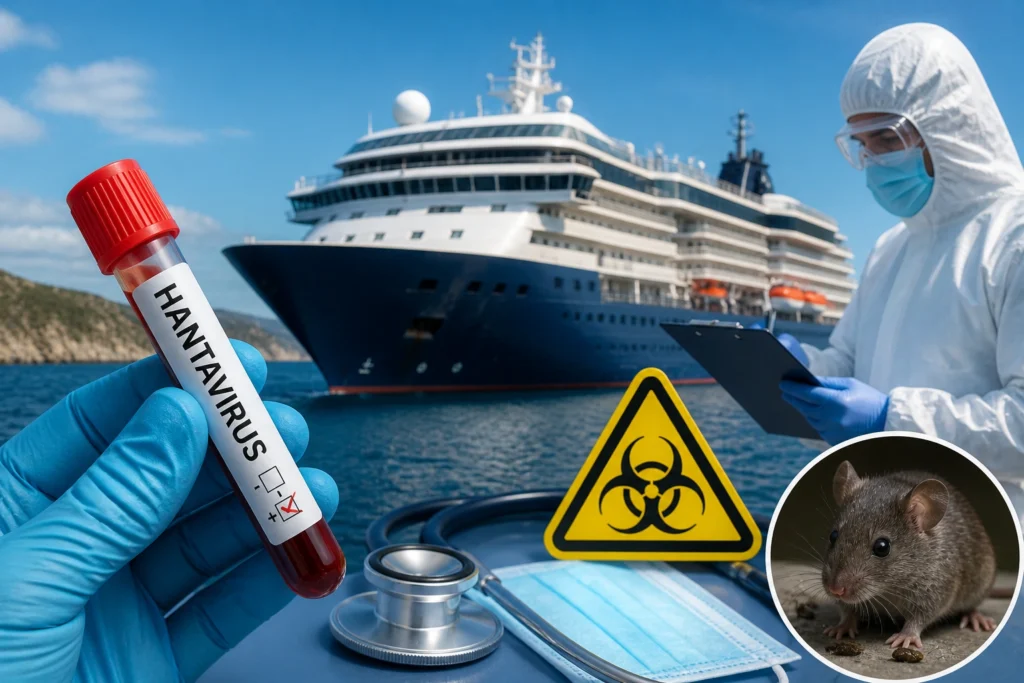
A growing health alert linked to a suspected hantavirus case aboard the MV Hondius has placed global attention on cruise safety, as the vessel’s journey between Argentina and Cape Verde highlights the challenges of managing infectious diseases in maritime tourism. The situation, confirmed and monitored by the World Health Organization, involves multiple suspected infections and reported fatalities, raising concerns across the international travel industry.
While only one case has been laboratory confirmed, several additional suspected infections remain under investigation, underscoring the complexity of disease containment aboard cruise ships operating across remote transoceanic routes.
Rare Virus Highlights Cruise Industry Vulnerabilities
Hantavirus, a zoonotic disease primarily transmitted through exposure to infected rodent droppings or urine, is considered rare but potentially severe. Health authorities note that the illness can develop into Hantavirus Pulmonary Syndrome, a condition with a high mortality rate that requires urgent medical attention.
Although human-to-human transmission is uncommon, the confined environment of a cruise ship creates unique challenges for monitoring and controlling exposure. Expedition voyages, which often pass through diverse ecological zones, may increase the likelihood of encountering environmental risk factors.
Maritime Routes and Biosecurity Risks
The MV Hondius incident underscores the importance of biosecurity measures in modern cruise operations. Ships traveling long distances between continents—such as routes linking South America and Africa—operate in varying ecosystems where wildlife exposure can differ significantly.
For cruise operators, the event reinforces the need for strict sanitation protocols, pest control systems, and onboard health surveillance. Even with high standards in place, rare incidents can emerge, requiring rapid response and coordination with global health authorities.
Global Data Shows Low Incidence but High Impact
Despite its rarity, hantavirus remains a significant concern due to its severity. Global health data indicates tens of thousands of cases annually worldwide, with varying regional distribution. In contrast, reported cases in the Americas remain relatively low, making outbreaks in international travel settings particularly notable.
This combination of low incidence and high mortality risk places hantavirus among the diseases that demand vigilant monitoring, especially in environments where early detection may be challenging.
Cruise Tourism Faces Renewed Safety Focus
The global cruise industry, which carries millions of passengers each year, operates within tightly managed health and safety frameworks. However, incidents like the MV Hondius outbreak highlight how even rare health events can disrupt operations and impact traveler confidence.
Cruise ships function as self-contained ecosystems, where shared spaces and extended voyages increase the importance of rapid identification and containment of health risks. Operators are likely to intensify investments in medical preparedness, onboard diagnostics, and emergency response systems as a result of such events.
Challenges of Medical Response at Sea
Managing serious illnesses like hantavirus onboard presents logistical challenges. While cruise ships are equipped with medical facilities, they may not have the advanced capabilities required for severe cases, necessitating emergency evacuations or diversions to nearby ports.
Supportive care remains the primary treatment approach, often involving oxygen therapy and intensive monitoring. In critical situations, patients must be transferred to specialized medical facilities, which can delay treatment depending on the ship’s location.
Key Travel Safety Insights for Passengers
The incident provides important lessons for travelers, particularly those embarking on expedition cruises. Maintaining personal hygiene, avoiding exposure to potentially contaminated environments, and reporting symptoms early are essential steps in reducing risk.
Travelers are also encouraged to stay informed about region-specific health risks and participate in pre-departure health briefings offered by cruise operators. These measures can significantly enhance awareness and preparedness during voyages.
Industry Response and Future Preparedness
As investigations continue, global health agencies and cruise operators are working closely to identify the source of the outbreak and prevent further spread. Enhanced monitoring, laboratory testing, and contact tracing are underway to ensure comprehensive containment.
The incident serves as a reminder that as cruise tourism expands into more remote and adventurous routes, the integration of public health strategies into travel operations becomes increasingly critical.
A Turning Point for Travel Health Awareness
The hantavirus alert aboard the MV Hondius represents a pivotal moment for the cruise industry and global tourism sector. While such outbreaks remain rare, their impact highlights the importance of preparedness, transparency, and collaboration between health authorities and travel providers.
For travelers, the message is clear: modern travel offers extraordinary experiences, but awareness and proactive health measures are essential components of safe and responsible journeys in an interconnected world.
For more travel news like this, keep reading Global Travel Wire