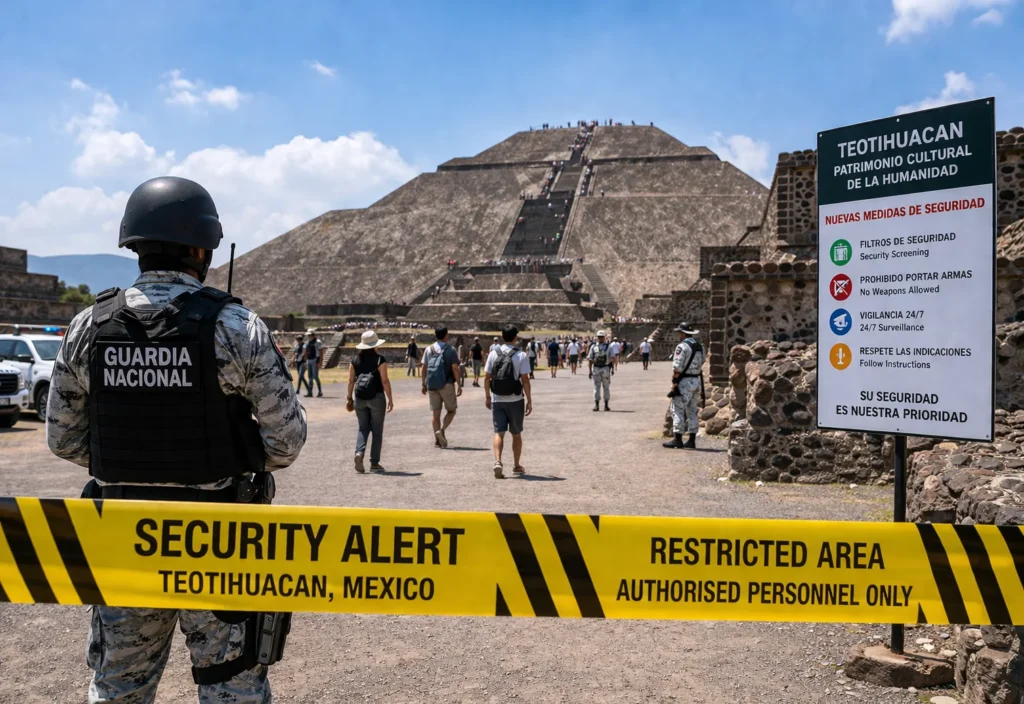
A major security overhaul is underway across Mexico following a tragic incident at one of its most iconic heritage sites, prompting authorities to introduce stricter safety measures ahead of the 2026 global travel surge. The घटना at Teotihuacan has led to immediate action by the government to reinforce security at tourist destinations nationwide.
According to official statements, the incident occurred at the Pyramid of the Moon within the Teotihuacan complex, resulting in casualties and injuries that shocked both domestic and international tourism communities. Authorities have since confirmed that the situation was contained, and the site has reopened with significantly enhanced security protocols.
The Mexican government has emphasized that visitor safety remains a top priority, particularly as the country prepares to co-host the FIFA World Cup 2026. With millions of international visitors expected, officials are accelerating security upgrades across key tourist hubs and host cities, including Mexico City, Guadalajara, and Monterrey.
President Claudia Sheinbaum has directed authorities to implement comprehensive security reforms across major cultural and tourist locations. These measures include the installation of advanced screening systems at entry points, similar to airport security procedures, to prevent unauthorized items from entering high-traffic sites.
Tourism officials highlight that Mexico’s archaeological landmarks are among the most visited in the world, attracting millions of travelers each year. Ensuring their safety is essential not only for visitor confidence but also for preserving the country’s global tourism reputation. Enhanced screening systems, surveillance networks, and increased security personnel are now being deployed to address vulnerabilities identified during the incident.
The response also includes expanded use of high-definition surveillance systems across heritage zones. Previously reliant on physical patrols, many sites are now being upgraded with modern monitoring technology to provide real-time oversight and rapid response capabilities. This shift reflects a broader move toward integrating technology into tourism security management.
The Mexican National Guard has been assigned a greater role in protecting key tourist destinations. Permanent security presence is being established at major sites, ensuring continuous monitoring and quick intervention if needed. This approach aligns with international best practices for safeguarding high-profile tourist locations.
In preparation for the FIFA World Cup, authorities are also focusing on securing transportation networks. Airports, highways, and public transit systems connecting major cities and stadiums are undergoing enhanced monitoring. Special security zones are being planned around stadiums and fan areas to ensure safe movement for visitors attending matches.
Tourism authorities are working closely with international partners and event organizers to align security standards with global expectations. This includes coordination with event security teams to create controlled environments where large crowds can gather safely. The goal is to provide a seamless and secure experience for both sports fans and general tourists.
Despite the incident, officials maintain that Mexico remains a welcoming destination for international travelers. The government has described the घटना as isolated but acknowledges the need for stronger preventive measures. By acting swiftly, authorities aim to restore confidence and demonstrate their commitment to visitor safety.
Travel advisories now emphasize awareness and preparedness for visitors. Tourists are encouraged to follow official guidelines, stay within designated tourist areas, and remain informed about local conditions. Enhanced security checks at popular attractions may result in longer entry times, but authorities stress that these measures are essential for ensuring safety.
The Teotihuacan site itself has reopened with new protocols in place. Visitors can expect increased screening at entry points, visible security presence, and improved crowd management systems. These changes are part of a nationwide effort to standardize safety procedures across all major attractions.
The timing of the incident has intensified global attention, given the upcoming World Cup. However, tourism officials view this as an opportunity to strengthen infrastructure and showcase Mexico’s ability to host large-scale international events securely. Investments in security, technology, and coordination are expected to benefit the tourism sector in the long term.
Mexico’s tourism industry plays a vital role in its economy, contributing significantly to employment and development. Maintaining a safe environment for visitors is therefore critical to sustaining growth. Authorities are committed to balancing accessibility with security, ensuring that travelers can enjoy cultural experiences without चिंता.
For international visitors, the enhanced measures provide reassurance that safety is being prioritized. From archaeological sites to urban attractions, the focus is on creating a secure environment that supports both पर्यटन and cultural preservation.
Looking ahead, Mexico aims to set a benchmark for tourism security by integrating modern technology with traditional hospitality. The lessons learned from this incident are expected to influence future policies and strengthen the country’s resilience in managing पर्यटन risks.
As preparations for the FIFA World Cup continue, Mexico is positioning itself as a destination that combines rich heritage with robust safety systems. By reinforcing security across its पर्यटन landscape, the country seeks to ensure that visitors can explore its iconic sites with confidence and peace of mind.