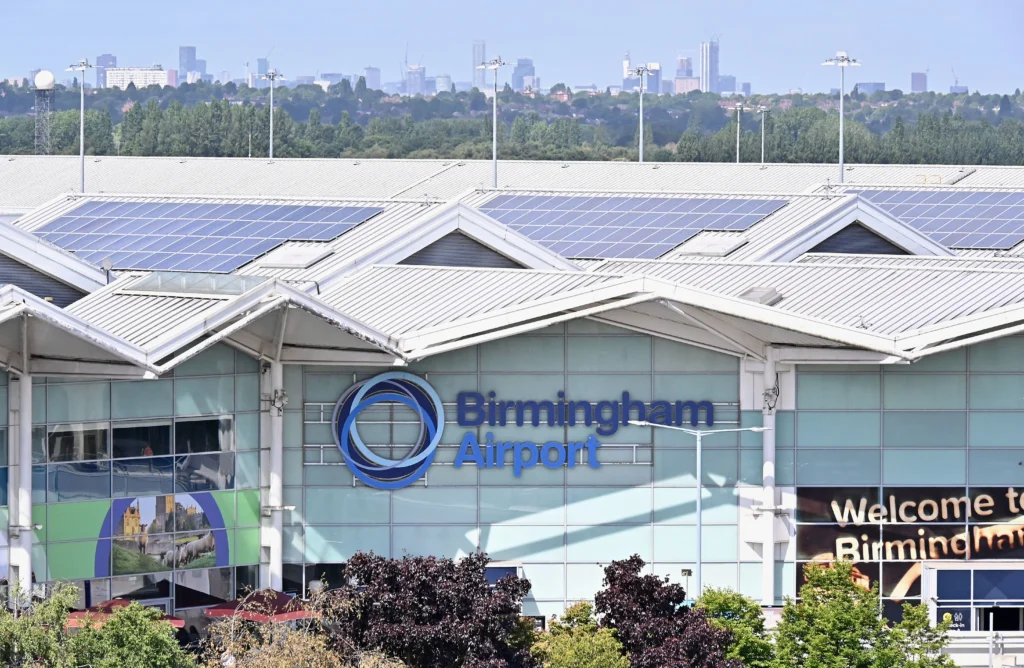
Birmingham Airport has recorded its busiest May in history, handling more than 1.3 million passengers as the United Kingdom’s aviation network shows signs of a sharper regional shift during the busy summer travel build-up.
The airport reported 1,303,831 passengers in May 2026, including 627,191 arrivals and 676,640 departures. The figures confirm a major milestone for the Midlands gateway and underline growing demand for regional airports as travellers seek convenient, reliable alternatives to congested aviation hubs.
The record month comes as UK aviation enters another high-pressure summer season. London airports continue to carry the country’s largest volumes, but operational challenges, full schedules, airspace pressures, and cancellation concerns have made reliability a bigger factor in how passengers choose departure points.
For Birmingham, that shift is creating a stronger role in national and international travel. The airport is no longer serving only its immediate regional catchment. Instead, it is increasingly positioned as a practical departure point for leisure travellers, families, business passengers, and international visitors moving across the Midlands and beyond.
May Passenger Record Strengthens Regional Aviation
Birmingham Airport’s May performance reflects a broader recovery and expansion in UK aviation demand. The Civil Aviation Authority has reported that UK airports handled more than 300 million passenger journeys in 2025, the busiest annual level on record. That national rebound has increased pressure on major airports while also giving regional gateways more room to capture demand.
At Birmingham, the latest figures show strong outbound travel demand at the beginning of the peak holiday period. Departures outnumbered arrivals in May, suggesting high appetite for overseas leisure travel ahead of the full summer season.
The airport’s leading routes also reveal the travel pattern. Dublin was the top destination, followed by Mallorca, Amsterdam, Alicante, Malaga, Antalya, Faro, Tenerife, Paris, and Barcelona. These routes point to a powerful mix of city breaks, beach holidays, visiting friends and relatives, and short-haul European tourism.
That route profile is important for airlines and tour operators. When passenger volumes rise across a broad mix of sun, city, and hub destinations, airlines can justify stronger frequencies, better seasonal capacity, and wider route development.
London Disruption Concerns Push Reliability Higher
While London remains the dominant aviation market in the UK, passenger behaviour is becoming more flexible. Travellers increasingly compare not only fares and destinations but also airport experience, cancellation risk, journey time to terminal, and confidence in same-day operations.
The Civil Aviation Authority publishes monthly punctuality and cancellation data for selected UK airports, including major London airports and Birmingham. Its reporting framework defines cancelled flights and tracks disruption as part of on-time performance. This official visibility has made schedule reliability a more prominent issue for passengers planning holidays, business trips, and connecting journeys.
London airports continue to handle intense operational demand, with Heathrow alone carrying more than 7.1 million passengers in May 2026 despite a slight year-on-year fall. Heathrow also recorded its busiest May day, with 262,000 passengers on 22 May. However, that level of activity shows how tightly packed the capital’s airport system remains during peak periods.
For some travellers, regional departures can reduce stress. Birmingham offers strong road and rail access, a central location, and a growing route network. That combination is particularly attractive to passengers who want to avoid longer surface journeys into London, crowded terminals, or disruption-sensitive itineraries.
Airlines, Hotels and Tourism Businesses Benefit
The growth at Birmingham Airport carries direct benefits for the travel economy. Higher passenger throughput supports airlines, airport retail, hospitality operators, ground transport, hotels, and tourism businesses across the Midlands.
More departures also mean more pre-flight demand for airport hotels, parking, restaurants, lounges, and transport links. Meanwhile, inbound arrivals support city stays, regional attractions, business events, cultural tourism, and visitor spending in Birmingham and surrounding destinations.
The impact extends beyond the terminal. Stronger airport performance can make a region more attractive for conferences, sporting events, exhibitions, and international investment. With Birmingham preparing for major event activity, the airport’s expanding passenger base strengthens the city’s ability to welcome visitors at scale.
Airlines will also watch the May numbers closely. Sustained growth can encourage route expansion, larger aircraft deployment, and greater frequency on high-demand European services. Dublin, Mallorca, Amsterdam, Alicante, and Malaga are already core performers, but continued demand may open the door for further leisure and business connectivity.
Capacity Pressure Becomes the Next Challenge
Birmingham Airport’s success also brings operational pressure. Rising passenger volumes place greater demand on check-in, security screening, baggage systems, boarding gates, immigration, road access, and customer service teams.
The airport has already signalled long-term ambitions to handle higher passenger volumes in the years ahead. Its strategic planning has identified future capacity growth, terminal improvements, and investment in passenger experience as central priorities.
That planning will become more important if regional airport demand continues to rise. Travellers shifting away from London will expect Birmingham to deliver reliability, speed, comfort, and clear communication throughout the airport journey.
Sustainability is also part of the airport’s growth story. Birmingham Airport has highlighted progress on carbon accreditation and its ambition to become a net zero carbon gateway by 2033. As passenger numbers increase, environmental performance will remain a key issue for regulators, airlines, travellers, and local communities.
Birmingham Gains Strategic Aviation Momentum
Birmingham Airport’s record May is more than a monthly traffic milestone. It signals a changing UK aviation landscape in which regional airports are gaining strategic importance as passengers rethink how and where they travel.
The rise in May traffic shows that traveller demand remains strong, but it also shows that convenience and reliability are now central to airport choice. For many passengers, avoiding disruption can matter as much as finding the closest departure point.
If London airport pressure continues through the summer, Birmingham could remain one of the strongest beneficiaries of the regional travel shift. Its route network, central location, and record passenger momentum place it in a stronger position within UK aviation.
For travellers, the message is clear: Britain’s regional airports are becoming more important gateways to Europe and beyond. For Birmingham, May 2026 may stand as a turning point in its rise as one of the United Kingdom’s most influential travel hubs.
For more travel news like this, keep reading Global Travel Wire