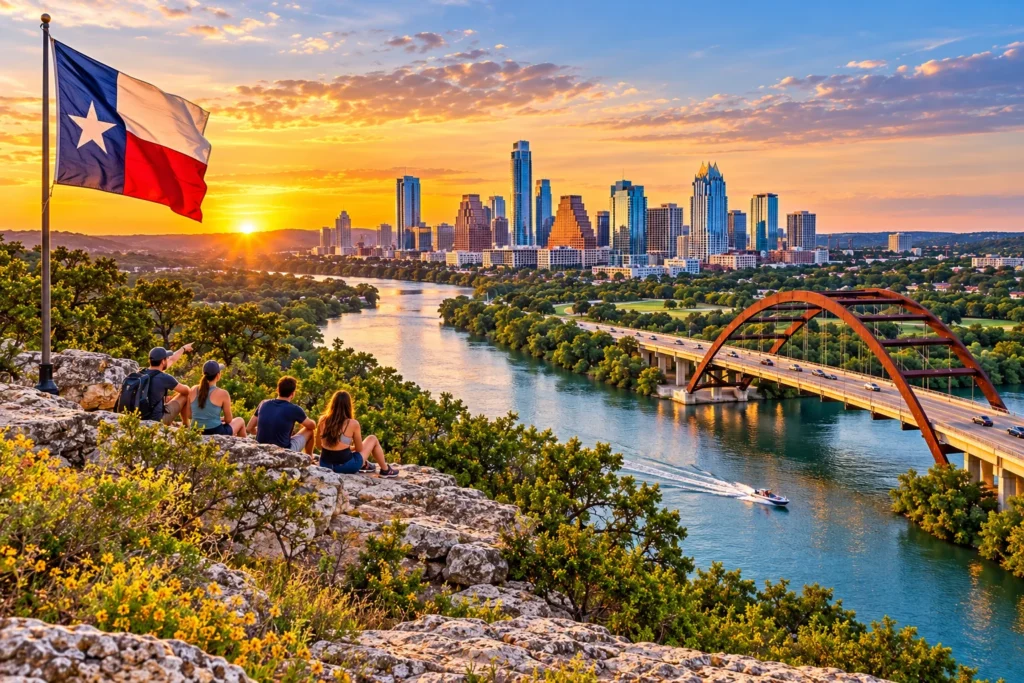
Central Texas is witnessing one of the most remarkable demographic and economic transformations in the United States. Today, the Dallas-Fort Worth metroplex stands at approximately 8.5 million residents. In comparison, the combined Austin and San Antonio metropolitan area currently encompasses nearly 5.5 million people—a figure that matches where Dallas-Fort Worth stood at the turn of the millennium. Official demographic forecasts indicate that by 2050, this Central Texas region will expand to at least 7.5 million residents, rapidly closing the gap with Texas’s largest urban centers.
This population explosion is reshaping the geographical and cultural dynamic between Austin and San Antonio. Once viewed as distinct metropolitan destinations separated by open country, the two regional hubs are rapidly converging into a unified mega-region. State transportation authorities, regional planning councils, and municipal leaders are executing concerted strategies to build the infrastructure, intercity transit connections, and tourism initiatives required to support this unified corridor.
Regional Collaboration Strengthens the Texas Hill Country Hospitality Sector
At the core of this transformation is a shared interest in strengthening regional tourism and leisure travel. Tourism accounts for tens of billions of dollars in annual economic impact across Travis, Hays, Comal, Guadalupe, and Bexar counties. From live music venues and iconic state landmarks to spring-fed rivers and historic Hill Country downtowns, the corridor attracts tens of millions of domestic and international visitors each year.
Recognizing that regional travelers increasingly explore destinations across municipal lines, regional tourism boards and municipal leaders have established collaborative alliances. These public-private partnerships focus on promoting multi-city travel itineraries, coordinate seasonal event calendars, and position the corridor as an interconnected holiday hub. When major conventions or sports tournaments fill hotel capacity in one city, surrounding communities along the Interstate 35 axis capture the secondary economic benefits, ensuring overall visitor retention across the region.
Alternative Transportation Routes Target Interstate 35 Congestion
Sustaining long-term visitor movement requires overcoming significant mobility challenges, particularly along Interstate 35. As one of the busiest highway corridors in North America, heavy traffic often impacts regional leisure travel and weekend tourism.
To address these challenges, state transportation departments and regional mobility authorities have initiated long-range infrastructure plans targeting 2050 development goals. Multiple alternative travel routes and roadway expansion projects are currently on official drawing boards. Strategies include enhancing regional bypass routes, expanding multi-lane state highways, and upgrading arterial corridors to redirect freight traffic away from primary tourist corridors.
Simultaneously, regional transit planners are re-evaluating high-capacity passenger options. Joint mobility studies conducted by regional councils of governments continue to examine passenger rail frameworks, express bus corridors, and multimodal transit centers. Providing alternative transportation options will allow tourists, business travelers, and suburban commuters to navigate between Austin, San Marcos, New Braunfels, and San Antonio safely and efficiently without relying solely on highway transit.
Emerging Mid-Corridor Hubs Transform into Primary Travel Destinations
As the space between major urban cores fills in, intermediate municipalities along the highway corridor are developing into primary travel destinations rather than transient stopovers. Communities such as San Marcos, Buda, Kyle, and New Braunfels are investing heavily in local tourism infrastructure, riverfront parks, historic downtown enhancements, and convention facilities.
Official tourism statistics highlight a steady increase in multi-night stays within these mid-corridor destinations. Leisure travelers frequently utilize these communities as central bases for exploring the broader Texas Hill Country region. By expanding local lodging inventories, boutique hotels, and cultural facilities, intermediate municipalities ensure that tourism spending is distributed evenly throughout the entire regional economy.
Strategic Planning Ensures Long-Term Cultural and Environmental Preservation
Public officials and tourism administrators emphasize that managing high-density growth requires balancing economic development with environmental stewardship. Preserving natural resources—including fragile spring systems, river basins, and rural landscapes—remains a top priority for state and local park authorities.
Conservation programs funded through municipal and state initiatives aim to protect sensitive ecological areas while expanding outdoor recreation access for residents and tourists alike. By integrating environmental preservation into regional master plans, local leaders ensure that the natural features drawing millions of visitors to Central Texas remain intact as the urban landscape grows.
Through proactive infrastructure investments, inter-agency alliances, and unified destination marketing, Central Texas is preparing for a future as a world-class travel destination. The coordinated development of the highway corridor ensures that as the population grows toward 2050, the region will offer seamless mobility, vibrant cultural attractions, and sustained economic growth for generations to come.
For more travel news like this, keep reading Global Travel Wire