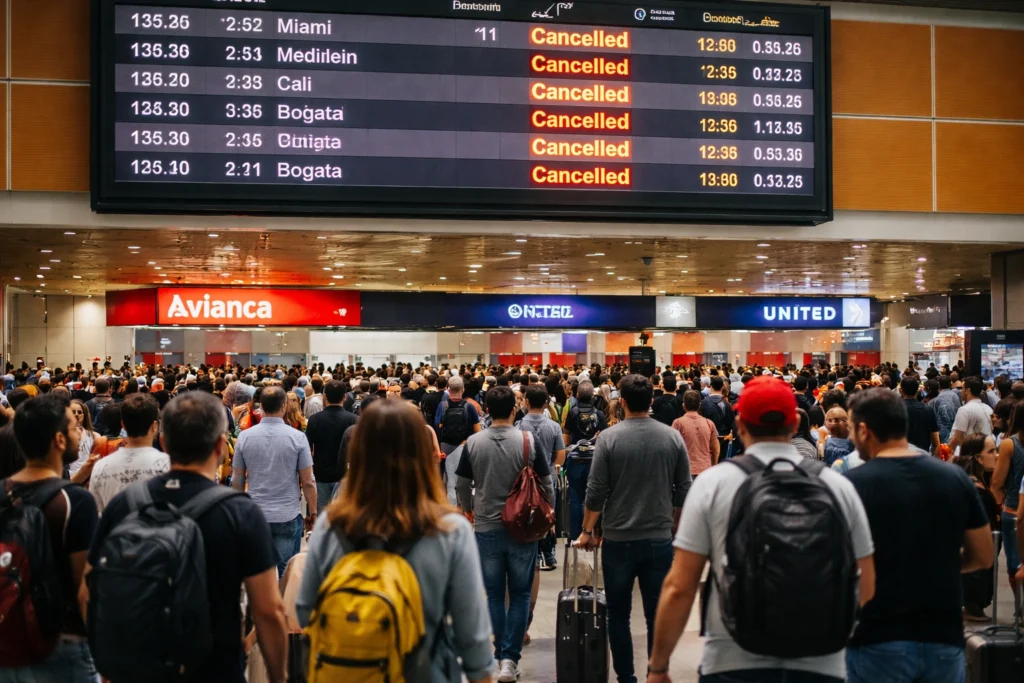
A sudden wave of six flight cancellations across Colombia has disrupted passenger travel through Bogotá, Cali, Cartagena and Barranquilla, affecting both domestic and international routes including Miami, Medellín, Bogotá and Cali. The schedule changes involve Avianca, United Airlines and additional carriers, creating fresh pressure on one of South America’s most interconnected aviation networks.
The disruptions were recorded at four of the country’s key airports: El Dorado International Airport in Bogotá, Alfonso Bonilla Aragón International Airport in Cali, Rafael Núñez International Airport in Cartagena and Ernesto Cortissoz International Airport in Barranquilla. While the number of cancellations was limited, the impact was amplified because several affected sectors are among Colombia’s highest-demand travel corridors.
Bogotá Hub Sees Domestic and International Cuts
Bogotá’s El Dorado International Airport, the country’s largest gateway and a major transfer hub for South America, was hit by two cancelled departures. One service to Cali was removed from the early morning schedule, while a United Airlines flight to Miami was also cancelled.
The Bogotá–Miami route is especially important for leisure travelers, visiting family traffic and business passengers connecting between Colombia and the United States. Any interruption on this sector can affect hotel reservations, cruise connections, onward flights and broader travel plans across the Americas.
For domestic travelers, Bogotá also functions as the central link for many one-stop itineraries. When departures are cancelled at El Dorado, passengers across the wider network can quickly feel the consequences through missed connections and reduced rebooking options.
Cali-Bogotá Corridor Under Pressure
Cali recorded two cancellations, both affecting flights to Bogotá. The affected services reduced capacity on one of Colombia’s busiest domestic business and tourism routes.
The Bogotá–Cali air bridge supports corporate travel, weekend breaks, family visits and government movement. Frequent schedules usually give passengers flexibility, but simultaneous cancellations can tighten seat availability and push travelers onto later departures.
For the hospitality sector, even short-term air service disruptions can influence arrival patterns, airport transfers and same-day bookings, particularly in cities that depend on strong domestic mobility.
Cartagena Tourism Connectivity Interrupted
Cartagena, one of Colombia’s leading leisure destinations, saw a cancellation on the route to Medellín. The affected flight linked two major tourism markets: the Caribbean coastal city known for beaches and heritage attractions, and Medellín, one of the country’s strongest urban visitor destinations.
This route is important for both domestic holidaymakers and international visitors combining multiple Colombian cities in one itinerary. Reduced frequency can mean longer waits, changed schedules and altered hotel check-in plans for travelers moving between destinations.
Tourism operators in Cartagena closely monitor domestic aviation reliability because smooth air access remains essential for sustaining visitor demand throughout the year.
Barranquilla Faces Early Morning Disruption
Barranquilla also recorded a cancellation on an early morning flight to Bogotá, affecting passengers heading to the capital and those connecting onward to other Colombian or international destinations.
Early departures are often favored by business travelers and same-day return passengers. When these flights are removed, travelers may face compressed schedules, additional airport wait times or overnight changes.
As Colombia’s northern coastal economy continues expanding, dependable air links from Barranquilla remain important for trade, conferences, tourism and regional development.
What the Latest Cancellations Show
The latest disruptions reveal several clear trends. First, Bogotá’s role as a national hub means even a small number of cancellations can have a wider ripple effect. Second, high-frequency domestic corridors such as Bogotá–Cali remain especially sensitive because they carry large volumes of daily travelers. Third, international services like Miami are strategically significant because they connect Colombia to a broader long-haul network.
Although airlines routinely adjust schedules for operational reasons, simultaneous disruptions across multiple airports highlight how closely linked Colombia’s aviation system has become.
Advice for Travelers
Passengers traveling through Colombia in the coming days should monitor flight status closely, confirm departure times before heading to the airport and allow additional flexibility for connections. Travelers with international itineraries may benefit from arriving earlier and checking baggage or boarding requirements in advance.
Those using Bogotá as a transfer point should pay special attention to updates, as schedule changes there can affect multiple onward routes.
Outlook for Colombia Tourism and Aviation
Colombia continues to grow as a destination for city breaks, beach holidays, culture tourism and business travel. Strong domestic aviation links are central to that growth, allowing visitors to move quickly between destinations such as Bogotá, Cali, Cartagena, Medellín and Barranquilla.
While the current wave of six cancellations is manageable compared with larger disruptions, it underlines how vital schedule reliability is for airlines, airports, hotels and travelers alike. As carriers stabilize operations, passengers will be watching for smoother service across the country’s busiest routes.
For more travel news like this, keep reading Global Travel Wire