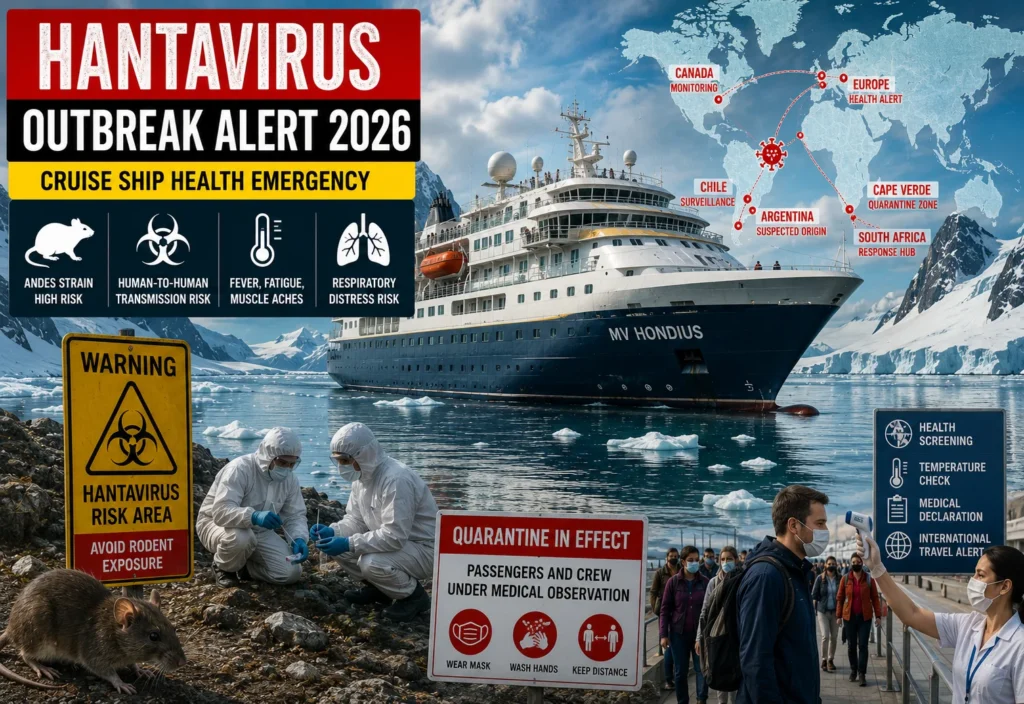
The global expedition cruise industry is facing heightened health scrutiny following a hantavirus outbreak linked to an Antarctic expedition vessel operating in South Atlantic waters. International health authorities, tourism agencies, airport operators, and maritime regulators have intensified monitoring procedures after confirmed infections and fatalities connected to passengers traveling through Patagonia and Antarctic cruise routes.
Governments across Europe, North America, Africa, and South America have implemented emergency public health protocols as concerns grow regarding the spread of the Andes strain of hantavirus, a rare variant associated with parts of Argentina and Chile.
The outbreak has placed adventure tourism and expedition cruise operations under increased international attention, particularly routes departing from Patagonia and connecting to Antarctica. Health officials are working closely with cruise operators, border authorities, and aviation agencies to strengthen passenger monitoring, biosecurity screening, and emergency medical coordination.
Ports, airports, and cruise terminals serving expedition tourism routes are now operating under enhanced health surveillance measures as governments attempt to prevent further international spread.
Andes Strain Raises Concerns for Cruise Tourism Safety
Health authorities confirmed that the current outbreak involves the Andes strain of hantavirus, a variant primarily associated with rodent populations in parts of South America. Unlike many other hantavirus strains, the Andes variant has raised concern among medical experts because of its rare potential for human-to-human transmission under specific conditions.
The confined environment aboard expedition vessels has intensified global attention on cruise safety standards and onboard medical preparedness. Tourism and maritime authorities stated that close-contact settings, shared facilities, and extended voyages can increase operational challenges during infectious disease incidents at sea.
Cruise tourism specialists noted that expedition cruises to Antarctica and remote wilderness regions have become increasingly popular in recent years, attracting travelers seeking polar exploration, wildlife tourism, and adventure experiences.
The outbreak has led several countries to strengthen health screening procedures for passengers arriving from Antarctic or Patagonian cruise itineraries. Airport health monitoring systems, thermal screening, passenger declarations, and contact tracing protocols are now being expanded at multiple international entry points.
Argentina and Patagonia Become Central Focus of Health Monitoring
Argentina has emerged as a major focus of international health surveillance efforts due to the suspected geographic origin of the Andes strain linked to the outbreak.
Tourism and health officials in Patagonia and Ushuaia are increasing monitoring measures at ports, airports, eco-tourism facilities, and expedition departure zones. Ushuaia remains one of the world’s primary gateways for Antarctic tourism and expedition cruise operations.
Government agencies are also distributing updated visitor guidance for tourists participating in trekking, wilderness tourism, and remote eco-lodge stays across southern Argentina.
Health authorities emphasized the importance of avoiding direct exposure to rodent habitats and maintaining hygiene precautions during outdoor travel in remote natural areas.
Tourism operators across Patagonia are continuing normal operations while cooperating with public health agencies to provide updated safety information for international visitors.
Officials confirmed that additional health inspections and passenger monitoring procedures are now active for travelers arriving or departing through key Antarctic tourism routes.
Global Health Monitoring Expands Across Cruise and Aviation Networks
Countries including Canada, Switzerland, Germany, South Africa, the United Kingdom, Spain, and the Netherlands have introduced additional monitoring systems linked to the outbreak response.
International airports are increasing observation procedures for passengers returning from South America, Antarctica, and expedition cruise itineraries. Health agencies are also coordinating closely with airlines and cruise operators to strengthen traveler communication and medical reporting systems.
South Africa and Cape Verde have become important response locations within the international coordination effort due to maritime routing and medical response operations associated with the affected vessel.
European health authorities are focusing heavily on rapid contact tracing and early symptom identification for returning passengers and crew members.
Tourism and border agencies confirmed that enhanced biosecurity protocols remain precautionary measures intended to support traveler safety and international health coordination.
The outbreak has also renewed discussions regarding emergency docking rights, maritime medical response systems, and onboard isolation capabilities within the global cruise sector.
Cruise Industry Reviews Health and Biosecurity Standards
The expedition cruise industry is now reassessing onboard medical preparedness, passenger screening systems, and emergency response procedures following the outbreak.
Cruise companies operating polar and remote-destination itineraries are reviewing health declaration requirements, pre-boarding assessments, sanitation standards, and onboard isolation facilities.
Industry leaders acknowledged that remote expedition tourism presents unique operational challenges due to long travel distances, limited medical infrastructure, and complex evacuation logistics in isolated regions.
Tourism experts believe the current situation may lead to permanent changes in cruise health management policies, particularly for adventure tourism sectors involving remote environments and wilderness travel.
Maritime authorities and tourism organizations are discussing stronger international coordination systems designed to improve emergency communication between ports, health agencies, and cruise operators during future health incidents.
Travel insurance providers are also reviewing policy structures linked to expedition tourism and remote travel coverage as global health risks continue influencing tourism planning.
Antarctic and Adventure Tourism Continue Under Enhanced Precautions
Despite the outbreak, tourism officials emphasized that Antarctic tourism and expedition travel operations continue under heightened monitoring and safety procedures.
Adventure tourism remains one of the fastest-growing segments of the global travel industry, attracting increasing numbers of travelers interested in remote nature experiences, scientific tourism, polar exploration, and eco-tourism.
Operators specializing in Antarctic and South American wilderness tourism are continuing to work closely with international health agencies to maintain operational safety and traveler confidence.
Tourism boards and expedition operators are encouraging passengers to stay informed through official health advisories, maintain flexible travel arrangements, and review medical coverage before departure.
Travelers are also being advised to monitor symptoms carefully following wilderness or expedition travel and seek immediate medical attention if illness develops after potential exposure.
Global Tourism Industry Prioritizes Health Security
The hantavirus outbreak highlights the growing importance of global health security within international tourism and transportation systems.
Governments, cruise operators, airports, airlines, and tourism agencies are increasingly focused on strengthening preparedness for infectious disease incidents that may affect global travel operations.
The cruise industry in particular continues investing in medical infrastructure, emergency response planning, sanitation technology, and passenger health management systems following recent global health challenges.
Tourism leaders believe that transparent communication, coordinated international response systems, and strong health safety protocols will remain essential for protecting traveler confidence and supporting sustainable growth within the adventure tourism sector.
As health monitoring continues and cruise operators implement additional safeguards, the global tourism industry remains focused on balancing traveler safety with the continued recovery and expansion of international expedition travel experiences.