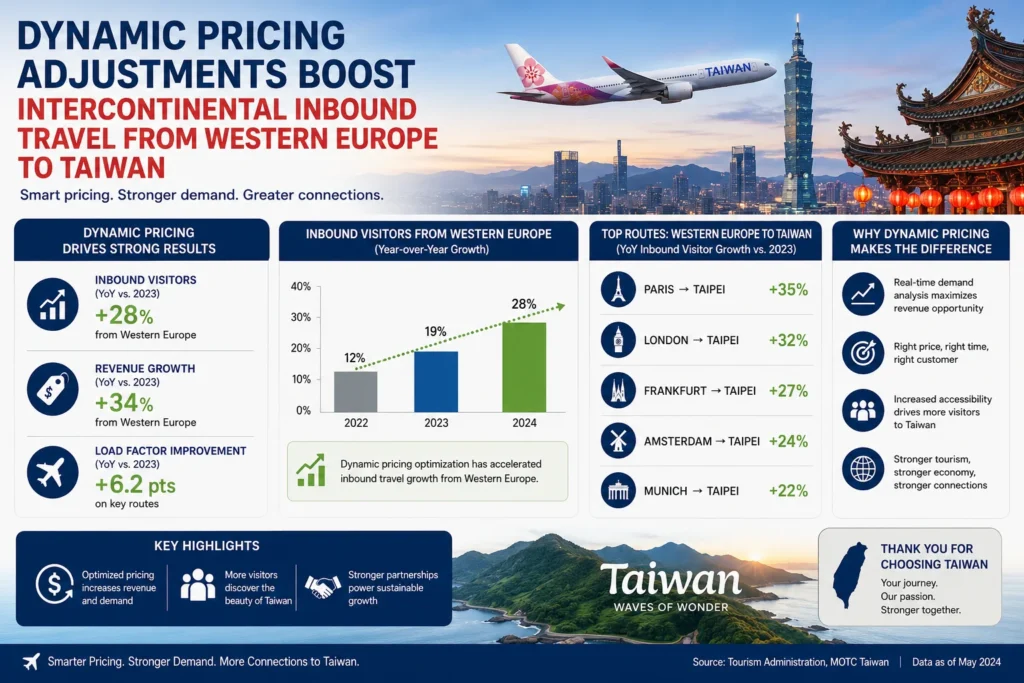
The global aviation landscape continues to witness significant structural adjustments, yielding competitive transit advantages for international leisure travelers. According to recent seasonal route reviews issued by European airport authorities, full-service airfare pricing matrices on long-haul corridors connecting Western Europe to East Asia have registered notable downward corrections. Specifically, multi-city routing configurations originating from Barcelona-El Prat Airport and concluding at Taiwan Taoyuan International Airport have adjusted to baseline rates around €457 for round-trip itineraries. This structural pricing shift lowers the economic barrier for European holidaymakers seeking to immerse themselves in Taiwan’s robust cultural sectors, night market culinary traditions, and mountainous ecological reserves.
Statistical briefs published by the Bureau of Transportation under the Ministry of Transportation and Communications in Taiwan outline a steady, upward trajectory in inbound passenger arrivals from European source markets. To support this expanding traveler segment, national tourism initiatives like the “Taiwan-The Lucky Land” incentive campaign have been actively extended, offering incoming independent travelers opportunities to win localized digital vouchers to spend on domestic accommodation and transit. The availability of promotional long-haul tariffs from major global carriers, such as Shenzhen Airlines, complements these state-sponsored initiatives, effectively driving higher visitor volumes through strategic entry points during standard shoulder-season travel windows.
For passengers departing from the Iberian Peninsula, the logistical composition of these promotional long-haul tickets provides a clear financial benefit over unbundled, low-cost carrier structures. Official regulatory filings confirm that these full-service fares systematically include standard checked baggage allowances, complimentary hot meal services during intercontinental flight segments, and access to basic in-flight entertainment frameworks. In an aviation ecosystem where ancillary fees for checked luggage can add substantial overhead to base ticket prices, the integration of these services directly protects the consumer’s travel budget, making long-haul exploration far more predictable.
The transit path for this cross-continental routing typically spans between 15 and 22 total hours, factoring in scheduled transfer windows at major mainland Chinese aviation hubs, such as Shenzhen Bao’an International Airport. These strategic gateway hubs are designed to process international transit passengers smoothly, utilizing modernized terminal amenities to reduce ground friction. For European travelers, these intermediate stops offer a balanced pause during extended journeys, allowing passengers to stretch, utilize lounge facilities, and navigate terminal connections before boarding their connecting flight into the northern aviation hub of Taipei.
The Taiwan Tourism Administration has highlighted that enhanced aviation connectivity directly stimulates regional distribution of visitors across the island. Upon arrival at Taoyuan International Airport, incoming tourists can easily access the Taiwan High Speed Rail network, which connects the capital city of Taipei to major southern cultural hubs like Taichung, Tainan, and Kaohsiung in under two hours. This highly integrated domestic transit infrastructure allows independent European travelers to maximize their itineraries, moving seamlessly from the historical architecture of the Chiang Kai-shek Memorial Hall to the dramatic marble cliffs of Taroko Gorge without requiring complex domestic transfers.
Administrative ease also plays a major role in sustaining this international travel corridor. Under current entry regulations maintained by the Bureau of Consular Affairs, citizens of the European Union profit from comprehensive visa-exempt entry privileges for tourism stays extending up to 90 days. This baseline administrative simplicity, combined with multi-lingual tourist assistance networks and widely accessible public wireless internet infrastructure across major municipalities, positions the region as a highly approachable, low-friction destination for first-time visitors to East Asia.
Tourism operators note that promotional fares hovering around the €457 threshold typically represent strategic capacity optimization by carriers during periods of localized demand fluctuations. Travelers looking to capitalize on these specific tariffs are encouraged by aviation analysts to monitor seasonal scheduling releases and maintain flexibility regarding exact weekday departure windows. By securing baseline transportation costs well below traditional historical averages, international holidaymakers can allocate a larger portion of their operational travel budgets directly into high-value local experiences, regional culinary tours, and immersive stays within the island’s expanding network of eco-certified boutique resorts.
As global airlines continue to expand their international networks and introduce modern, fuel-efficient widebody fleets to standard intercontinental service, the affordability of the Western Europe-to-East Asia transit sector is projected to remain highly dynamic. The sustained availability of competitive long-haul choices ensures that cultural capital hubs like Taipei remain highly visible and financially accessible options on the global tourism map for European travelers.
For more travel news like this, keep reading Global Travel Wire