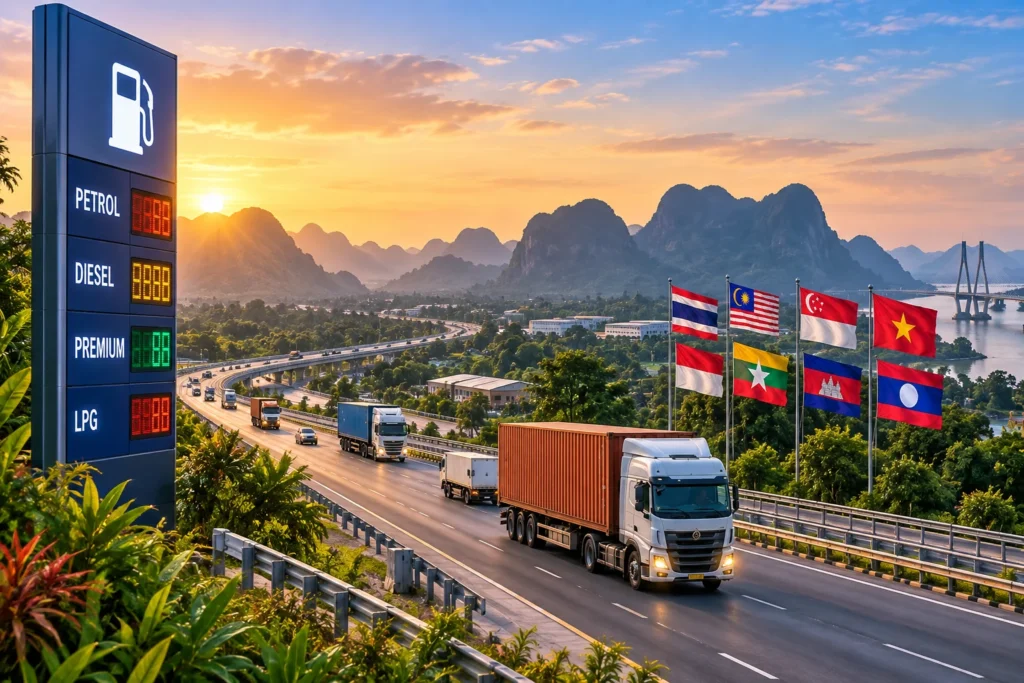
Fluctuating diesel costs across Southeast Asia are reshaping long-distance bus routes, inter-island ferry connections, and regional itineraries. Official announcements from regional transport authorities confirm that fuel expenditures now consume between 35 and 55 percent of total operating budgets for overland coaches and high-speed catamarans. In response, regulatory agencies in Thailand, Indonesia, and the Philippines have authorized structured fuel surcharges and route adjustments to maintain regional mobility.
These economic shifts are steering independent travelers, group tours, and commute networks away from traditional unhedged diesel buses toward electrified passenger rail lines, fuel-efficient feeder minivans, and streamlined maritime schedules.
Regional Transport Ministries Authorize Statutory Fare Adjustments
Land transport departments and maritime administration authorities across major ASEAN nations have introduced regulated price adjustments to balance operational viability with consumer protection. Unlike international commercial airlines using complex fuel hedging, surface transit networks often purchase fuel directly through retail pumps and commercial docks, leaving them exposed to market volatility.
In Thailand, the Department of Land Transport approved an official fare increase of 3 satang per kilometer per seat for regulated interprovincial bus routes. Similarly, sea transport authorities have permitted private catamaran operators connecting mainland ports to popular islands like Koh Samui, Koh Phangan, and Koh Tao to implement floating bunker surcharges.
In Indonesia, state-owned ferry corporation PT ASDP Indonesia Ferry enforces tiered tariffs across the Bali Strait, connecting Ketapang Port in East Java to Gilimanuk in Bali. Intercity bus operators now consolidate passenger manifests to preserve operating margins. Meanwhile, in the Philippines, the Maritime Industry Authority issued official directives capping temporary emergency fuel surcharges at 20 percent for FastCraft and roll-on/roll-off vessels operating along the Western Nautical Highway.
Key administrative and operational measures across regional arteries include:
Enforcing statutory fare caps to prevent predatory price surges on vital public corridors.
Authorizing temporary fuel surcharges tied directly to national diesel benchmark prices.
Offering temporary vessel inspection fee discounts to maritime transport operators.
Eliminating low-occupancy off-peak departures to maximize fuel efficiency per trip.
Electrified Rail and Feeder Networks Gain Inbound Market Share
As long-distance diesel bus fares adjust to fuel realities, electrified rail networks and smaller transport vehicles are capturing a growing share of regional travel demand. National infrastructure investments are enabling seamless transitions between trunk line rail corridors and local island ferry terminals.
The State Railway of Thailand has expanded double-tracking along the Southern Line from Krung Thep Aphiwat Central Terminal in Bangkok down to Chumphon and Surat Thani. Travelers increasingly choose overnight sleeper trains to reach southern transit hubs, where private transport fleets operate high-efficiency feeder shuttles to ferry piers. Similarly, Indonesia’s high-speed rail lines and upgraded Trans-Java rail networks are transforming long-haul highway coaches into local port connectors.
To optimize fuel performance, regional tour operators and destination management companies are replacing 45-seat heavy coaches with executive 9-to-14-seat minivans. These smaller vehicles consume significantly less fuel per kilometer, providing operational flexibility while maintaining comfortable transit options for visitor groups.
Practical Strategies for Navigating Island and Regional Corridors
Travelers navigating overland routes across Thailand, Indonesia, Malaysia, and the Philippines can take practical steps to streamline their journeys and avoid unexpected transit delays.
Official tourism guidance recommends the following field-tested approaches:
Utilize integrated digital booking platforms to secure verified through-tickets with real-time tariff calculations.
Reserve sleeper train berths early when traveling along major trunk lines to bypass highway fuel surcharges.
Carry sufficient local currency in small denominations to cover local port departure fees, municipal environmental taxes, and terminal charges billed separately from base tickets.
Maintain a minimum three-hour buffer between scheduled ferry arrivals and connecting regional flights to accommodate potential departure consolidations.
Decoupling Transport Networks from Fossil Fuel Reliance
Rising operating expenses have accelerated ecological transport initiatives across Southeast Asia. In Thailand, the Bangkok E-Bus Program, operating under public transport concessions in coordination with state energy frameworks, continues deploying hundreds of battery-electric buses across metropolitan routes. Operating at significantly lower energy costs than conventional diesel vehicles, electric transport fleets protect public transit systems from global oil market fluctuations.
Simultaneously, schedule realignments along coastal straits offer environmental benefits for delicate marine ecosystems. Reduced ferry frequencies across shallow waterways around popular island destinations help minimize underwater acoustic disturbance and shoreline wake erosion, protecting nesting sea turtles and coral reef habitats.
By utilizing electrified rail services, certified electric urban buses, and integrated digital ticketing, international visitors contribute directly to a more sustainable, low-emission travel framework across Southeast Asia.
For more travel news like this, keep reading Global Travel Wire