Modern international travelers are increasingly prioritizing neighborhood engagement, cultural authenticity, and distinct local experiences over traditional monument sightseeing. The latest Global Tourism City Attractiveness Index reveals a significant realignment in global destination rankings, with New York City outranking Paris in pure visitor sentiment and securing third place globally among pure attractiveness measures, positioning itself directly behind Japan’s culinary and historical powerhouses of Osaka and Kyoto.
The comprehensive index, which evaluated 261 international destinations to establish the top 200 cities, measures both global awareness and organic visitor sentiment. The findings reflect a broader evolution in traveler preferences, demonstrating that digital reputation, positive emotional connection, and neighborhood-level activities now play a decisive role in shaping international travel appeal.
Changing Traveler Priorities Elevate Immersive City Destinations
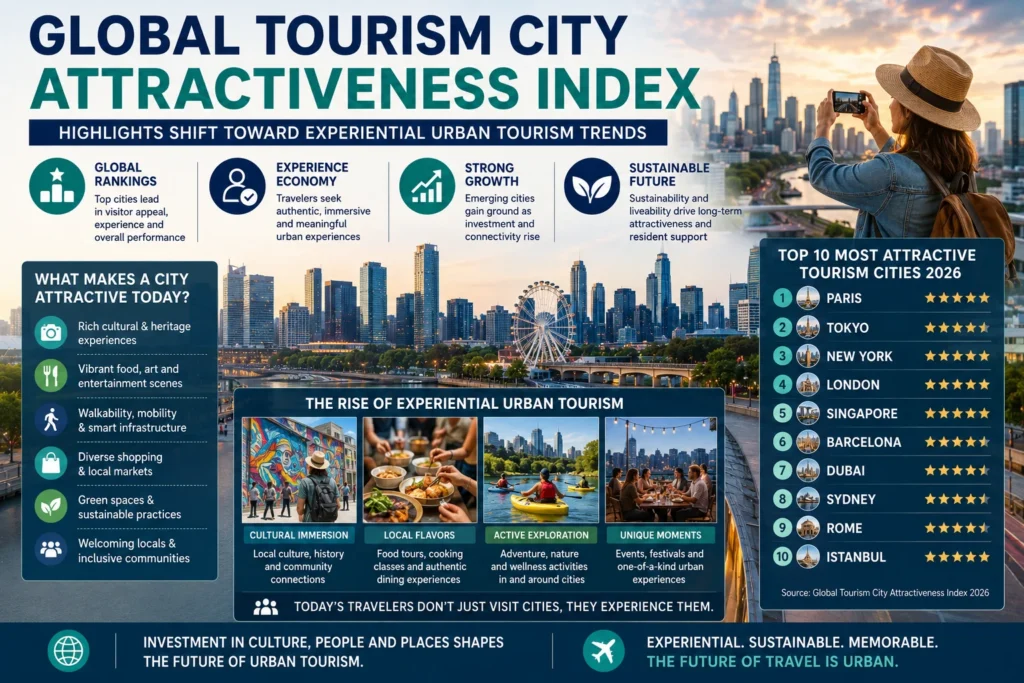
Results from the attractiveness study reflect a fundamental shift in how global travelers perceive urban destinations. In the specific visitor sentiment evaluation, Japan captured the top two positions, with Osaka ranking first overall for visitor attractiveness, followed by Kyoto in second place. New York City claimed third place, outperforming South Korea’s capital city of Seoul in fourth, while Paris rounded out the top five.
This ranking structure emphasizes that today’s visitors seek active cultural participation within local communities. While world-famous landmarks such as the Eiffel Tower or the Empire State Building remain primary drivers of initial destination awareness, a city’s broader atmosphere, hospitality, and daily cultural lifestyle are now the key factors determining visitor satisfaction.
Travelers are increasingly gravitating toward independent business districts, regional food markets, and community-led events. This shift underscores the growing importance of authentic hospitality and diverse urban experiences in sustaining a strong international tourism identity.
Data-Driven Methodology Evaluates Global Traveler Sentiment
The index utilized an analytical framework examining global digital conversations across 14 distinct languages, gathering data from visitor reviews, travel forums, and social media platforms while excluding corporate news broadcasts to isolate genuine traveler sentiment. Artificial intelligence tools processed millions of organic posts to evaluate emotional tone and visitor satisfaction levels.
To generate balanced destination scores, researchers applied specific weighted indicators to assess urban appeal:
Urban Beauty and Natural Scenery (30%): Evaluating cityscape aesthetics, green space integration, public parks, and architectural harmony.
Cultural and Historical Value (30%): Measuring historical preservation, museum quality, heritage protection, and local tradition accessibility.
Experiential Tourism Content (30%): Assessing nightlife, culinary diversity, shopping options, neighborhood walkability, and entertainment offerings.
Hospitality Standards (10%): Measuring visitor safety, service quality, community welcoming attitudes, and local travel support.
By combining global brand awareness with direct visitor sentiment on an equal weighting, the index requires destinations to maintain high international visibility alongside positive traveler experiences to achieve top rankings.
Community-Led Tourism Management and Destination Sustainability
The emphasis on experiential urban tourism trends is accelerating sustainable management strategies among official destination marketing organizations. Tourism boards are increasingly focusing on dispersing foot traffic into residential neighborhoods to distribute tourism revenue equitably while preserving central historical districts.
In New York, official tourism promotion channels actively highlight culinary and cultural attractions across all five city boroughs, guiding visitors into vibrant business corridors in Brooklyn, Queens, and the Bronx. This strategy reduces crowd density at major central monuments while providing small, immigrant-owned businesses with direct economic benefits from international visitor spending.
Similarly, Japanese tourism management bodies are implementing measures to handle growing visitor volumes sustainably. The Kyoto City Tourism Association has established local guidelines designed to protect historic residential quarters, protect heritage sites, and promote quiet morning visitation at cultural temples. In Osaka, tourism officials leverage the city’s public transportation network to guide visitors toward family-operated food districts, supporting local markets while ensuring high-quality visitor experiences.
Culinary Heritage as a Core Component of City Attractiveness
A central element driving high visitor sentiment across the top five cities is their distinct culinary identity. Gastronomy provides travelers with an immediate connection to local history and culture:
Osaka: Celebrated for street food staples such as takoyaki (octopus-filled savory batter) and okonomiyaki (savory cabbage pancakes cooked on flat griddles) served throughout traditional market stalls.
Kyoto: Recognized for seasonal multi-course kaiseki-ryori dining, traditional tofu dishes, and premium matcha green tea cultural experiences.
New York City: Famous for its iconic thin-crust pizza slices, classic deli pastrami, and fresh neighborhood bagels that define the city’s everyday food culture.
Seoul: Highlighted for traditional kimchi, gimbap (seaweed rice rolls), and night-market street foods that offer authentic local dining experiences.
Paris: Celebrated for classic bistro cuisine, including escargots, croque monsieur, and artisan bakery products that anchor French culinary tradition.
Future Outlook for Global Destination Management
The latest index results highlight that maintaining a strong global tourism profile requires destinations to continuously balance international promotion with high-quality local experience management. As travelers place higher value on authentic neighborhood engagement, municipal tourism authorities are prioritizing public transit improvements, digital visitor guides, and eco-friendly accommodation standards.
By supporting community-led initiatives and encouraging sustainable visitor practices, leading global cities are building resilient tourism frameworks capable of attracting international travelers while maintaining a high quality of life for residents.
For more travel news like this, keep reading Global Travel Wire