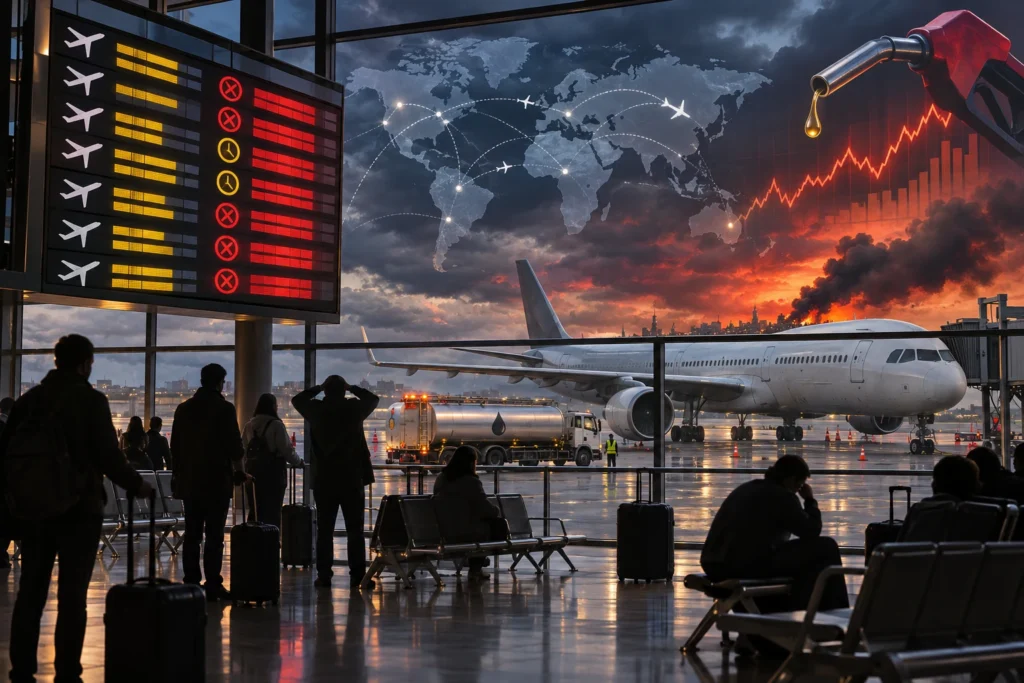
Escalating hostilities in the Middle East and the closure of key maritime and aviation passages have triggered significant reverberations across the international tourism industry. Official announcements from national transport ministries, civil aviation authorities, and government travel agencies indicate that rising fuel expenditure, widespread airspace reconfigurations, and heightened safety warnings are transforming global travel patterns. For destinations reliant on intercontinental visitor flows, the compounding impact of jet fuel surges and flight route detours presents a complex operational test.
Transportation and aviation regulators have updated flight conflict advisories following military confrontations and restricted transit corridors across the Persian Gulf and surrounding skies. Government civil aviation bodies across Europe, North America, and Asia have advised international air carriers to avoid several regional flight information regions. These emergency rerouting protocols have narrowed commercial flight paths connecting Europe with the Asia-Pacific region, requiring carriers to divert around volatile air corridors. These diversions significantly increase flight durations, crew duty requirements, and overall carbon emissions, creating widespread logistical bottlenecks at major hub airports.
Compounding the logistical complexity of rerouted flights is the severe volatility observed in global petroleum markets. The virtual halt of maritime tanker transit through the Strait of Hormuz—a maritime artery that normally channels roughly a fifth of global petroleum supply—has driven crude and refined product costs sharply higher. For the international tourism and hospitality ecosystem, this development directly affects operating economics.
Aviation fuel represents one of the largest direct operating costs for commercial passenger airlines. Civil aviation statistics and industry forecasts confirm that substantial increases in jet fuel prices are compressing carrier balance sheets, prompting airlines to introduce elevated fuel surcharges on long-haul tickets. Higher ticket prices inevitably affect consumer discretionary spending, influencing long-distance leisure travel plans and outbound holiday bookings.
National tourism boards and public economic ministries are closely tracking these shifts in passenger mobility. Travel alerts issued by foreign affairs ministries advise citizens to exercise increased caution, reconsider non-essential travel to affected zones, or evaluate alternative transit routes. Major transit hubs in the Gulf that have historically served as premier stopovers for millions of intercontinental tourists are contending with temporary capacity adjustments, schedule consolidations, and transit passenger redistributions.
The ripple effects extend far beyond the immediate geography of the crisis. Emerging tourism economies that depend heavily on long-haul European, North American, and Asian visitor spending are monitoring forward bookings with caution. Destination marketing organizations in Southeast Asia, Africa, and the Indian Ocean report shifts in traveler behavior, with visitors opting for direct, non-stop flights or regional domestic alternatives rather than itineraries with layovers in Middle Eastern hubs.
Conversely, intra-regional tourism and rail-based travel across Europe and North America are experiencing relative gains as vacationers seek localized, land-based alternatives. Regional travel ministries report sustained interest in domestic holiday corridors, national parks, and drive-to vacation spots that remain immune to international aviation surcharges.
Beyond passenger movement, the broader hospitality infrastructure faces cost-push pressures stemming from elevated global shipping rates and energy overheads. Hotels, resorts, and tourism service providers must balance utility expenses, transport procurement, and food supply chains against traveler price sensitivity. While the commercial aviation and tourism sectors have established a proven record of resilience following geopolitical and economic disruptions, government analysts acknowledge that rebuilding stable international travel flows will require time, consistent diplomatic de-escalation, and normalized transit routes.
As civil aviation departments and national tourism directorates coordinate contingency plans, the long-term outlook for global leisure travel hinges on corridor stability and energy price equilibrium. In the interim, official public advisories continue to urge prospective travelers to monitor flight statuses directly through national carrier bulletins, confirm entry requirements with relevant embassies, and account for extended travel times when booking international journeys.
For more travel news like this, keep reading Global Travel Wire