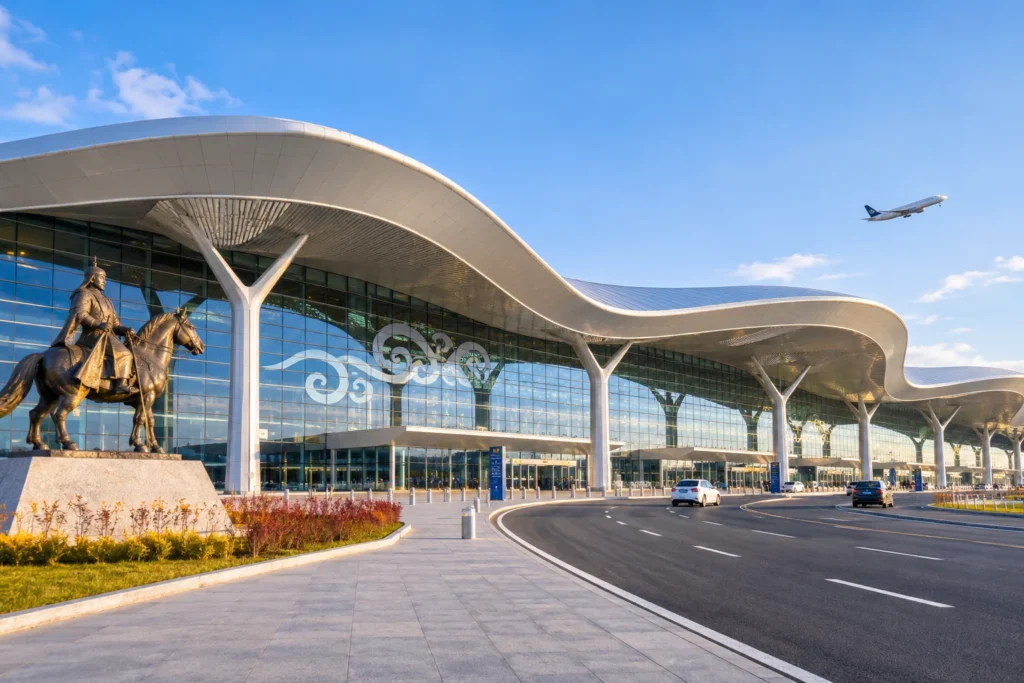
Inner Mongolia Autonomous Region is preparing for a historic milestone in aviation and cross-border travel as Hohhot Shengle International Airport officially commences operations on November 26. Final operational preparations are underway for the region’s first 4F-class international aviation hub, which will replace the long-serving Hohhot Baita International Airport. Beyond a routine relocation of flight services, this transition marks a substantial expansion in northern China’s international air connectivity, positioning the regional capital as a premier gateway for global visitors exploring the grasslands.
Designated as a regional aviation hub and a national Class I air port of entry, Shengle International Airport will also serve as a primary alternate airport for the Beijing–Tianjin–Hebei airport cluster and a strategic transport node along the Belt and Road Initiative. After 68 years of continuous service since opening in 1958, Baita International Airport will pass the baton to this next-generation facility, ushering in a new era for regional mobility and cultural exchange.
World-Class Infrastructure Built for Growing Global Passenger Demand
The scale of Hohhot Shengle International Airport reflects long-term planning aimed at eliminating longstanding capacity constraints. Baita International Airport was originally designed to accommodate 3 million passengers per year by 2015, a threshold surpassed years ago due to rapid growth in Hohhot’s local economy and cultural tourism sector. Shengle resolves this bottleneck with an annual design capacity of 28 million passengers, 320,000 tonnes of cargo and mail, and 244,000 aircraft movements.
Spanning a terminal floor area of 320,000 square metres, the facility features two widely spaced parallel runways separated by 2,000 metres, allowing simultaneous, independent takeoffs and landings. Its apron accommodates up to 130 aircraft stands, ensuring smooth ground operations even during peak seasonal travel surges. Inside the departures hall, travellers will find clearly zoned areas for international flights as well as services to Hong Kong, Macao, and Taiwan. Dedicated international check-in islands and comprehensive bilingual Chinese–English signage are designed to streamline navigation for overseas visitors.
According to official regional records, the airport’s port-of-entry infrastructure passed the autonomous region’s acceptance inspection in March 2026. With customs, immigration, and border inspection facilities fully operational, Shengle meets all national standards required for seamless international passenger processing.
Expanding Cross-Border Air Routes Across Northeast Asia and Eurasia
Ahead of the operational transfer, Hohhot already maintains six regular international passenger services connecting travellers to Ulaanbaatar in Mongolia; Seoul, Daegu, and Busan in South Korea; Vladivostok in Russia; and Bangkok in Thailand via Chongqing. Among these, the Ulaanbaatar route stands as Inner Mongolia’s most frequent direct air link between China and Mongolia, facilitating steady bilateral travel.
Official aviation statistics underscore surging demand for cross-border travel into the region. Between January and July 2026, Baita International Airport recorded 997 inbound and outbound cross-border flights, representing a 69.9 percent year-on-year increase. During the same seven-month period, cross-border passenger volume climbed 89.3 percent to reach 69,200 travellers, reflecting heightened international interest in Inner Mongolia’s cultural heritage and natural landscapes.
Upon opening on November 26, the entire existing domestic and international flight network will seamlessly transfer to Shengle International Airport. Building on the new hub’s expanded capabilities, regional aviation authorities plan to steadily add international routes linking Hohhot with destinations across Russia and Mongolia. Simultaneously, flight frequencies will increase to major domestic economic and tourism centres, including the Yangtze River Delta, the Guangdong–Hong Kong–Macao Greater Bay Area, and the Chengdu–Chongqing region, supported by an upgraded network of regional feeder flights.
Multimodal Connectivity Unlocking Grassland Destinations
For international tourists and business travellers alike, Shengle International Airport forms the centerpiece of an integrated multimodal transport network. Air services will work in tandem with Inner Mongolia’s expanding overland corridors. Hohhot currently operates 22 international road transport routes, while its China–Europe and China–Central Asia railway freight services connect more than 70 stations across over 10 countries in Europe and Asia.
This convergence of air, rail, and highway links extends the airport’s reach far beyond the municipal boundaries of Hohhot. Regional feeder routes will connect the vast Chilechuan grasslands directly with border ports of entry, making remote scenic areas and cultural sites far more accessible to domestic and international visitors. Furthermore, integration with pilot free trade zones and cross-border commerce platforms ensures that wherever new air routes open, cultural tourism exchanges and economic cooperation follow closely behind.
As winds sweep across the Chilechuan grasslands, the inauguration of Hohhot Shengle International Airport represents a decisive leap forward for northern China’s travel infrastructure. By linking key domestic economic hubs with markets across Northeast Asia and Eurasia, the new grassland gateway is poised to welcome millions of travellers, deepening global cultural ties and driving sustained growth in Inner Mongolia tourism.
For more travel news like this, keep reading Global Travel Wire