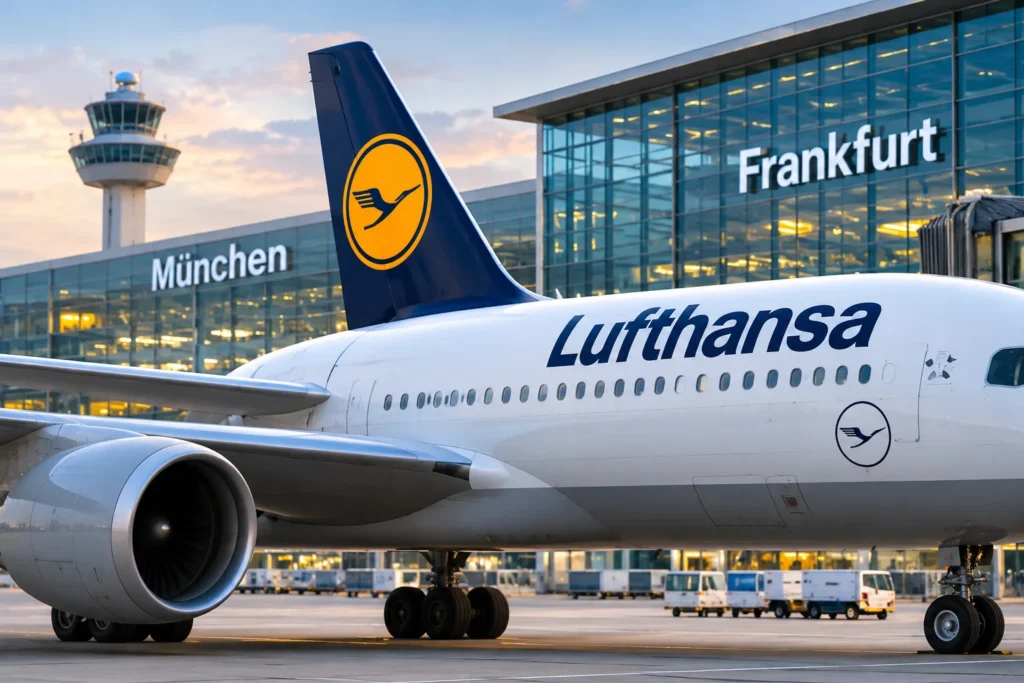
European aviation tourism faces a significant operational shift as German flag carrier Lufthansa Airlines moves forward with plans to eliminate 1,000 full-time positions across its primary international hubs in Frankfurt and Munich. Outlined in an official internal communication to employees signed by Lufthansa Airlines Chief Executive Jens Ritter and four fellow executive board members, the workforce reduction reflects intensifying financial pressures driven by persistently high jet fuel prices, geopolitical instability in the Middle East, and domestic industrial action. For global travellers, tour operators, and European destinations reliant on Germany’s twin aviation gateways, these structural adjustments signal potential changes in flight schedules, short-haul feeder networks, and ticket pricing strategies across the continent.
According to the official management communication, the core Lufthansa Airlines division is navigating its third consecutive year of financial underperformance despite multi-year turnaround initiatives launched over the past twenty-four months. During the first nine months of 2026, the flagship carrier recorded an operating loss of €180 million, averaging €20 million in monthly losses, alongside a year-on-year deterioration in third-quarter earnings. Executive leadership emphasized that earlier efficiency measures have proven insufficient to offset macroeconomic headwinds, necessitating deeper organizational restructuring at its two largest German operational bases.
Financial Pressures and Fuel Costs Impacting Airline Operations
A primary driver behind the restructuring is the dramatic surge in aviation fuel expenditures triggered by ongoing conflict in the Middle East. Official group projections indicate that the company’s annual fuel bill for 2026 will exceed 2025 levels by approximately €2 billion. Because jet fuel represents one of the largest variable expenses in commercial air transport, sustained price spikes directly compress profit margins on both regional and intercontinental routes.
In addition to energy costs, Lufthansa Airlines endured nine days of labour strikes during 2026, disrupting passenger itineraries and adding substantial operational recovery expenses to an already elevated cost base in Germany. Management noted that these combined pressures have set back recovery timelines, compelling the board to streamline staffing across Frankfurt Airport and Munich Airport, which together form the backbone of Germany’s international air connectivity.
The planned reduction of 1,000 full-time roles represents roughly 2.5 percent of the core airline’s workforce of around 40,000 personnel. While the exact timeline for the reductions and the specific operational departments affected remain under internal review, the move follows an earlier corporate announcement to trim approximately 4,000 administrative roles across the broader aviation group by 2030. By the end of 2025, the wider group employed roughly 67,100 staff members within Germany, making workforce efficiency a central pillar of its long-term competitiveness strategy.
Implications for Frankfurt and Munich Hubs and Regional Flight Capacity
For the international travel and tourism industry, operational adjustments at Frankfurt and Munich carry far-reaching consequences. Both airports function as vital transit hubs connecting North America, Asia, and the Middle East with hundreds of European leisure and business destinations. Alongside the workforce reductions, Lufthansa Airlines has indicated plans to trim short-haul and medium-haul flight capacity in response to high German location costs and airport fees.
A contraction in short- and medium-haul capacity directly affects feeder routes that funnel international tourists from major long-haul arrivals into secondary European cities, alpine resorts, and Mediterranean coastal destinations. Tour operators and destination management organizations across Europe closely monitor capacity shifts at Frankfurt and Munich, as reduced flight frequencies can tighten seat availability and influence seasonal airfares for inbound visitors.
At the same time, official group financial disclosures highlight a sharp divergence between the struggles of the core German airline and the resilience of its sister carriers and long-haul premium segments. While the flagship brand posted nine-month losses, the broader Lufthansa Group—which also encompasses Austrian Airlines, Swiss International Air Lines, and Brussels Airlines—achieved a 30 percent year-on-year increase in third-quarter operating profits. Strong international demand for premium cabin tickets on long-haul routes has bolstered group-level performance, demonstrating that global appetite for transcontinental leisure and corporate travel remains robust even as regional cost structures undergo realignment.
Navigating the Future of European Air Travel and Connectivity
The restructuring at Lufthansa Airlines underscores a broader transformation underway across European aviation tourism. High infrastructure charges, environmental compliance costs, and volatile global energy markets are prompting legacy carriers to concentrate capacity on profitable long-haul corridors while rationalizing domestic and intra-European networks.
For travellers planning journeys through Germany in the coming seasons, Frankfurt and Munich will remain essential global gateways, though airlines are placing heightened emphasis on operational efficiency and fleet deployment discipline. As Lufthansa works with employee representatives to finalize the scope and schedule of its hub restructuring, tourism stakeholders across Germany and neighbouring European markets will be watching closely to see how capacity adjustments shape regional accessibility, transit convenience, and cross-border visitor flows in 2027 and beyond.
For more travel news like this, keep reading Global Travel Wire