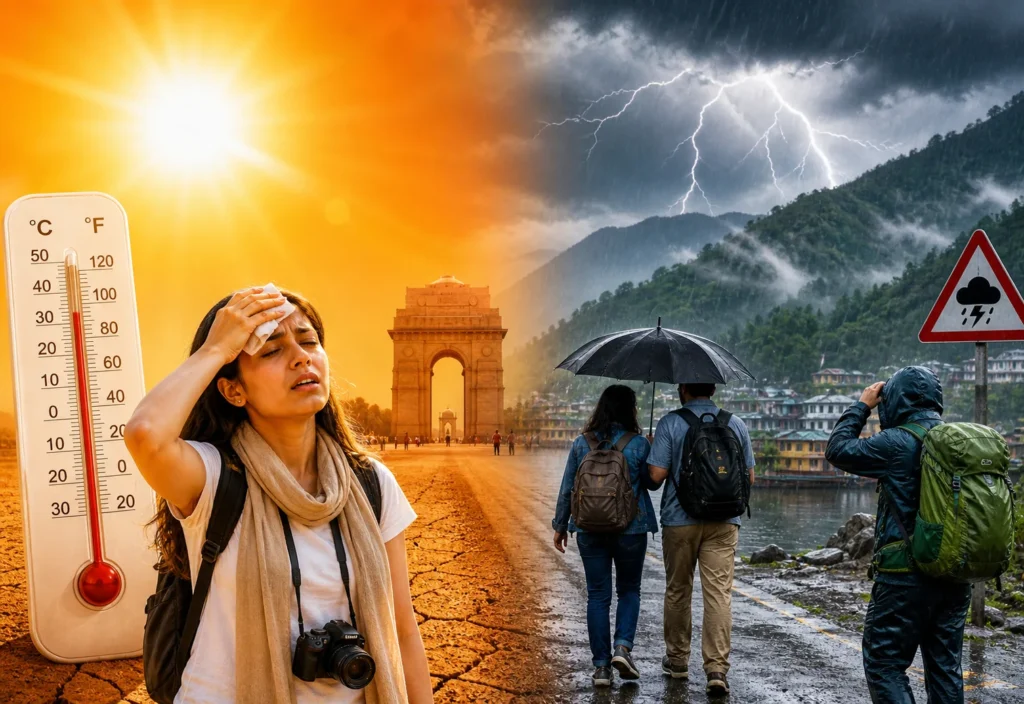
As summer travel season gains momentum across India, the India Meteorological Department has issued an important advisory highlighting extreme weather conditions that could impact tourism plans in 2026. The warning comes as intense heatwaves combine with sudden storms across multiple regions, creating a complex travel environment that requires careful planning and awareness.
According to official forecasts, large parts of northern, central, and eastern India are experiencing severe heatwave conditions, with temperatures rising above 40 degrees Celsius. States including Rajasthan, Delhi, Punjab, and Uttar Pradesh are among the most affected regions. These conditions are typical of pre-monsoon months but have intensified in recent years, prompting authorities to issue regular alerts for residents and travelers.
At the same time, eastern and northeastern regions such as Assam, Meghalaya, and Arunachal Pradesh are witnessing heavy rainfall, thunderstorms, and strong winds. Southern states like Kerala and Karnataka are also experiencing intermittent showers, creating a mix of climatic conditions across the country.
Tourism authorities emphasize that while travel remains open and accessible, visitors should stay updated with official weather bulletins and plan their itineraries accordingly. The combination of extreme heat and sudden rainfall can affect transport schedules, outdoor sightseeing, and overall travel comfort.
Heatwaves present one of the most significant challenges for tourists during this period. Prolonged exposure to high temperatures can lead to dehydration, heat exhaustion, and in severe cases, heatstroke. Health authorities advise travelers to take preventive measures, particularly during peak afternoon hours when temperatures are at their highest.
Urban centers such as New Delhi often experience higher temperatures due to the urban heat island effect, making it essential for visitors to limit outdoor activities during midday. Early morning and evening hours are recommended for sightseeing, allowing tourists to explore destinations while avoiding extreme heat.
Hydration is a key priority during summer travel in India. Carrying sufficient drinking water, consuming electrolyte-rich fluids, and avoiding excessive caffeine or alcohol can help maintain body balance. Wearing light, breathable clothing and using protective accessories such as hats and sunglasses can further reduce heat-related risks.
While the north deals with dry heat, the eastern and southern regions face challenges associated with sudden storms and heavy rainfall. Thunderstorms can lead to temporary disruptions in road and rail transport, as well as delays in flights. Travelers are advised to monitor updates from transport authorities and allow flexibility in their schedules.
Adventure tourism activities, including trekking and outdoor exploration, require additional caution during this period. Slippery trails, flash floods, and strong winds can increase safety risks, particularly in hilly and forested regions. Tourism boards recommend choosing guided tours and following local safety guidelines when engaging in such activities.
Rapid weather changes can also impact health. A shift from high temperatures to cooler, humid conditions may trigger respiratory issues or allergies in some individuals. Travelers with pre-existing medical conditions are encouraged to carry necessary medications and consult healthcare providers before embarking on their journey.
Another concern during the monsoon transition period is the increase in mosquito-borne diseases. Stagnant water following rainfall can lead to higher mosquito activity, raising the risk of infections such as dengue and malaria. Using insect repellents, wearing protective clothing, and staying in well-maintained accommodations can help minimize exposure.
Tourism authorities highlight the importance of preparedness, especially for international visitors unfamiliar with India’s diverse climate patterns. Acclimatization, adequate rest, and awareness of local medical facilities can enhance travel safety. Comprehensive travel insurance covering weather-related disruptions is also recommended.
Infrastructure across major tourist destinations continues to support safe travel, with emergency services and healthcare facilities available in most regions. Authorities have strengthened response systems to handle weather-related challenges, ensuring that travelers receive timely assistance when needed.
Despite the weather challenges, India remains a vibrant and diverse travel destination during summer. Hill stations, coastal areas, and indoor cultural attractions offer alternatives for tourists seeking комфорт and safety. Destinations in higher altitudes often provide cooler climates, making them popular choices during heatwave conditions.
Government tourism campaigns continue to promote responsible travel practices, encouraging visitors to respect local advisories and environmental conditions. By adapting travel plans and staying informed, tourists can still enjoy a fulfilling and safe experience across the country.
Looking ahead, the India Meteorological Department has indicated that above-normal heatwave days may continue in 2026. This highlights the growing importance of climate awareness in tourism planning. Travelers are increasingly factoring weather conditions into their decisions, choosing destinations and travel periods that align with комфорт and safety.
In this evolving travel landscape, flexibility and preparedness are essential. By following official guidelines, staying hydrated, and monitoring weather updates, tourists can navigate India’s summer season with confidence.
As one of the world’s most diverse tourism destinations, India continues to welcome visitors with its rich culture, heritage, and natural beauty. With proper precautions and informed planning, travelers can safely explore the country even during challenging weather conditions, ensuring memorable experiences while prioritizing health and well-being.