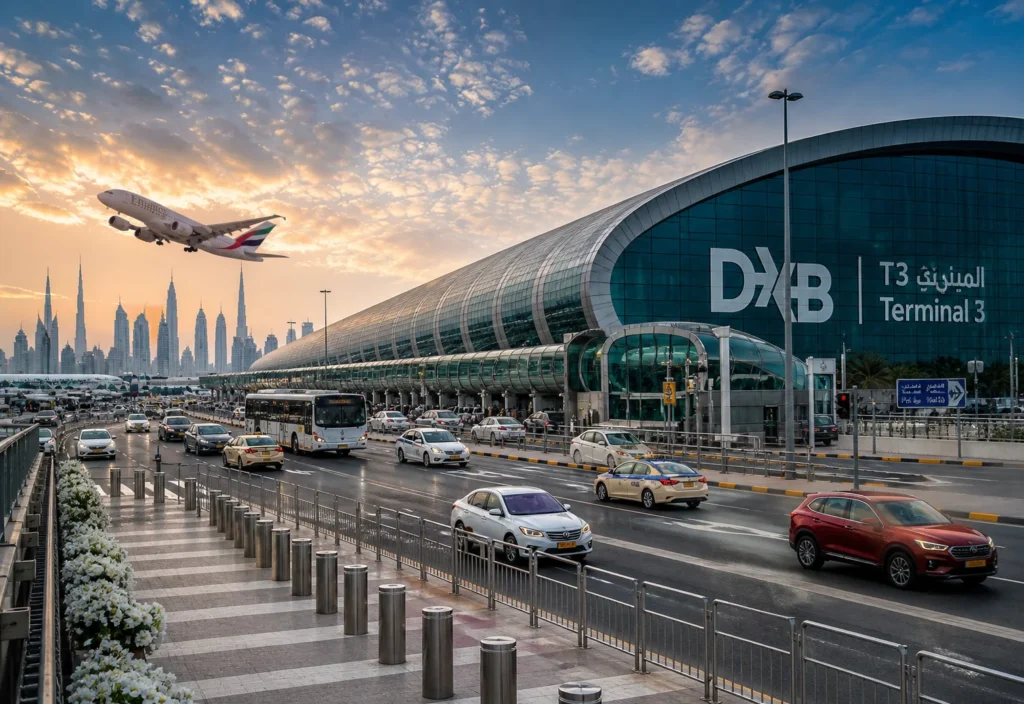
Dubai International Airport has reinforced its position as one of the world’s most resilient aviation hubs after successfully maintaining operations during a period of regional conflict. The airport’s ability to manage safety risks while continuing passenger services highlights the strength of the UAE’s aviation infrastructure and its importance to global tourism.
According to official statements from Dubai Airports, the airport remained functional despite facing multiple security alerts over several weeks. Authorities implemented advanced safety protocols and coordinated closely with national defense and aviation agencies to ensure that passengers and staff remained protected at all times.
The UAE government has consistently prioritized aviation safety and operational continuity as part of its broader tourism and economic strategy. Dubai International Airport, one of the busiest global transit hubs, plays a vital role in connecting travelers between Europe, Asia, Africa, and beyond. Maintaining uninterrupted operations during challenging circumstances was therefore essential to sustaining international travel flows.
During the crisis period, airport authorities reported handling tens of thousands of aircraft movements and significant cargo volumes, demonstrating the scale of operations that continued despite constraints. Passenger traffic experienced a temporary decline, reflecting reduced travel demand and airspace restrictions, but officials remain confident about a strong recovery trajectory.
A key aspect of the airport’s response involved the use of controlled air corridors. Due to regional airspace limitations, flights were routed through a narrower path than usual, requiring precise coordination with neighboring air traffic authorities. This system ensured that aircraft could continue operating safely while avoiding restricted zones.
These temporary air corridors required airlines to adjust flight paths, often resulting in longer travel times. However, aviation authorities prioritized safety and continuity, ensuring that essential connectivity was maintained. This approach aligns with international aviation standards, where passenger safety remains the highest priority during any operational disruption.
The UAE’s aviation regulators worked closely with regional partners to manage airspace capacity and ensure smooth coordination. This collaboration highlights the importance of international cooperation in maintaining global travel networks, especially during periods of uncertainty.
Despite the challenges, Dubai International Airport continued to provide essential services to travelers. Airport teams implemented rapid-response procedures to guide passengers to safe areas during alerts, ensuring minimal disruption to the overall travel experience. These measures were supported by continuous communication with passengers, helping maintain confidence in the airport’s operations.
Government officials have emphasized that maintaining operational continuity was crucial not only for safety but also for economic stability. The aviation sector is a key driver of tourism in the UAE, contributing significantly to national GDP and supporting a wide range of industries, including hospitality and retail.
The ability to keep flights running during the crisis also reassured international travelers and airlines. Tourism authorities note that traveler confidence is closely linked to perceptions of safety and reliability. By demonstrating resilience, Dubai has strengthened its reputation as a secure and dependable travel hub.
Emergency response systems played a central role in managing the situation. Civil defense teams, airport staff, and aviation authorities worked in coordination to address incidents quickly and effectively. This integrated approach reflects the UAE’s commitment to maintaining world-class safety standards across its infrastructure.
Leadership and communication were also highlighted as critical factors in the successful management of the crisis. Authorities ensured that staff were well-informed and empowered to make decisions, enabling quick responses to evolving परिस्थितियाँ. Clear communication with passengers helped reduce anxiety and maintain trust in the system.
As airspace restrictions begin to ease, Dubai International Airport is gradually returning to normal operations. Officials expect passenger traffic to increase in the coming months, supported by renewed travel demand and improved connectivity. The airport’s central role in global transit positions it for a strong recovery.
Tourism authorities in Dubai have already outlined plans to support this rebound, including marketing campaigns and enhanced visitor experiences. The city’s ability to maintain operations during challenging परिस्थितियाँ is expected to boost its appeal as a safe and reliable destination.
The experience has also provided valuable lessons for the aviation industry. Crisis management, real-time decision-making, and cross-sector collaboration have proven essential in maintaining operations under pressure. These insights are likely to inform future strategies for airports worldwide.
Dubai’s approach demonstrates how modern aviation hubs can adapt to complex challenges while prioritizing safety and efficiency. Investments in technology, infrastructure, and human resources have enabled the airport to respond effectively and maintain high service standards.
For travelers, the continued operation of Dubai International Airport during the crisis underscores the reliability of the UAE’s aviation system. As global tourism continues to recover, destinations that demonstrate resilience and preparedness are likely to attract more visitors.
Looking ahead, Dubai is expected to build on this experience to further strengthen its aviation sector. Continued collaboration between government agencies, airlines, and airport operators will be key to ensuring long-term growth and stability.
In a rapidly changing global travel environment, Dubai International Airport has set a benchmark for crisis management and operational resilience. Its ability to maintain services while ensuring safety reinforces its status as a leading global gateway and a cornerstone of international tourism.