Greece, Turkey, Israel, Egypt, Cyprus, India, Australia and the United States are entering a turbulent 2026 tourism season as rising fuel prices, escalating airline expenses, increasing travel costs and heightened tensions across the Middle East disrupt global travel confidence and reshape international booking patterns.
What initially appeared to be a strong recovery year for Mediterranean tourism is now facing mounting pressure from operational cost surges and geopolitical instability. Airlines, ferry operators, hotels and tour companies across major tourism markets are confronting rapidly shifting traveler behavior as consumers reconsider budgets, delay reservations and prioritize flexibility amid growing uncertainty.
The combination of soaring aviation fuel costs, longer flight routes caused by regional airspace concerns and increased travel expenses is creating volatility across both European and long-haul tourism markets, threatening booking stability during one of the world’s most important travel seasons.
Greece Faces Mounting Pressure Despite Strong Early Demand
Greece entered 2026 with optimism after several years of record tourism performance driven by strong demand from Europe, North America and emerging long-haul markets. Early bookings across hotels, ferry operators and travel agencies initially pointed toward another successful season.
However, the environment has become increasingly challenging as operational costs surge across the travel sector.
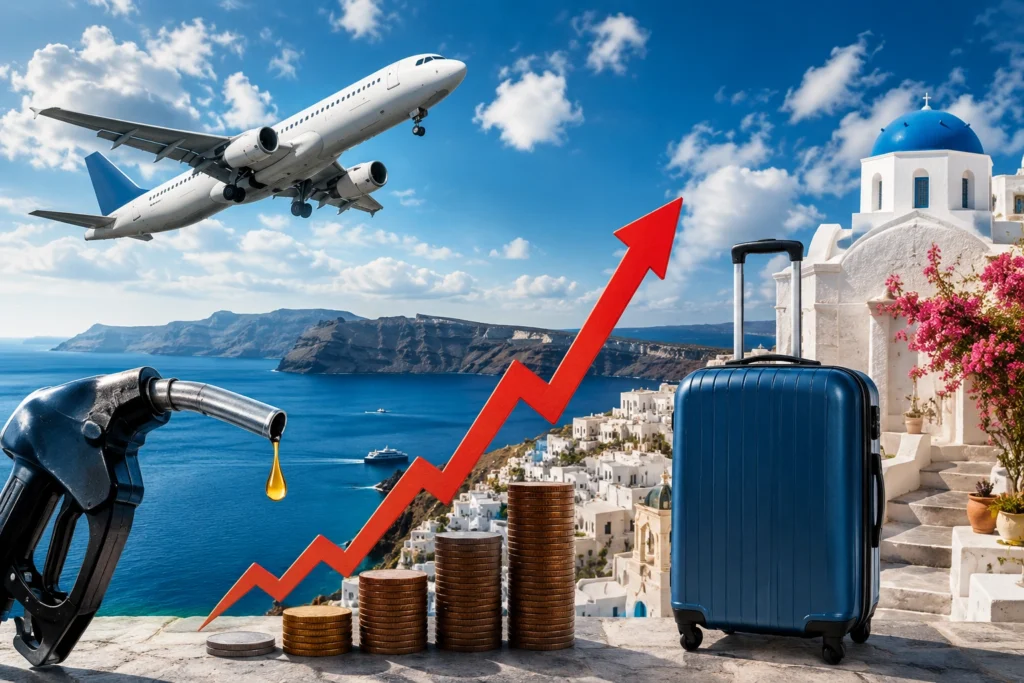
Airlines serving Greece continue facing historic increases in aviation fuel prices, leading to higher ticket fares on both regional and intercontinental routes. Ferry operators connecting mainland Greece with popular island destinations are also experiencing rising fuel-related expenses, increasing transportation costs for travelers exploring the Aegean and Ionian islands.
Tourism businesses across Greece are simultaneously dealing with inflation-driven increases in accommodation, dining and operational expenses, putting additional pressure on visitor budgets.
Industry stakeholders report that while widespread cancellations have not yet materialized, traveler behavior is clearly shifting toward more cautious planning, shorter stays and delayed bookings.
Middle East Tensions Increase Tourism Uncertainty
Heightened geopolitical tensions across the Middle East are also contributing to uncertainty throughout the Mediterranean tourism landscape.
Long-haul travelers from the United States, Australia and India are showing increased caution when planning international travel to regions perceived as geographically connected to ongoing instability. Airlines operating between Europe, the Gulf and Asia have already adjusted certain routes and schedules in response to regional airspace concerns and operational risks.
Tourism analysts note that perception plays a critical role in travel demand, particularly for premium long-haul markets where travelers prioritize safety, convenience and scheduling reliability.
The resulting uncertainty is creating challenges for destinations heavily dependent on international tourism flows during peak summer months.
Turkey, Egypt and Cyprus Also Experience Booking Volatility
Turkey, another major Mediterranean tourism powerhouse, is experiencing similar pressures linked to rising transportation costs and changing traveler sentiment.
Tour operators report slower booking momentum as travelers evaluate alternative destinations closer to home or perceived as more stable. Although summer demand remains present, expectations for peak-season growth have moderated.
Egypt’s tourism industry is also confronting increased competition as travelers compare cost-to-value ratios across Mediterranean and Middle Eastern destinations. While iconic destinations such as Cairo and Luxor continue attracting visitors, elevated travel costs are influencing decision-making among price-sensitive tourists.
Cyprus continues maintaining relatively stable visitor demand from Europe, but airlines and tourism operators are adjusting marketing strategies as airfare increases impact booking pace across coastal resorts and seasonal tourism markets.
Long-Haul Markets Become Increasingly Sensitive
The United States and Australia remain particularly sensitive to rising airline expenses due to the long-haul nature of Mediterranean travel.
American travelers continue booking trips to Greece, Italy and Spain, but many are shortening itineraries or postponing final travel decisions until closer to departure dates. This trend reduces average visitor spending and complicates operational forecasting for hotels and tour operators.
Australia’s outbound travel market is similarly affected by elevated airfare prices. While demand for European vacations remains strong, some travelers are reconsidering timing or selecting destinations closer to home due to rising transportation costs.
India’s rapidly expanding outbound tourism sector is also becoming more cautious as airfare surges influence discretionary travel budgets for Mediterranean vacations.
Mediterranean Destinations Adapt to New Travel Patterns
Tourism operators across Greece and neighboring countries are now adapting strategies to respond to evolving traveler behavior.
In Greece, destinations are experiencing varying levels of demand stability. Athens continues benefiting from strong international connectivity and city tourism demand, while islands dependent on ferry access face greater sensitivity to rising transportation costs.
The Cyclades, including Santorini and Mykonos, continue attracting premium travelers despite elevated prices, though budget-conscious tourists are increasingly exploring alternative islands.
Crete is witnessing stronger last-minute booking activity as travelers delay final decisions, while the Dodecanese Islands have reportedly experienced softer online search activity and booking momentum.
Tourism businesses throughout the Mediterranean are increasingly emphasizing flexibility, safety messaging and value-driven experiences to maintain traveler confidence.
Airlines and Hospitality Operators Face Operational Challenges
Rising fuel prices are significantly impacting airline profitability and route planning worldwide. Carriers operating long-haul services between North America, Europe, Asia and the Middle East continue revising schedules, frequencies and pricing strategies in response to operational pressures.
Hospitality businesses are also adapting to fluctuating booking windows and changing guest expectations. Hotels, resorts and tourism operators are increasingly relying on dynamic pricing strategies and targeted marketing campaigns to stimulate demand while protecting revenue performance.
Industry experts warn that prolonged geopolitical instability or sustained fuel cost increases could further disrupt tourism flows throughout 2026.
Greece and Mediterranean Markets Remain Resilient
Despite mounting challenges, Greece and its Mediterranean neighbors continue benefiting from globally recognized tourism brands, developed infrastructure and long-standing international appeal.
Modern airports, cruise ports, ferry systems and tourism services provide destinations with operational resilience even during periods of market uncertainty. Historical experience navigating economic crises and regional instability has also strengthened adaptability across the tourism sector.
Tourism authorities and operators are expected to continue emphasizing safety, accessibility and premium experiences in order to retain market share and maintain visitor confidence.
Global Tourism Faces Defining Year in 2026
The 2026 tourism season is shaping into one of the most unpredictable periods for Mediterranean and global travel markets in recent years.
Rising airline costs, elevated fuel prices and geopolitical tensions are collectively reshaping traveler behavior and forcing tourism businesses to adapt rapidly. Countries including Greece, Turkey, Israel, Egypt, Cyprus, India, Australia and the United States are all navigating a travel environment increasingly defined by uncertainty, operational complexity and shifting consumer priorities.
While demand for Mediterranean tourism remains fundamentally strong, the ability of destinations and airlines to manage cost pressures, reassure travelers and maintain operational flexibility will likely determine which markets emerge strongest from a highly volatile global tourism landscape.
For more travel news like this, keep reading Global Travel Wire