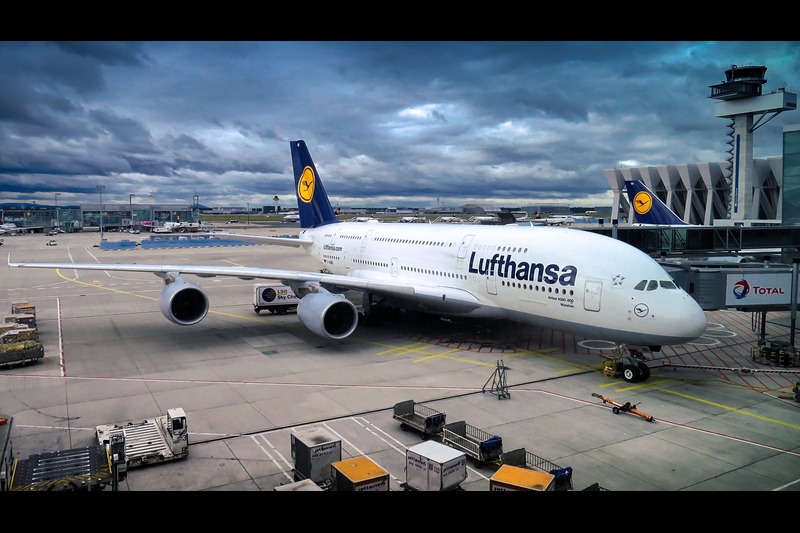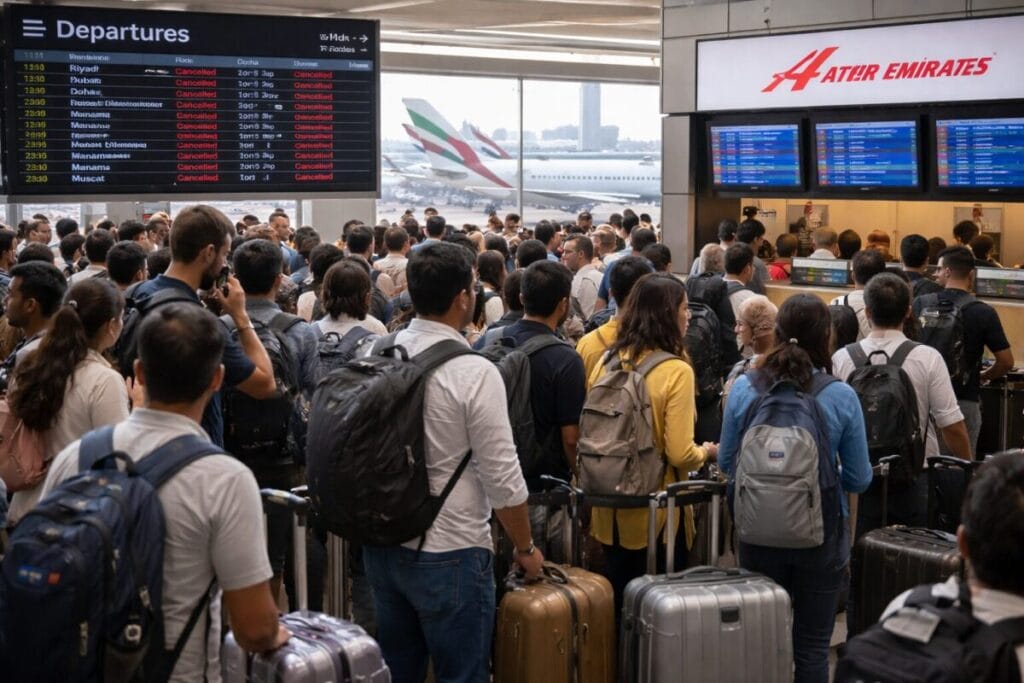
Escalating tensions across the Middle East have created major disruption in global aviation. Airspace closures across several countries have stranded thousands of travelers.
The conflict involving the United States, Israel, and Iran has intensified regional security concerns. Governments across the region have responded with strict airspace restrictions.
Countries including Iran, Iraq, Kuwait, Bahrain, and Qatar have limited or closed airspace corridors. These measures have forced airlines to cancel flights and reroute aircraft.
As a result, aviation hubs across the Middle East now face severe congestion and operational challenges.
Airlines have launched emergency plans to support stranded passengers, including thousands of Indian travellers.
Airspace Restrictions Create Major Aviation Challenges
The Middle East serves as a key transit region for global air travel. Major flight routes connecting Asia, Europe, and North America pass through this corridor.
However, security alerts and missile threats have forced authorities to restrict aviation routes. Airlines now avoid several high-risk air corridors.
Flight routes have shifted toward Central Asia and the Horn of Africa. These longer paths increase fuel consumption and extend travel times.
Pilots and airlines must now follow constantly changing safety advisories.
Airport operations in several cities have also slowed due to increased security procedures.
These conditions have created uncertainty for airlines and travelers alike.
Air India Launches Emergency Flights for Stranded Travellers
India’s national airline, Air India, has launched emergency flights to support stranded passengers. The airline has arranged additional services from key Middle Eastern airports.
Special flights now operate from cities including Dubai, Abu Dhabi, Ras Al-Khaimah, and Sharjah. These services focus on bringing Indian citizens back home safely.
Air India continues operating regular routes to destinations such as Muscat and Jeddah. However, many international flights now follow alternative paths due to restricted airspace.
The airline has warned passengers about longer travel times on several routes.
Flights to Europe and North America still operate but follow extended routes for safety.
Air India remains in constant coordination with aviation authorities to ensure passenger safety.
IndiGo Maintains Limited Operations to Key Destinations
IndiGo, India’s largest airline by passenger numbers, has also adjusted operations during the crisis.
The airline continues operating limited flights to selected Middle Eastern destinations.
However, IndiGo has reduced schedules to ensure operational safety.
Airline officials have warned that the situation remains unpredictable.
Flight operations depend on daily safety assessments and government approvals.
Passengers must check flight status before arriving at airports.
IndiGo has emphasized passenger and crew safety as its highest priority during this period.
The airline continues working to reunite stranded passengers with families across India.
Etihad Airways Restarts Limited International Services
Etihad Airways has gradually resumed selected flight operations during the crisis.
The airline now operates limited flights from Abu Dhabi to several international destinations.
Key routes include flights to Indian cities such as Delhi, Mumbai, and Ahmedabad.
Etihad also continues some services to Europe, Asia, and North America.
However, ongoing airspace restrictions may cause delays or sudden schedule adjustments.
Passengers traveling through Abu Dhabi should prepare for longer journey times.
Etihad has advised travelers to monitor updates through official airline communication channels.
Airline teams continue evaluating safety conditions across regional airspace.
Qatar Airways Arranges Special Repatriation Flights
Qatar Airways has faced some of the most severe disruptions during the crisis. Airspace restrictions over Qatar forced the airline to suspend many regular flights.
To assist stranded travelers, Qatar Airways has arranged special repatriation flights.
These flights operate from Hamad International Airport in Doha to major European cities.
Destinations include London, Paris, Madrid, Rome, and Frankfurt.
The airline has prioritized vulnerable passengers, including families, elderly travelers, and medical cases.
Seats on these emergency flights were allocated to affected passengers first.
The airline also works closely with aviation authorities to maintain limited air traffic routes.
These emergency corridors allow essential flights to operate safely.
Major Airports Experience Heavy Disruptions
Several major airports across the Middle East now operate under strict restrictions.
Airports in Dubai and Abu Dhabi have experienced reduced flight operations.
Airlines have canceled multiple routes while security agencies monitor regional developments.
Airport authorities have also increased safety checks and surveillance measures.
These procedures aim to protect travelers and aviation staff.
However, they also increase waiting times and travel delays.
Travelers must prepare for last-minute schedule changes and possible rerouting.
Indian Travellers Face Uncertainty and Delays
Indian travelers have faced significant disruption due to the airspace crisis.
Many passengers traveling between India, Europe, and North America transit through the Middle East.
Airspace closures have forced airlines to cancel or delay connecting flights.
As a result, thousands of travelers remain stranded at major aviation hubs.
Airlines continue working with embassies and authorities to assist passengers.
Travelers must stay updated through airline notifications and government advisories.
Flexible travel plans have become essential during this crisis.
Aviation Industry Faces Rising Operational Costs
The ongoing crisis has also increased costs for airlines worldwide.
Longer flight routes require more fuel and additional crew planning.
Airlines must also adjust maintenance schedules and flight rotations.
These operational challenges affect ticket availability and travel schedules.
Industry analysts expect prolonged disruption if regional tensions continue.
Airlines will likely maintain alternative flight routes for safety.
Travel Outlook Remains Uncertain
The future of air travel across the Middle East remains uncertain.
Diplomatic developments and military activity will influence aviation safety conditions.
Airlines continue monitoring regional developments and adjusting flight plans.
For travelers, staying informed remains essential.
Passengers should check airline updates frequently and remain flexible with travel plans.
Until stability returns, global aviation will continue navigating one of its most complex crises in recent years.
For more travel news like this, keep reading Global Travel Wire