Air travel across the Gulf region faced severe disruption as geopolitical tensions intensified across the Middle East. Several countries introduced airspace restrictions to address growing security risks. These developments triggered widespread flight delays and cancellations on March 8.
Major aviation hubs such as Dubai, Doha, and Abu Dhabi experienced heavy operational pressure throughout the day. Airlines struggled to maintain normal schedules as changing airspace restrictions forced rapid adjustments to flight plans. As a result, thousands of travelers faced long delays and unexpected travel disruptions.
Passengers traveling through Gulf hubs encountered crowded terminals and constantly changing departure schedules. The aviation industry continues to monitor the situation closely as regional tensions influence global travel routes.
Middle East Conflict Triggers Airspace Restrictions
Rising geopolitical tensions across the Middle East have created serious challenges for aviation safety. Governments across the region introduced strict airspace controls to reduce risks for civilian aircraft.
Authorities closed or restricted several key air corridors across the Arabian Gulf. Airlines now avoid these areas completely to maintain safety standards. These restrictions have forced airlines to redesign flight paths and adjust operations quickly.
Pilots and air traffic controllers must coordinate constantly to identify safe corridors for international flights. These efforts aim to maintain global connectivity despite growing regional uncertainty.
Dubai, Doha, and Abu Dhabi Face Heavy Airport Pressure
Dubai, Doha, and Abu Dhabi serve as some of the world’s busiest aviation hubs. Millions of passengers rely on these airports every month for global connections.
However, the recent airspace disruptions have placed enormous pressure on airport operations. Flights arriving and departing from these hubs experienced significant delays throughout the day.
Some airlines canceled services due to operational uncertainty. Others delayed departures while waiting for clearance to use alternative air routes.
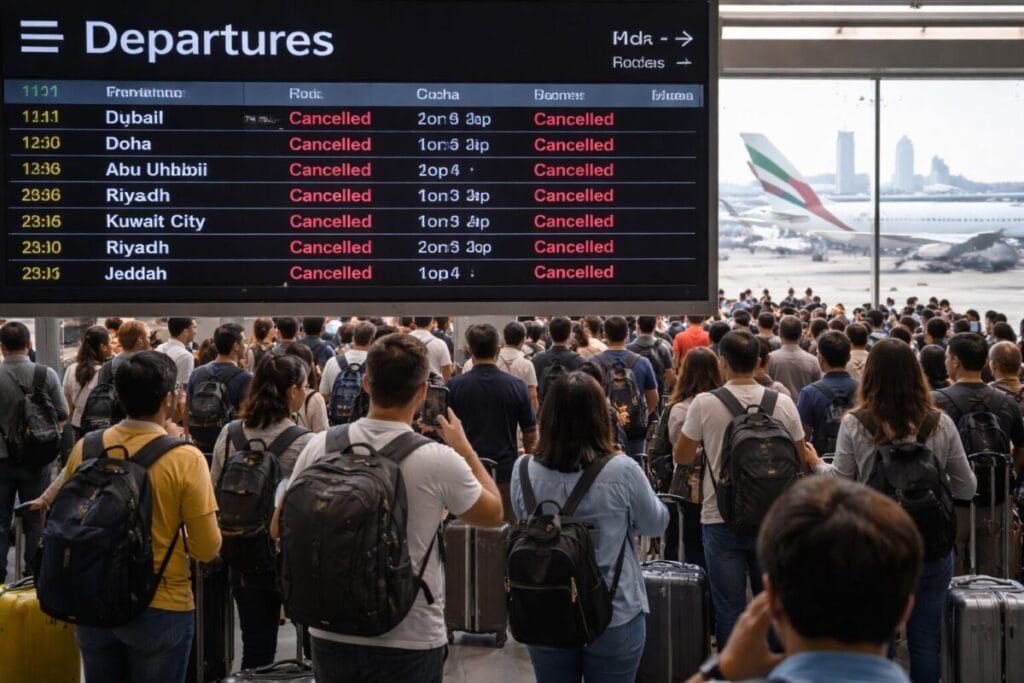
Airport authorities worked closely with airlines to manage passenger congestion. Travelers encountered crowded terminals, long queues, and frequent schedule changes.
Despite these challenges, airport teams continued assisting passengers with rebooking and travel support.
Airlines Reroute Flights to Avoid Restricted Airspace
Airlines across the world have begun rerouting flights to avoid restricted Gulf airspace. These new routes often pass through Central Asia, the Mediterranean region, or parts of Africa.
These adjustments significantly increase flight duration on many international routes. Pilots must now follow complex navigation paths to bypass restricted zones safely.
These longer routes also increase fuel consumption and operational costs. Airlines must adjust aircraft scheduling and crew planning to accommodate the new flight paths.
Despite these challenges, aviation authorities emphasize safety as the highest priority for all airlines operating in the region.
Global Aviation Network Feels the Ripple Effect
The disruption across Gulf airspace has affected aviation networks far beyond the Middle East. Many global flight routes connecting Europe, Asia, and Africa depend on Gulf transit corridors.
Airlines worldwide have adjusted schedules due to restricted airspace. Passengers traveling between continents have faced longer journeys and missed connections.
Flights from Gulf hubs to cities such as London, Paris, and New York experienced delays and operational adjustments. Connecting passengers traveling from South Asia and Southeast Asia also faced complications.
These disruptions highlight how regional tensions can quickly impact global aviation networks.
Longer Flight Routes Create Operational Challenges
Extended flight paths have become one of the most difficult challenges for airlines. Flights that normally cross Gulf airspace must now follow alternative routes.
These longer journeys increase travel time by several hours in some cases. Airlines must carefully plan fuel loads and crew schedules to handle extended flights.
Aircraft rotations have also changed due to the longer routes. These adjustments reduce flexibility for airlines managing large global fleets.
Passengers often experience delays as airlines reorganize schedules to accommodate the new travel patterns.
Airports Introduce Emergency Passenger Support
Airports across the Gulf region have implemented additional procedures to support affected travelers. Authorities have increased coordination between airlines, airport staff, and air traffic control teams.
Some airports extended operational hours to manage delayed arrivals and departures. Passenger service teams have assisted travelers with rebooking and accommodation arrangements.
Airlines also provided meals and temporary accommodation to passengers facing long delays. Airport authorities increased communication updates to help travelers stay informed.
These coordinated efforts helped reduce confusion during a challenging day for global aviation.
Airlines Work to Stabilize Flight Operations
Airlines across the region continue adjusting operations to manage the ongoing disruptions. Flight planners evaluate safety conditions before approving departures.
Airlines also coordinate with aviation authorities to secure safe alternative air corridors. Some carriers have reduced flight frequencies temporarily to stabilize operations.
These adjustments help airlines manage aircraft rotations and passenger demand. Despite the disruption, many flights continue operating through alternative routes.
Airlines remain focused on restoring stable schedules as soon as regional conditions improve.
Travelers Urged to Remain Flexible
Passengers traveling through Gulf airports must remain flexible during this period. Flight schedules may change quickly as security developments evolve.
Airlines recommend checking flight status frequently before leaving for airports. Travelers should also allow extra time for airport procedures and boarding.
Flexible travel plans can help passengers manage sudden delays or cancellations. Many airlines now offer rebooking options to assist affected travelers.
Staying informed remains the best strategy for navigating the current aviation disruptions.
Aviation Outlook Remains Uncertain
The future of Gulf aviation remains uncertain as geopolitical tensions continue across the Middle East. Aviation authorities across the region continue monitoring security developments closely.
Further airspace restrictions may occur depending on regional conditions. Airlines will likely maintain alternative routes until stability returns.
This situation highlights how global aviation depends on secure international air corridors. Until tensions ease, passengers and airlines must navigate ongoing travel uncertainty across the region.
For more travel news like this, keep reading Global Travel Wire