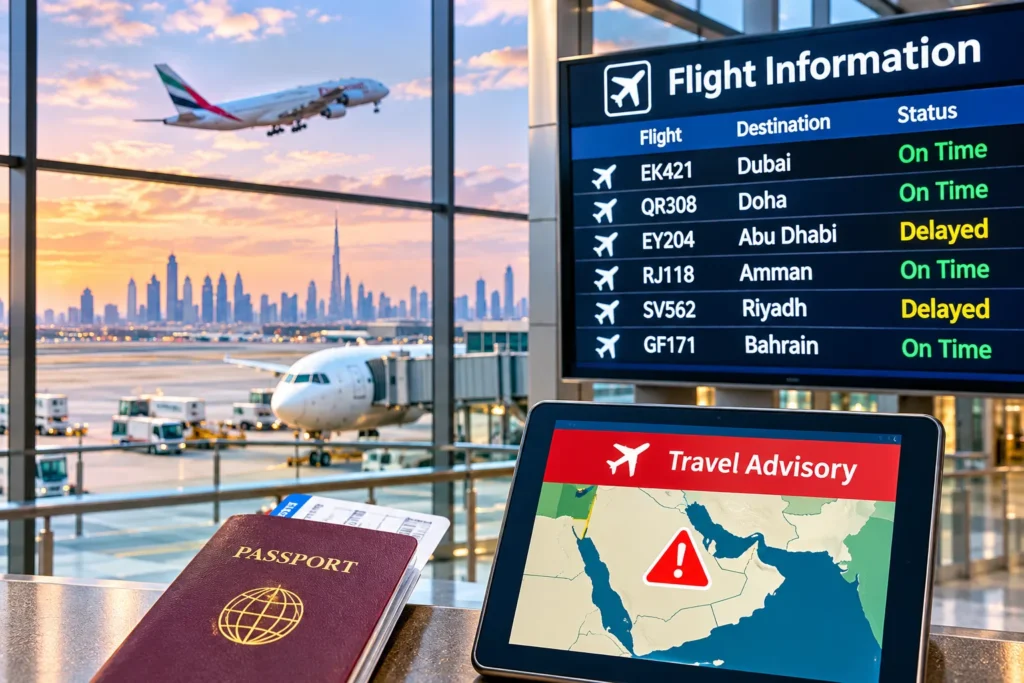
Official ministerial statements from the Ministry of Foreign Affairs of the Islamic Republic of Iran confirm that state authorities have formally designated key branches of the British armed forces and intelligence agencies as hostile entities following reciprocal government sanctions. The diplomatic declaration, announced on November 1, 2026, by Iran’s Supreme National Security Council, follows earlier statutory actions enacted by the United Kingdom regarding sovereign security listings. While the dispute centers on geopolitical and security designations, international civil aviation regulators, national transport ministries, and global travel federations are assessing the broader ramifications for regional transit corridors, commercial overflight clearances, and international leisure travel confidence across the wider Middle East.
Foreign affairs ministries and government travel advisory divisions across Europe, North America, and the Asia-Pacific region continue to issue detailed public safety advisories for citizens navigating commercial flight paths across regional airspace. The intensifying diplomatic rhetoric has prompted civil aviation administrations to review transcontinental routing schedules, ensuring passenger airlines maintain contingency flight plans, adequate fuel reserves, and verified emergency landing alternatives along vital corridors connecting Europe with Asia.
Heightened Consular Warnings and Border Scrutiny for International Voyagers
Public travel guidance issued by the Foreign, Commonwealth and Development Office of the United Kingdom maintains a strict advisory warning against all travel to the Islamic Republic of Iran. Official consular bulletins emphasize that foreign travelers, particularly dual nationals and individuals with ties to Western institutions, face acute administrative risks, including arbitrary detention, prolonged interrogation, and restricted consular access. British diplomatic authorities warn that individuals currently within Iranian territory should maintain heightened vigilance, monitor government announcements, and assess their departure options through remaining commercial avenues.
Transport authorities highlight that elevated political friction inevitably impacts land crossings and regional maritime transit. Coastal security notices along the Strait of Hormuz and the Persian Gulf urge leisure vessels, private yachts, and commercial cruise liners to follow international shipping lanes and maintain active communication with national maritime operations centers. Consular bureaus across Western nations advise travelers to register with embassy locator services, maintain physical copies of travel documentation, and avoid gathering near government installations, military infrastructure, or public demonstrations.
Tourism boards in neighboring Gulf jurisdictions emphasize that while sovereign border security remains robust within their own territories, travelers should monitor official government alerts. State tourism authorities throughout the United Arab Emirates, Oman, and Qatar report that domestic hospitality facilities, regional cultural attractions, and urban transport networks continue standard operations. However, tourism planners acknowledge that persistent geopolitical tensions generate consumer hesitation among long-haul travelers considering leisure vacations across the broader region.
Commercial Airline Rerouting and International Flight Corridors
The primary operational impact of escalating diplomatic tensions falls upon international commercial aviation. Sovereign civil aviation directorates and international airspace coordination groups continuously monitor regional flight paths to ensure commercial carriers avoid sensitive airspace. Previous regional airspace closures and tactical alerts have demonstrated the fragility of transcontinental air bridges, requiring commercial airlines to implement extensive diversions over Central Asia, Saudi Arabia, or Egypt.
National civil aviation bodies note that bypassing sovereign airspace incurs significant operational overhead for commercial passenger carriers. Longer flight routes translate into extended flight times of thirty to ninety minutes for popular city pairs between London, Paris, Frankfurt, and major destinations across South Asia and Southeast Asia. These detours increase commercial aviation fuel consumption, leading to adjustments in seat availability, flight frequencies, and seasonal ticket pricing during peak winter holiday travel periods.
Aviation safety directorates maintain strict safety notices advising passenger airlines against operating within contested air corridors at lower altitudes. In response, long-haul carriers operating widebody passenger aircraft are maintaining flexible scheduling protocols to minimize transit disruptions. Passengers booked on intercontinental itineraries through major transit hubs in the Middle East are advised to check real-time airline reservation platforms for schedule updates, gate changes, and potential connection adjustments.
Balancing Destination Marketing with Regional Tourism Resilience
Destination marketing organizations and municipal tourism authorities across the Arabian Peninsula are actively working to preserve international visitor confidence through transparent public communications. Official visitor statistics released by regional tourism ministries indicate that inbound arrivals to premier urban centers have demonstrated notable resilience, supported by high-profile sporting events, international trade symposiums, and cultural heritage festivals.
Public tourism agencies underline that modern travelers place a premium on safety and operational transparency. Government tourism bodies are collaborating closely with national carriers to ensure arriving tourists receive up-to-date entry guidance, comprehensive travel insurance advice, and verified transport recommendations upon arrival. Hospitality federations are offering flexible reservation modification policies to accommodate visitors affected by unexpected flight reschedulings or altered visa regulations.
Simultaneously, sovereign ministries of tourism emphasize the importance of distinct geographic communication, helping international consumers distinguish between localized geopolitical disputes and safe, hospitable travel destinations. By emphasizing world-class hospitality standards, advanced municipal policing, and modern transit infrastructure, regional destinations aim to sustain international visitor momentum through upcoming high-season travel periods.
Long-Term Outlook for Global Travel and Cross-Border Transit
The escalating diplomatic dispute between London and Tehran highlights the direct connection between international foreign policy and the global travel economy. When sovereign governments implement reciprocal sanctions and security listings, the effects reverberate through international flight routes, consumer confidence, and cross-border tourism investment.
Government transport departments and international civil aviation authorities reiterate that passenger safety remains the paramount operational directive across all transit corridors. As diplomatic missions work through official channels to address underlying security disputes, tourism agencies and public transport operators continue to emphasize agile logistical planning, strict adherence to verified government travel advisories, and the preservation of safe international passenger corridors worldwide.
For more travel news like this, keep reading Global Travel Wire