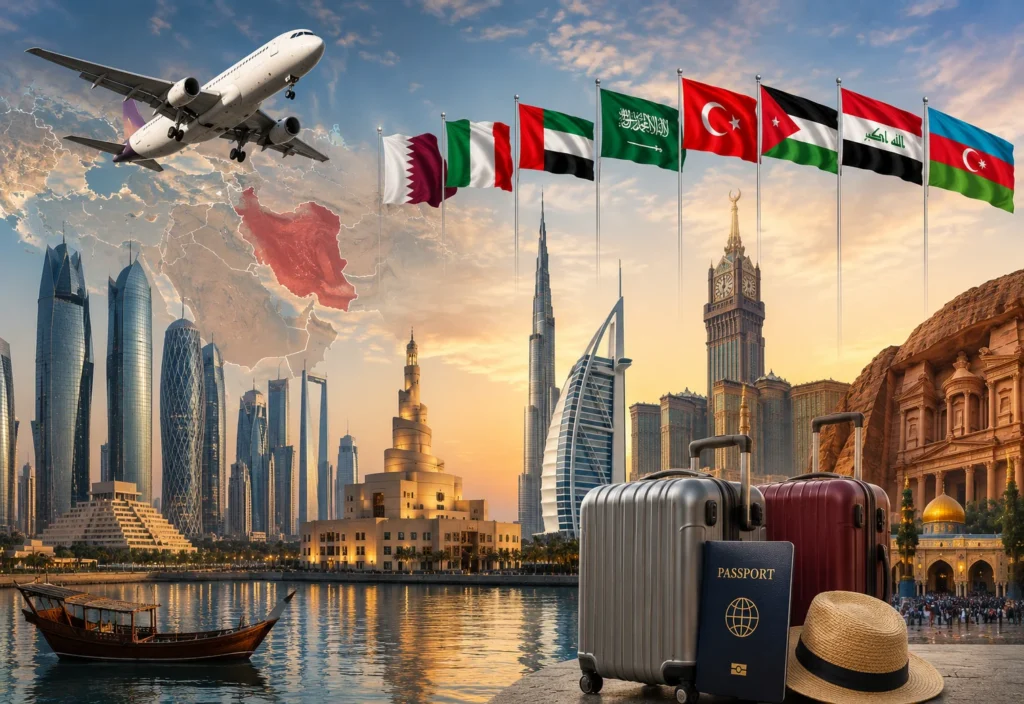
The Middle East tourism sector is confronting one of its most challenging periods in recent years as escalating regional tensions continue to impact travel confidence, aviation connectivity, and hospitality investments across key destinations. Governments throughout the Gulf and neighboring regions are intensifying diplomatic efforts aimed at restoring stability and protecting the economic progress driven by tourism, trade, and international investment.
A coalition of nations including Qatar, the United Arab Emirates, Saudi Arabia, Turkey, Jordan, Iraq, Azerbaijan, and Italy has called for immediate de-escalation following rising regional security concerns and disruptions to critical transport and energy infrastructure.
Tourism authorities and government officials across the region are increasingly concerned that prolonged instability could affect long-term visitor growth, global airline operations, and strategic tourism development plans that have transformed the Middle East into one of the world’s fastest-growing travel markets.
The crisis has already contributed to lower international visitor confidence, operational disruptions at ports and airports, and cancellations of major conferences and tourism events throughout several regional hubs.
Gulf Tourism Hubs Experience Decline in Visitor Activity
Several major tourism destinations in the Middle East have reported visible declines in business and leisure travel activity as security concerns influence travel planning decisions among international visitors.
Qatar, which has invested heavily in luxury hospitality infrastructure, global sporting events, and international conference tourism, is working to protect its tourism economy amid reduced travel demand. Doha’s hotels, aviation sector, and convention industry have experienced slower occupancy and booking trends compared to earlier projections for 2026.
Government tourism officials in Qatar continue emphasizing regional dialogue and diplomatic engagement as essential tools for restoring travel confidence and protecting long-term tourism growth.
The United Arab Emirates, one of the region’s most important aviation and tourism centers, has also faced operational challenges linked to disruptions affecting energy and logistics infrastructure. Authorities are working closely with airport operators, tourism agencies, and airlines to maintain travel continuity and reassure international visitors.
Dubai and Abu Dhabi remain major global transit gateways connecting Europe, Asia, and Africa, making stability in the Gulf region critical for worldwide tourism and aviation networks.
Saudi Arabia Protects Vision 2030 Tourism Expansion
Saudi Arabia’s ambitious Vision 2030 economic diversification programme has placed tourism development at the center of the kingdom’s long-term national strategy. The initiative aims to transform Saudi Arabia into a leading global tourism destination through investments in heritage tourism, luxury resorts, entertainment projects, and religious travel infrastructure.
Regional instability has created additional pressure on Saudi Arabia’s tourism ambitions, particularly as the country continues expanding its hospitality sector and promoting international tourism growth.
Religious tourism remains one of the kingdom’s most significant travel segments, with millions of pilgrims visiting holy sites annually for Hajj and Umrah pilgrimages. Officials are closely monitoring operational conditions to ensure continued safety and accessibility for religious visitors.
Infrastructure disruptions and rising transportation costs across the region have also raised concerns about broader impacts on international tourism flows, airline operations, and supply chain efficiency linked to tourism-related industries.
Saudi authorities continue emphasizing stability and regional cooperation as critical elements for maintaining investor confidence and supporting tourism sector expansion under Vision 2030.
Turkey Strengthens Role as Regional Tourism Mediator
Turkey has emerged as a key diplomatic actor during the ongoing regional tensions while simultaneously protecting its own tourism-dependent economy. Positioned between Europe, Asia, and the Middle East, Turkey remains one of the world’s largest tourism destinations and a major international aviation hub.
Ankara is using its strategic relationships across the region to encourage diplomatic dialogue and support efforts aimed at reducing tensions before the peak summer tourism season intensifies.
Turkish tourism officials have reported increased caution among travelers regarding regional travel planning, particularly in areas closer to southeastern borders. Flight adjustments and travel advisories have also affected some tourism and transit operations.
At the same time, Turkey continues promoting itself as a safe and accessible destination for international visitors while reinforcing airport security and regional coordination efforts.
Government leaders in Turkey have called for broader regional cooperation focused on economic stability, tourism recovery, and long-term peace initiatives designed to support sustained travel growth across neighboring countries.
Jordan and Iraq Face Tourism and Trade Challenges
Jordan and Iraq are among the countries experiencing direct economic spillover effects from regional instability due to their geographic proximity and reliance on tourism and trade activity.
Jordan’s tourism sector, which depends heavily on international visitors to heritage attractions such as Petra and the Dead Sea region, has experienced increased booking uncertainty as travelers reconsider regional itineraries.
Tourism revenue remains a vital component of Jordan’s national economy, and government officials are prioritizing stability and visitor safety as part of broader economic protection measures.
Iraq is also working to maintain secure conditions for religious pilgrimage tourism, particularly in important spiritual destinations including Karbala and Najaf. Pilgrimage travel represents a major tourism and economic sector for Iraq, attracting millions of regional visitors annually.
Cross-border trade routes throughout Jordan and Iraq have also faced increased operational strain due to heightened transport and logistics risks affecting regional mobility.
Azerbaijan Focuses on Energy and Tourism Stability
Azerbaijan has increasingly aligned with regional diplomatic efforts aimed at preserving stability across major energy and transport corridors linking Asia, Europe, and the Middle East.
The country continues promoting tourism growth in Baku and surrounding regions while monitoring the impact of wider regional instability on traveler sentiment.
Officials in Azerbaijan recognize the strong relationship between energy market stability and tourism investment throughout the broader region. Tourism authorities are continuing efforts to attract international visitors while supporting regional peace initiatives designed to protect economic development.
The country’s strategic role in energy transit and regional trade makes stability particularly important for sustaining tourism infrastructure growth and international investor confidence.
Regional Tourism Recovery Depends on Stability and Cooperation
Tourism leaders across the Middle East continue stressing that long-term growth in aviation, hospitality, and international travel depends heavily on regional stability and coordinated diplomatic engagement.
The Middle East has spent the past decade investing billions of dollars in tourism infrastructure, airline expansion, luxury hospitality projects, and cultural tourism initiatives designed to position the region as a major global travel destination.
Industry officials believe that maintaining traveler confidence, airline connectivity, and secure tourism operations will remain essential for protecting the economic transformation achieved across Gulf and Middle Eastern tourism markets.
As governments intensify diplomatic efforts and transportation authorities continue managing operational challenges, the region’s tourism sector remains focused on resilience, recovery, and long-term stability to safeguard future international travel growth.