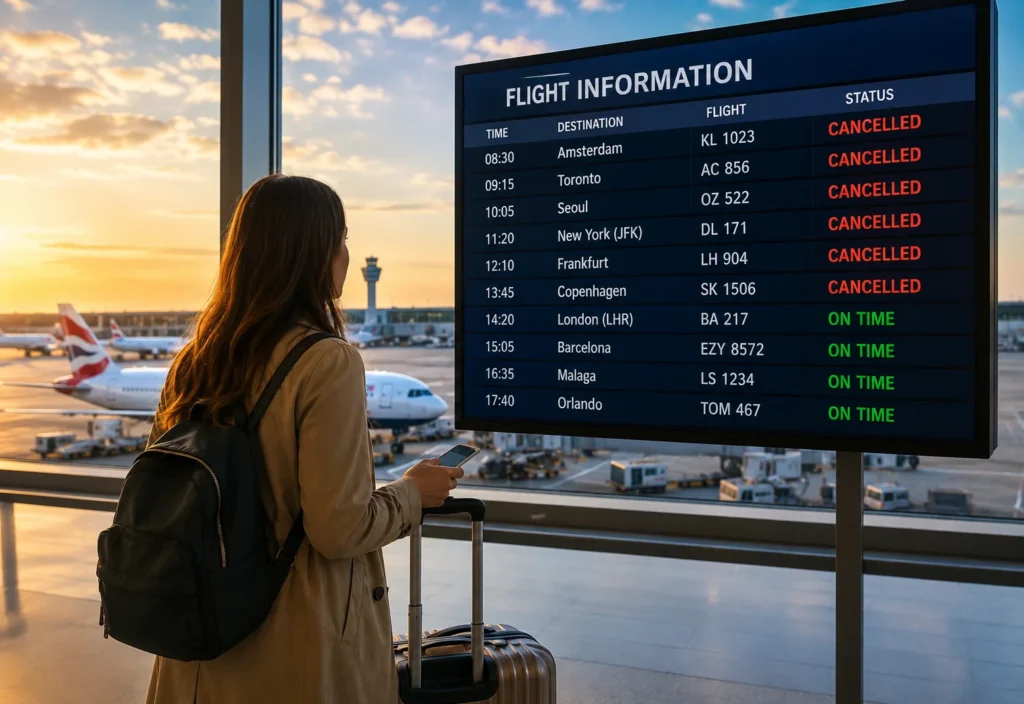
Airlines serving the United Kingdom are adjusting schedules and increasing ticket prices as rising jet fuel costs continue to affect global aviation and tourism markets. The changes come ahead of the busy summer holiday season, creating concerns among travellers planning international vacations and leisure trips.
Several international carriers operating routes to and from the UK have confirmed reductions in flight capacity as airlines seek to manage growing operational expenses linked to elevated fuel prices and disruptions in global energy supply chains.
Industry aviation data indicates that airlines worldwide removed approximately 13,000 flights from schedules during May 2026. Despite the reductions, travel industry organizations emphasized that the overall number of cancellations remains relatively limited compared to total global flight operations.
Tourism and aviation officials stated that popular holiday destinations from the UK continue to operate normally, with many major leisure routes remaining stable ahead of the summer tourism season.
Major Airlines Adjust Schedules Across European and Long-Haul Networks
A number of airlines serving UK airports have announced temporary schedule adjustments affecting selected domestic, European, and international routes. Airlines including KLM, Lufthansa, Air Canada, Delta Air Lines, SAS, and Asiana Airlines confirmed plans to reduce certain services as part of wider operational reviews.
The reductions are primarily focused on lower-demand routes and flight frequencies rather than widespread cancellations. Aviation analysts explained that airlines are attempting to preserve operational stability while controlling costs during a period of heightened fuel price volatility.
At the same time, several airlines and travel groups operating in the UK market stated that they do not currently expect major disruptions to planned summer schedules. British Airways parent company IAG, easyJet, and Jet2Holidays confirmed that operations remain stable and that no significant schedule changes are currently planned.
Tourism industry experts noted that airlines often target routes with multiple daily frequencies when reducing capacity, allowing passengers to be rebooked more easily on alternative flights.
Major UK airports continue to operate normally as authorities monitor aviation fuel supplies and airline operational planning.
Rising Jet Fuel Prices Drive Airfare Increases
The sharp increase in jet fuel prices has become one of the largest financial challenges facing airlines globally. Industry officials confirmed that aviation fuel costs rose significantly following disruptions to international energy supply routes connected to ongoing geopolitical tensions in the Middle East.
Many airlines have responded by introducing fare increases, adjusting baggage fees, and reviewing operational costs to offset higher fuel expenses.
Airlines and airline groups that have indicated fare adjustments or additional charges include Air France-KLM, Virgin Atlantic, Thai Airways, Pakistan International Airlines, Turkish Airlines-Sun Express, and British Airways owner IAG.
Long-haul international routes have experienced some of the largest fare increases due to extended flight times and altered flight paths designed to avoid restricted airspace and high-risk areas.
Industry tourism analysts stated that airlines are still relying partially on fuel supplies secured through earlier purchasing agreements, but longer-term fuel costs are expected to remain elevated if supply pressures continue.
Tourism authorities across Europe are encouraging travellers to plan holidays early and remain flexible regarding travel dates and destinations as pricing conditions continue evolving.
Tourism Industry Encourages Early Holiday Bookings
Tourism ministries and travel organizations across Europe continue encouraging travellers to book holidays early as airlines review future pricing strategies for the remainder of the year.
Officials within the European tourism sector noted that airfare volatility may continue throughout the summer season as airlines respond to changing operational and fuel market conditions.
Travel experts suggest that flexible booking strategies may help travellers manage rising holiday costs. Tourists are increasingly being advised to consider alternative travel dates, secondary airports, rail travel options, or domestic tourism opportunities to reduce expenses.
Several tourism boards emphasized that despite operational adjustments, international tourism demand remains strong and the majority of scheduled flights continue operating without disruption.
Travel advisers also recommended that passengers purchase comprehensive travel insurance policies that include protection for flight delays, cancellations, and travel disruptions.
Industry officials warned that while airlines and tour operators may ultimately reimburse eligible costs during disruptions, travellers could still face temporary out-of-pocket expenses while claims are processed.
Passenger Rights Remain Protected During Flight Disruptions
Government aviation authorities and consumer protection agencies continue reminding passengers that airline travellers maintain important rights when flights are canceled or delayed.
Under existing passenger protection rules, airlines are generally required to offer passengers either alternative transportation or refunds if flights are canceled. Airlines must also provide assistance such as meals, accommodation, and communication support during extended delays under standard operating circumstances.
However, aviation regulators noted that extraordinary situations such as armed conflict, severe weather, or major fuel supply disruptions may affect compensation obligations in some cases.
Passengers booking package holidays through licensed tour operators receive additional protections. Tourism regulations require package holiday companies to provide suitable alternatives, extended accommodations, or refunds if travel arrangements are significantly disrupted.
Consumer protection agencies are encouraging travellers to carefully review booking conditions, airline policies, and travel insurance coverage before confirming summer holiday plans.
Aviation Industry Faces Continuing Operational Challenges
The current aviation environment reflects broader challenges affecting the global tourism and airline industries in 2026. Rising fuel prices, geopolitical instability, supply chain pressures, and operational costs continue shaping airline strategies worldwide.
Airlines are increasingly focused on fuel efficiency, fleet modernization, and operational flexibility to reduce long-term exposure to volatile energy markets. Many carriers are also reevaluating route profitability and network structures to improve resilience during uncertain economic conditions.
Despite the challenges, tourism demand across Europe and international leisure markets remains comparatively strong. Airports, airlines, and tourism authorities continue working together to maintain travel stability during the busy summer season.
Industry experts believe that while some flight schedules and fares may fluctuate in the coming months, the overall tourism sector remains resilient due to sustained consumer interest in international travel experiences and holiday tourism.
As airlines continue adapting to changing market conditions, travellers are expected to benefit from improved planning transparency, operational flexibility, and enhanced consumer protections throughout the evolving summer travel season.