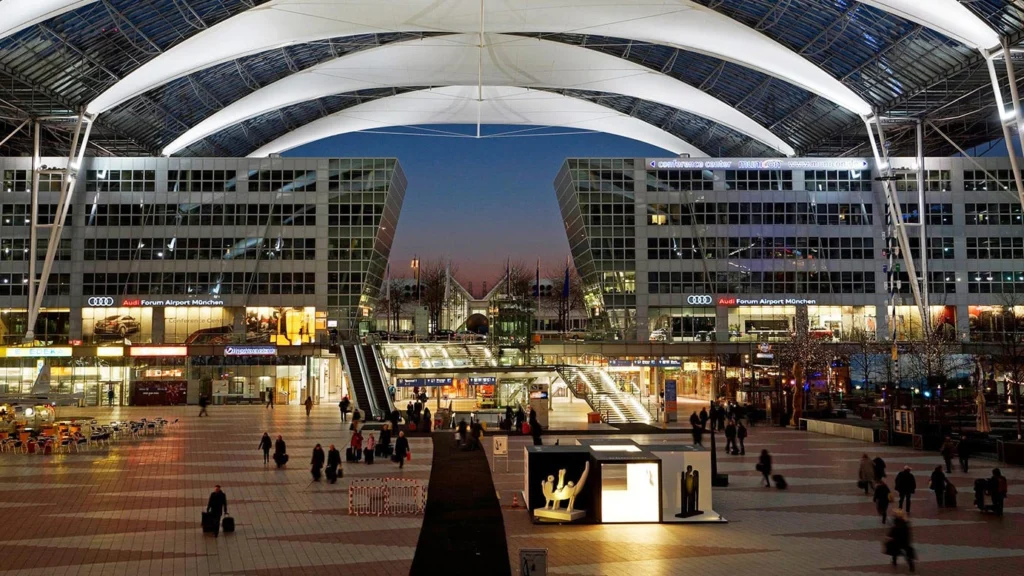
Munich Airport temporarily suspended flight operations on the evening of June 7, 2026, after a burning smell inside its air traffic control tower triggered an emergency evacuation. The precautionary shutdown disrupted arrivals and departures at one of Germany’s most important international gateways, creating delays, diversions, and uncertainty for passengers travelling across Europe and beyond.
The tower was evacuated at approximately 20:33 local time after personnel detected the unusual odour. German air navigation authorities halted airport flight movements while emergency teams inspected the facility and assessed whether the smell indicated a fire or another safety risk.
Operations resumed later in the evening after the affected technical component was replaced and the tower returned to service. However, passengers continued to face residual delays as airlines and airport teams worked to restore schedules and manage the backlog.
Smoke Smell Prompts Immediate Tower Evacuation
The air traffic control tower plays a critical role in coordinating aircraft movements on runways and taxiways. When controllers left the facility as a precaution, Munich Airport could not continue normal flight operations safely.
Emergency response teams inspected the tower and found no active fire. The burning smell was linked to a technical component in the ventilation system, which was replaced before unrestricted tower operations resumed.
The decision to evacuate the tower and suspend flights reflected strict aviation safety procedures. Even when no visible flames or smoke are present, any potential risk inside an air traffic control facility requires an immediate response.
Delays and Diversions Affect Passenger Journeys
The disruption had a wider impact because Munich Airport serves as a major connection point for domestic, European, and long-haul travel. Departing aircraft remained on the ground during the suspension, while some incoming flights required revised arrival plans.
Passengers with connecting journeys faced the possibility of missed onward flights, changed gates, longer terminal waits, and adjusted boarding times. Airlines and airport teams worked through the evening to resequence departures and manage aircraft movements after the tower returned to operation.
Travellers using Munich Airport were advised to check flight status directly with their airlines before travelling to the airport. Even after flights resumed, schedule recovery required time because aircraft, crews, and airport slots had to be repositioned.
Munich Airport Remains a Key European Gateway
The incident highlighted the importance of Munich Airport within Europe’s aviation network. The airport connects Bavaria with major cities across Germany, Europe, Asia, the Middle East, and North America. A temporary suspension at such a significant hub can quickly influence passenger journeys well beyond the airport itself.
International travellers using Munich as a transit point may experience knock-on effects when delays affect connecting flights. Hotels, airport transfer providers, rail passengers, tour operators, and business travel services can also face short-notice changes when aviation schedules are disrupted.
For Munich’s tourism sector, reliable air connectivity remains essential. The Bavarian capital attracts leisure visitors throughout the year with its cultural attractions, historic centre, museums, dining scene, seasonal events, and access to surrounding destinations. The airport also supports tourism across southern Germany and neighbouring Alpine regions.
Safety Takes Priority During Airport Recovery
Although the suspension caused inconvenience, the emergency response demonstrated the importance of prioritising passenger and operational safety. Air traffic control systems must function without uncertainty before aircraft movements can resume.
The incident also showed how a technical issue in a single critical facility can affect a much larger travel network. Airport infrastructure, ventilation equipment, emergency protocols, and rapid communication all play an important role in maintaining aviation reliability.
Travellers should allow additional time when travelling through Munich Airport following a disruption and monitor airline updates closely. Passengers with connections should review revised departure times, gate information, and any changes to onward travel arrangements.
Flights Resume After Precautionary Shutdown
Munich Airport returned to flight operations after the technical issue was addressed and the tower was cleared for use. Airport teams continued working to reduce delays and stabilise schedules as quickly as possible.
The smoke scare served as a reminder that aviation safety procedures can temporarily interrupt journeys but remain essential at major international airports. For passengers, the most practical step is to confirm flight status before departure and remain prepared for schedule adjustments while operations return to normal.
For more travel news like this, keep reading Global Travel Wire