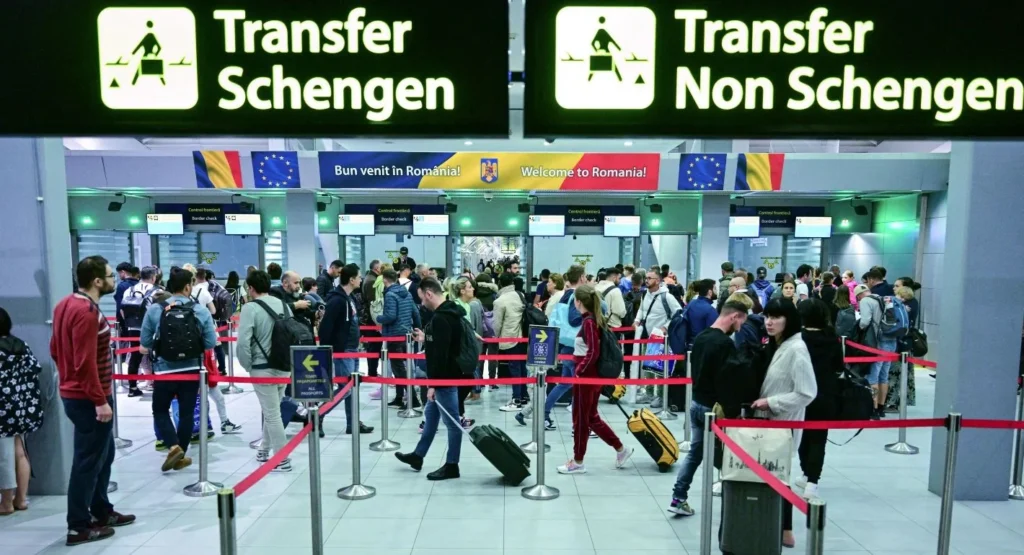
Tourists travelling between North Macedonia and the Schengen area should prepare for longer immigration waits as Europe’s biometric Entry/Exit System changes border processing.
Current UK government travel advice warns passengers to allow additional time at European Union country borders. The digital system can require extra processing for each eligible traveller entering or leaving the Schengen area.
The warning does not advise against visiting North Macedonia. It also does not indicate a border closure, security emergency or suspension of international transport.
However, it has important implications for road travellers, coach groups and air passengers using Schengen connections. Longer checks could affect transfers, hotel arrival times, sightseeing schedules and onward transport.
North Macedonia remains outside the Schengen area. Therefore, travellers moving between the country and participating European states must continue passing through immigration controls.
Biometric checks transform border processing
The Entry/Exit System, commonly called EES, digitally records eligible non-EU nationals making short visits to participating European countries.
Passport control officers may capture a facial image, scan fingerprints and record travel-document details. The system also registers entry and departure information.
These electronic records replace manual passport stamping for many short-stay visitors. They help border authorities confirm identities, identify overstays and monitor compliance with Schengen travel limits.
Initial registration may take longer than a conventional passport inspection. Later journeys can involve checks against information already stored in the traveller’s digital record.
EES is separate from ETIAS, the planned travel authorisation for eligible visa-exempt visitors. Travellers should not confuse the biometric border system with a visa or assume that registration replaces existing entry requirements.
Balkan road trips face scheduling pressure
The disruption warning is particularly important for tourists combining North Macedonia with Greece or other European destinations.
Greece is a Schengen member and an important direct gateway for road traffic. Private cars, coaches and organised tours moving across the Greek–North Macedonian border could encounter longer processing times.
A short delay for one person may become more significant when officials must process every passenger on a coach. Tour operators may need to revise transfer schedules, rest stops, guide hours and hotel check-in arrangements.
Independent motorists should avoid itineraries that depend on a precise border-crossing time. Passenger volumes, staffing, system availability and the number of first-time registrations can all influence queues.
Travellers should keep passports and supporting documents accessible. Water, medication, suitable clothing and charged phones can also make an unexpected wait more manageable.
Routes involving Albania, Bulgaria, Kosovo or Serbia may include different immigration arrangements. Visitors must check the rules applying to every country on their itinerary rather than relying only on North Macedonia’s requirements.
Flight connections may require extra time
North Macedonia has two international air gateways: Skopje International Airport and St Paul the Apostle Airport in Ohrid.
The EES warning does not indicate that either airport will close or that flights will be cancelled. Its main aviation impact concerns passengers entering or leaving the Schengen area during connecting journeys.
Travellers transferring through a Schengen airport should determine whether they must pass through immigration before reaching the next gate. They should also confirm whether checked baggage continues directly to North Macedonia.
Separate tickets present additional risk. An airline may not provide rebooking protection when an immigration delay causes a passenger to miss an independently purchased onward flight.
Passengers should select realistic connection times and follow instructions from airlines, airports and border officials. They should also allow additional time before departure when EES checks occur on the outbound journey.
Hotels and tours may face delayed arrivals
Hotels in Skopje, Ohrid and communities near major road corridors could experience less predictable guest arrival times.
Accommodation providers may need flexible check-in procedures and clearer communication with coach operators. Restaurants, attractions and local guides could also face scheduling problems when groups arrive later than expected.
Tour companies offering programmes across Greece and North Macedonia should add practical border buffers. They must avoid promising a specific crossing time because immigration procedures remain under government control.
The warning does not justify cancelling North Macedonia holidays. Instead, it calls for more realistic planning across every stage of a multi-country itinerary.
Foreign tourism growth increases importance
Official statistics show why dependable international access matters to North Macedonia’s visitor economy.
Total tourist arrivals increased by 7.8% during 2024 compared with 2023. Foreign arrivals rose by 13.1%, although domestic arrivals decreased by 1%.
Registered tourism nights increased by 5.2%. Foreign visitor nights grew by 8.9%, while domestic nights rose by 2.1%.
The figures underline the growing contribution of international visitors to hotels, restaurants, transport providers, guides and attractions. However, they do not represent every border crossing or day visitor.
No official forecast has estimated how EES delays will affect tourism revenue, employment or cancellations. The immediate pressure is more likely to involve uncertain schedules and additional operating time.
Visitors can continue travelling
North Macedonia remains open to international tourists. Visitors can continue exploring Skopje, Lake Ohrid, Bitola, national parks, mountain landscapes and cultural attractions.
Before departure, travellers should verify passport validity and the entry rules for every transit country. They should identify where their journey crosses a Schengen external border and allow sufficient time.
Travel insurance can provide useful protection, although policies vary. Visitors should examine exclusions covering border delays, missed connections and independently booked transport.
The North Macedonia Schengen border warning is ultimately a preparation notice, not a tourism ban. Clear information, flexible schedules and properly planned connections can help travellers manage longer checks while supporting the country’s expanding international tourism market.
For more travel news like this, keep reading Global Travel Wire