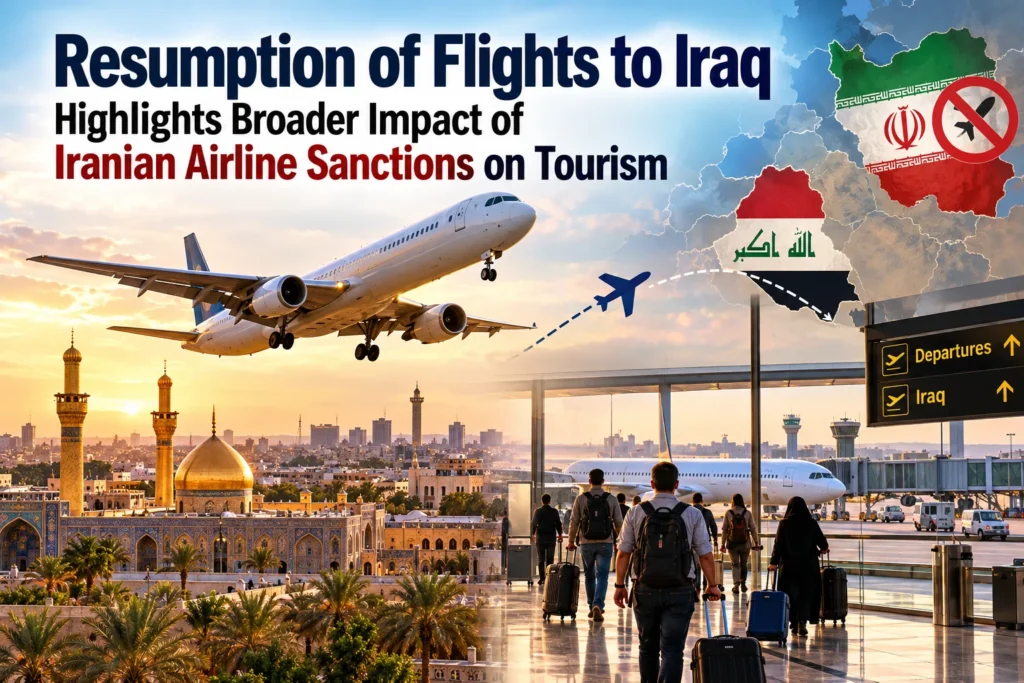
When state broadcasting channels recently announced the resumption of passenger air services connecting Mashhad in eastern Iran to Najaf in Iraq, the headline gained immediate regional attention. Under standard aviation operating conditions, a single short-haul flight between established cultural centers would represent routine scheduling. However, against a backdrop of strict international aviation restrictions, the return of commercial air transit along the Mashhad to Najaf corridor underscores the deep operational pressures currently shaping regional mobility.
Comprehensive regulatory measures and civil aviation sanctions have targeted twenty-seven domestic Iranian air carriers, limiting standard international ground handling, refueling arrangements, and routine airport service agreements across multiple foreign jurisdictions. While regional diplomatic discussions continue regarding flight operations with neighboring partners including Oman and Azerbaijan, as well as limited scheduled services connecting Tehran and Mashhad with Karachi, commercial aviation authorities face significant hurdles in restoring consistent multi-destination route networks.
Government statements confirm that primary freight and foreign trade logistics remain resilient, relying overwhelmingly on maritime shipping lanes, rail infrastructure, and overland commercial trucking corridors rather than air cargo networks. Nevertheless, the primary strain of air travel restrictions falls squarely on civilian passenger movements, regional tourism flows, and international cross-border travel.
Travel Costs and Border Logistics Strain Regional Tourism Mobility
The contraction of direct commercial air links has drastically reshaped travel dynamics for individuals and families seeking regional cross-border transit. International airfares on non-sanctioned regional carriers operating out of main transit points have seen sharp increases, placing standard holiday travel and family visits beyond the reach of many ordinary travelers.
As direct regional flight options diminish, overland border infrastructure has experienced heightened congestion. Travelers journeying to neighboring destinations such as Turkey or regional hubs frequently face extended customs processing times and lengthy road journeys through land crossings like the Bazargan border post. Travel industry agency specialists note that high currency conversion costs combined with elevated international ticketing prices have transformed standard leisure travel into an expensive, logistically complex endeavor.
While limited official exemptions granted by host civil aviation authorities allow specific regional routes—such as scheduled passenger flights into Najaf—to maintain vital religious and pilgrimage connections, these localized corridors cannot fully substitute for major international transit hubs. Neighboring international hubs provide comprehensive onward global connectivity to Europe, North America, and Asia that regional sacred tourism destinations are not structured to supply.
Socioeconomic Impacts and Cultural Isolation Concerns in Regional Travel
Beyond the immediate financial burden placed on individual passengers, social analysts and tourism experts highlight broader cultural implications associated with limited foreign travel access. For decades, accessible air links to regional destinations like Istanbul, Muscat, and Dubai served as vital economic and social bridges, offering travelers exposure to diverse international hospitality standards, lifestyle options, and modern commercial tourism infrastructure.
When affordable access to foreign travel is curtailed by operational and financial barriers, cultural exchange and international exposure shrink. Tourism researchers observe that restricted access to global environments can lead to heightened social frustration, reduced international exchange, and a isolation of leisure activities within domestic boundaries.
The resumption of limited regional service between Mashhad and Najaf demonstrates how regional aviation authorities continue searching for pragmatic transit solutions under severe operational constraints. However, as international airline sanctions maintain pressure on domestic commercial fleets, the primary long-term impact continues to manifest in reduced global connectivity and limited international travel opportunities for everyday regional passengers.
For more travel news like this, keep reading Global Travel Wire