As travel industry leaders and policymakers convene at the World Travel & Tourism Council (WTTC) Global Summit in Valletta, Malta, international attention has turned sharply toward regional aviation infrastructure and travel security. Deliberations centered on expanding international connectivity, accelerating sustainable infrastructure investment, and fostering global tourism resilience were met with immediate real-world challenges following security incidents involving critical transport hubs in the Gulf region.
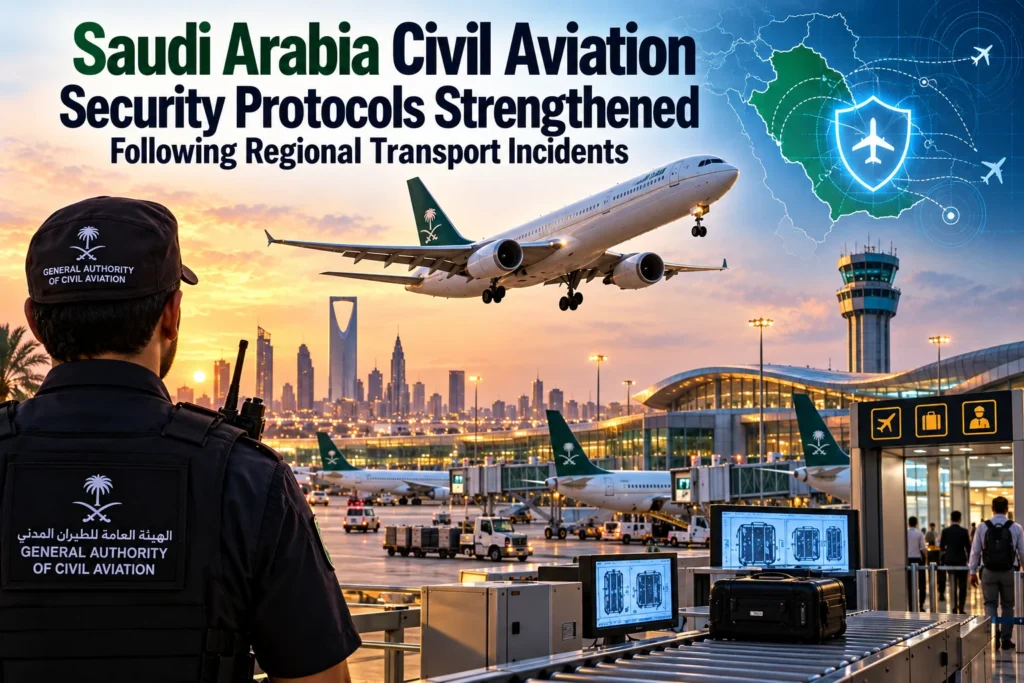
Civil aviation authorities confirmed that security incidents targeting key air transportation facilities in Saudi Arabia, including King Khalid International Airport in Riyadh as well as regional facilities in Abha, Jazan, and Najran, resulted in operational adjustments, temporary flight suspensions, and safety protocols across several facilities. With official reports confirming casualties and injuries among airport personnel and international residents, the incidents underscored the direct operational intersection between regional security and international transit networks.
The developments transformed abstract discussions around crisis management into an immediate focus for government representatives, commercial airlines, and hospitality investors attending the global summit.
Strategic Significance of Riyadh’s Aviation Infrastructure for Vision 2030
King Khalid International Airport serves as the central commercial gateway to Saudi Arabia’s capital, handling significant volumes of international business travelers, government delegations, and leisure tourists. The facility plays an integral role in supporting Saudi Arabia’s long-term economic strategy under Vision 2030, which aims to diversify the national economy by expanding cultural, heritage, and entertainment tourism.
According to official statistics published by the Saudi Ministry of Tourism and the General Authority of Civil Aviation (GACA), the Kingdom has recorded substantial growth in international visitor arrivals, reaching over 27 million inbound tourists annually as part of an overarching target to welcome 150 million domestic and international visitors by the end of the decade. Central to this strategy is the establishment of a robust aviation network, highlighted by the launch of national carrier Riyadh Air, designed to establish the capital as a premier global aviation hub connecting Europe, Asia, and Africa.
When main operational hubs face temporary schedule adjustments, delayed departures, or rerouted flight paths, the wider travel ecosystem—comprising hotel operators, tour agencies, global conference organizers, and foreign investors—must adapt quickly. International air carriers evaluating route safety routinely review risk assessments, airspace advisories, and insurance parameters before maintaining regular schedules.
Aviation Industry Priorities and Long-Term Gulf Tourism Resilience
In response to airspace and airport security concerns, civil aviation regulators and international carriers continue to monitor operational conditions closely. Standard safety protocols prioritize passenger and crew security, resulting in temporary service pauses or route modifications when unexpected airspace challenges arise.
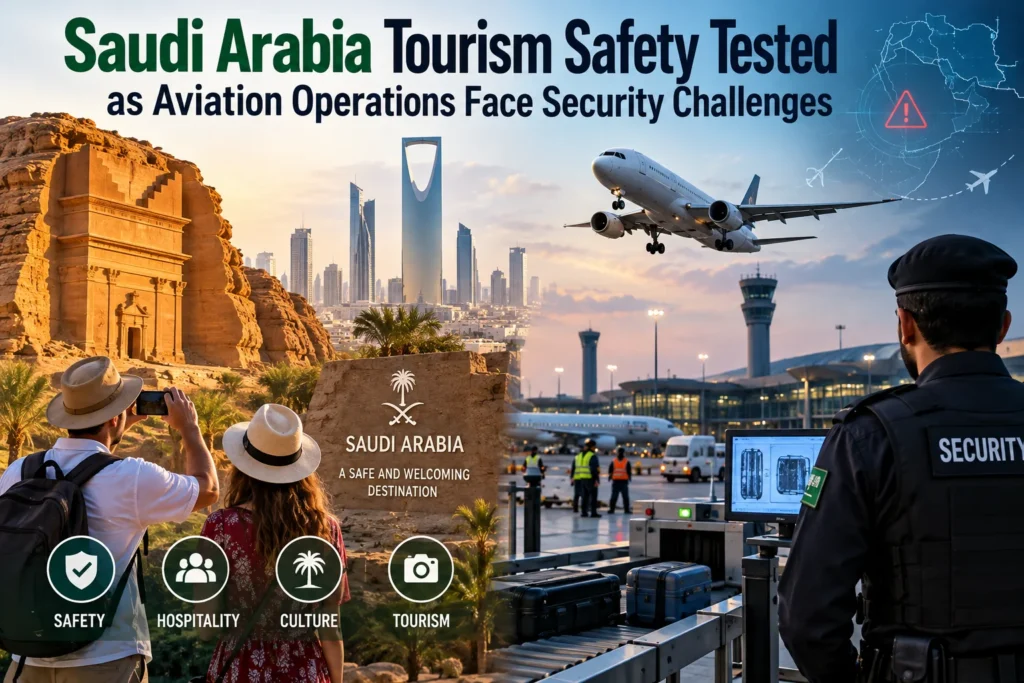
Despite short-term disruptions, global tourism stakeholders at the WTTC Summit emphasized that long-term travel demand across the Middle East remains grounded in strong fundamentals. Large-scale capital investments in destination infrastructure—including mega-developments along the Red Sea coast, historic cultural sites in Diriyah, and new entertainment districts—continue to draw international partnerships and global hotel management commitments.
Industry experts note that maintaining traveler confidence during periods of regional uncertainty relies heavily on transparent communication, verified safety measures, and adaptive operational planning. As aviation authorities maintain strict safety measures across major transit hubs, international travel organizations and government bodies remain committed to safeguarding passenger well-being while sustaining global travel connectivity.
For more travel news like this, keep reading Global Travel Wire