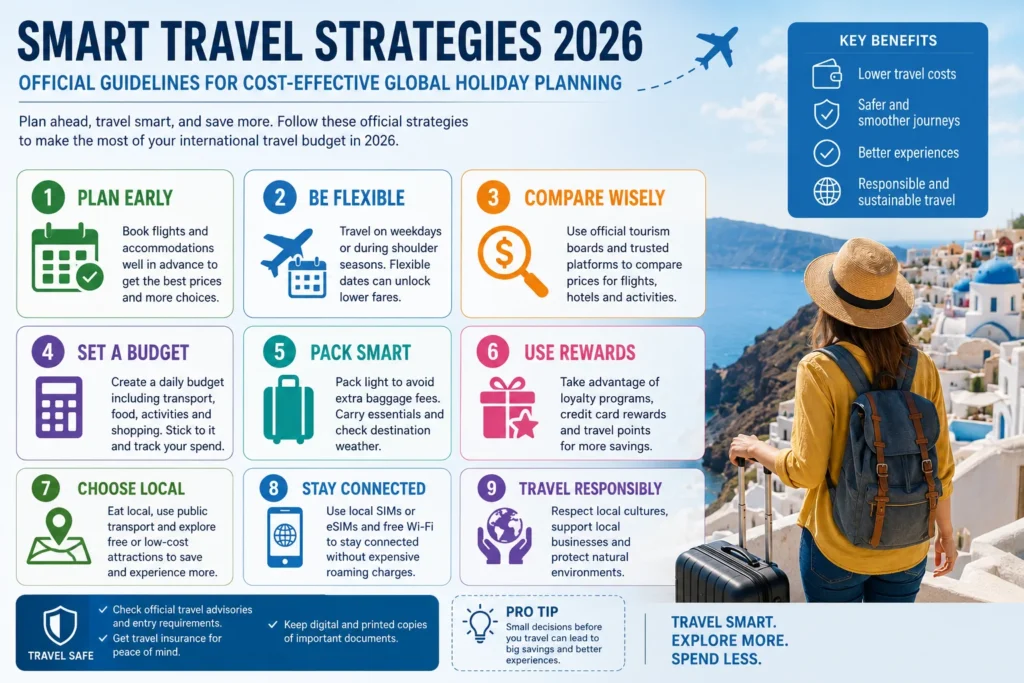
Navigating international travel in 2026 requires an updated approach as global tourism adapts to evolving economic dynamics, shifting air passenger demand, and digital transit innovations. Official statistics from UN Tourism highlight that despite elevated transportation and accommodation costs, global international arrivals reached over 300 million in the first quarter of 2026 alone, demonstrating strong underlying travel demand worldwide.
However, with rising operational expenses, fluctuating aviation fuel costs, and varying capacity adjustments reported by the International Air Transport Association, travelers are increasingly seeking structured, data-driven methods to optimize their journeys. Implementing verified smart travel strategies 2026 allows holidaymakers to minimize unexpected expenses, ensure smoother airport transit, and execute well-planned itineraries without sacrificing safety or comfort.
Leveraging Official Flight Industry Patterns for Maximum Savings
Airline passenger load factors across major international routes consistently average above 84 percent, according to industry performance releases from aviation authorities. Because passenger capacity remains tightly managed across global networks, traditional last-minute booking practices often result in steep price increases rather than clearance discounts.
Official travel management guidelines recommend securing long-haul international flights between eight and twelve weeks prior to departure. For regional domestic routes, booking three to six weeks in advance aligns best with carrier inventory release cycles. Additionally, official civil aviation data demonstrates that mid-week departures, specifically on Tuesdays and Wednesdays, routinely offer lower average fare baselines compared to weekend travel periods, as business travel demand shifts and leisure capacity opens up.
Understanding Dynamic Pricing and Multi-Modal Transit Networks
Dynamic pricing models utilized by global carriers respond in real time to search volume surges, localized holiday calendars, and fuel surcharge updates. To navigate these automated pricing algorithms effectively, travel planning should rely on official route aggregators and direct airline booking portals that disclose all mandatory government taxes and passenger facility charges upfront.
Beyond air travel, integrating regional rail and municipal public transit networks into overall itinerary planning provides significant financial relief. National transport ministries across Europe and Asia have expanded unified digital travel passes that grant unlimited access to high-speed rail, regional commuter trains, and urban metro systems at fixed discounted rates. Utilizing multi-modal transit passes not only lowers local transfer expenses but also mitigates urban traffic congestion in major tourist capitals.
Streamlining Border Clearance Through Digital Travel Declarations
Government border agencies and international airport authorities are accelerating the rollout of digital identity systems and biometric border controls across global hubs. National customs and border protection releases confirm that pre-registering arrival details through official government mobile applications significantly reduces wait times at immigration checkpoints.
Travelers should complete electronic travel authorizations, digital health declarations, and customs declarations via verified government portals at least 72 hours prior to embarkation. Securing digital entry approvals in advance prevents administrative delays at departure gates, avoids rush-processing fees, and ensures full compliance with updated international entry requirements.
Optimizing Accommodation Logistics and Regional Travel Timing
Accommodation costs represent one of the largest budget components for international trips. UN Tourism research indicates a growing trend toward regional diversification, where travelers explore secondary cities and near-destination hubs to avoid peak-season rate spikes in primary tourist capitals.
To secure optimal lodging value, travelers are advised to book directly through verified hotel portals or official tourism board reservation platforms, which frequently offer flexible cancellation policies and bundled amenity benefits. Furthermore, scheduling visits during shoulder seasons—typically late spring and early autumn in the Northern Hemisphere—delivers milder weather, reduced crowding at UNESCO World Heritage sites, and substantially lower nightly room rates across municipal hospitality sectors.
Managing Currency Exchange and Financial Security Abroad
Financial security during international travel depends on utilizing transparent, low-fee monetary transactions. Central bank releases and consumer protection advisories repeatedly warn against using airport currency exchange kiosks, which routinely apply inflated exchange margins and substantial service fees.
Travelers should instead utilize multi-currency digital accounts or credit cards that feature zero foreign transaction fees and convert funds using real-time interbank exchange rates. When paying via card terminals overseas, choosing to settle transactions in the local destination currency rather than one’s home currency prevents costly dynamic currency conversion surcharges imposed by merchant point-of-sale systems.
Adopting Off-Peak and Regional Travel Models
Official tourism statistics confirm that destinations offering robust regional infrastructure and diversified cultural attractions are seeing steady growth as travelers seek balanced, sustainable experiences. By prioritizing destinations that invest in public safety, sustainable mobility, and transparent visitor pricing, international tourists can maximize the value of their holiday investments.
By combining advance airfare booking, digital border clearance tools, official transit passes, and direct lodging reservations, holidaymakers can navigate the complexities of international travel efficiently. Employing these verified smart travel strategies 2026 ensures that modern journeys remain rewarding, secure, and economically sustainable.
For more travel news like this, keep reading Global Travel Wire