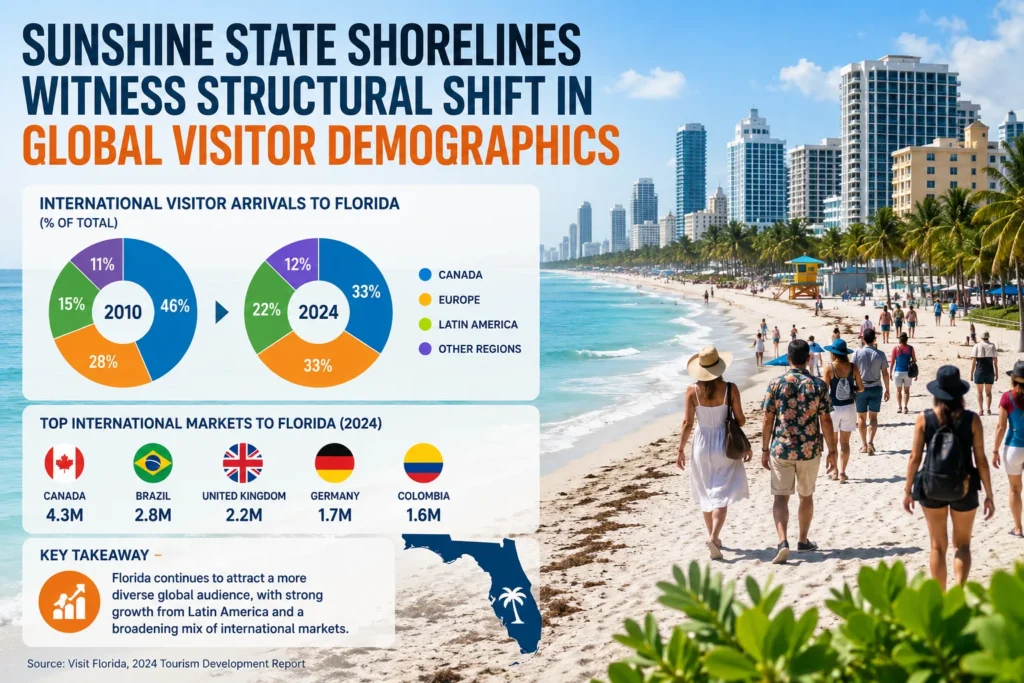
A profound structural rebalancing is transforming the vacation landscape along the western edge of the Sunshine State. Official tourism intelligence datasets released for the mid-2026 travel season reveal that Florida Gulf Coast international tourism is entering a highly dynamic phase characterized by a distinct contraction in long-haul arrivals from traditional European and Canadian origin markets. As long-stay coastal travel patterns from these historical strongholds decelerate, regional hospitality networks and destination managers are actively pivoting their promotional architecture toward robust domestic feeder cities and surging Latin American traveler segments.
According to comprehensive seasonal analysis from Visit Florida, the state’s official tourism marketing corporation, the current evolution represents a fundamental realignment of the inbound visitor mix rather than a brief contraction. While overall traveler volumes arriving in the state continue to break baseline records, the specific submarkets along the Gulf Coast that have traditionally built their seasonal economic models around extended international stays are encountering softer occupancy metrics. This structural transition is forcing an immediate recalibration of how coastal destinations showcase their assets to a rapidly changing global audience.
Geographic Variances and Shifting Source Markets
The exposure to this shifting demographic trend is most visible across prominent Gulf Coast vacation spots, including the Tampa Bay region, Sarasota, Naples, Fort Myers, and Clearwater. Historically, these coastal communities have relied on a dependable influx of high-spending, multi-week visitors from Canada and Western European nations such as the United Kingdom, Germany, Italy, Denmark, and Norway. However, verified public registry figures indicate that more than 90 percent of all visitors to the state are now sourced from domestic origins, leaving long-haul international segments with a reduced proportional impact on total tourism performance.
The vital Canadian market segment has registered a noticeable double-digit decline in arrivals, interrupting decades of established seasonal migration habits. Industry data published by state transport boards links this cooling demand to a combination of escalated transborder aviation pricing, tightening discretionary spending thresholds, and significantly higher travel insurance premiums tied to changing sub-tropical weather patterns.
Concurrently, Western European inbound performance remains largely flat or marginally down. Vacationers from the continent are increasingly choosing closer geographical alternatives, redirecting their holiday capital toward destinations in the Mediterranean, the Middle East, and parts of Asia that provide highly competitive lodging rates and reduced flight durations.
Conversely, Latin American source markets are quickly establishing themselves as the primary catalysts for inbound international growth. Enhanced flight frequencies through major hubs like Miami International Airport and secondary regional runways have unlocked seamless access for short-haul travelers. Brazil stands out as an exceptional premium driver, yielding elevated expenditure metrics across retail, dining, and luxury hospitality sectors. Mexico continues to supply highly consistent short-haul family vacation volume, while Colombia and select Andean economies are expanding their footprint across both leisure and corporate travel channels, completely altering the traditional seasonal cadence of the coastal economy.
Operational Volatility for Mid-Range Accommodations and Attractions
The rebalancing of source markets introduces specific financial and operational realities that coastal businesses must navigate. Property management groups specializing in vacation rentals face increased revenue volatility due to fewer multi-month bookings from international guests. Local excursion operators, nature cruise companies, and cultural attractions are also reporting a lower proportion of international tour participants, which is only partially offset by the shorter stay intervals of domestic weekend travelers.
Furthermore, shorter booking windows have become the absolute standard. Rather than planning beach holidays six to nine months in advance, contemporary travelers are waiting until days before departure to finalize their lodging. This shift creates distinct challenges for resort operators attempting to forecast seasonal inventory needs, food and beverage supplies, and hospitality labor requirements. Intense global competition from Mediterranean beach resorts adds additional pressure on mid-range properties along the Gulf Coast to prove their overall value proposition.
Strategic Adaptation and Targeted Campaigns
State tourism administrators note that while total visitor counts remain insulated due to phenomenal domestic travel demand, the absence of traditional long-stay international spending fundamentally alters the net economic yield per visitor. Public tourism officials emphasize that the modern travel economy requires coastal operators to transition away from historical seasonal dependencies, building instead a resilient, year-round framework centered on domestic and regional visitors.
Hospitality optimization strategies recommend that mid-range accommodation providers adapt by introducing properties explicitly configured for remote-work flexibility, wellness-focused multi-day packages, and highly dynamic pricing models. These initiatives are carefully designed to attract affluent remote professionals and family units migrating temporarily from the Northeastern and Midwestern United States.
Practical Logistics and Planning for Regional Visitors
For travelers aiming to experience the unique white-sand ecosystems of the Gulf Coast during this transition, current market conditions offer several tactical advantages. The shorter booking cycles prevalent across the industry mean that excellent lodging deals can frequently be secured closer to an intended departure date, allowing for highly spontaneous travel planning.
Prospective vacationers should closely monitor flexible mid-week lodging promotions as properties adjust rates to fill gaps left by departing international visitors. Given the evolving weather landscapes, travel planners strongly advise purchasing comprehensive trip protection policies that explicitly account for climate-related delays or mandatory evacuations. Additionally, comparing regional airline options with driving routes remains an excellent way to maximize value as hospitality groups expand long-stay promotional incentives to stabilize occupancy throughout the year.
For more travel news like this, keep reading Global Travel Wire