Thailand continues to rank among the most sought-after international destinations for Indian vacationers. The seamless flight connectivity, dynamic culinary landscapes of Bangkok, pristine shorelines of Phuket, and scenic islands of Krabi keep the country positioned at the top of seasonal travel checklists. However, anyone organizing an upcoming getaway must pay closer attention to their pre-departure paperwork.
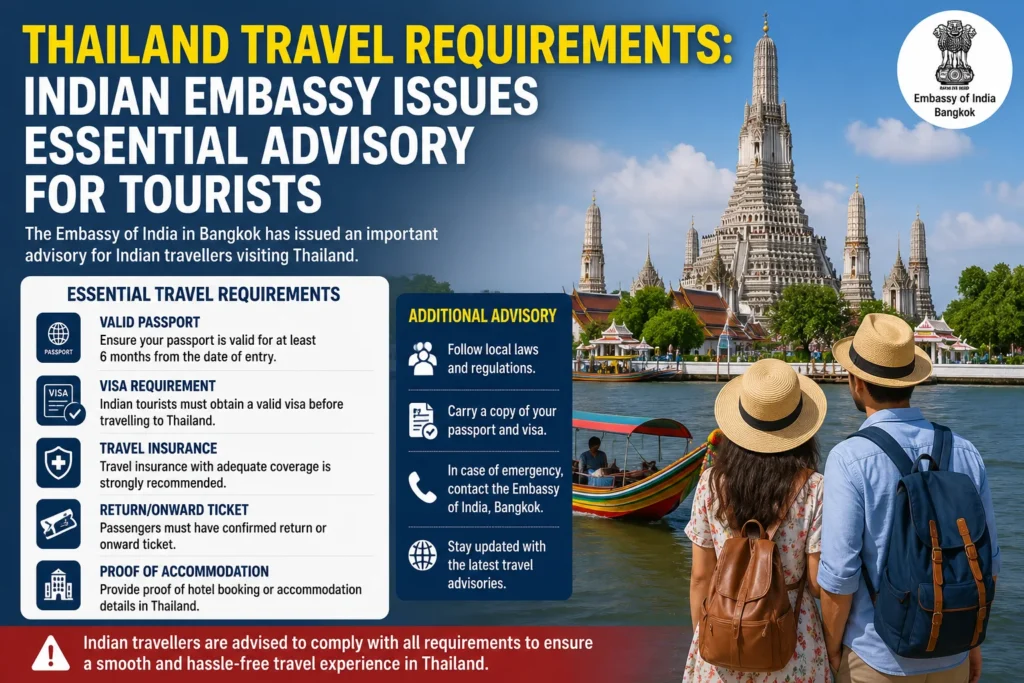
The Embassy of India in Bangkok has issued a comprehensive travel advisory for Indian nationals, explicitly detailing the crucial documentation and entry procedures mandated for visitors. This official notification aligns with recent adjustments made by Thai immigration authorities regarding entry protocols. While the standard criteria remain straightforward, administrative officials emphasize that having your individual paperwork perfectly organized is the key to preventing unwanted transit delays or denial of entry at the border.
Mandatory Checklist Before Boarding Your Flight
According to the official ministerial directive, specific baseline documents must be secured and presented upon arrival to satisfy the current immigration framework. International transit rules dictate strict adherence to these provisions to ensure a seamless holiday experience.
Valid Passport Framework
Your passport must possess a minimum validity of six months extending from the exact date of your scheduled arrival in Thailand. Immigration desks will systematically reject passports nearing expiration.
Confirmed Transit Bookings
Tourists are required to produce verified proof of return flight tickets or documented onward travel to an alternate destination. Alongside transit details, clear hotel booking confirmations matching the duration of the stay are mandatory.
Transparent Travel Itinerary
A structured travel plan detailing the cities, accommodations, and intended tour routes should be readily accessible in digital or physical formats to outline the clear purpose of your visit.
The Introduction of the Thailand Digital Arrival Card (TDAC)
A major highlight of the recent advisory focuses on the Thailand Digital Arrival Card (TDAC), an electronic protocol implemented by the Thai Ministry of Public Health and the Immigration Bureau. The digital application has entirely replaced the traditional paper-based TM6 immigration forms.
Completing the TDAC registration is a mandatory requirement for all foreign passport holders arriving by air, land, or sea. Eligible tourists utilizing visa exemption structures are not exempt from this procedure. The registration must be filed through the official government portal within 72 hours prior to landing in Thailand.
Upon successful electronic submission of personal data, accommodation addresses, and basic health declarations, travelers will receive a verification confirmation and a tracking QR code. Immigration officers at checkpoint terminals will request this code during the clearance process. Failing to submit this form before departure will result in immediate delays at the border checkpoints.
Financial Proof and Visa Verification Regulations
The embassy statement further highlights that travelers must be mindful of the financial parameters enforced by Thai border control. Visitors arriving under the Visa on Arrival (VOA) framework or utilizing current visa waiver facilities may be actively requested to demonstrate proof of sufficient financial subsistence.
Under official regulations, travelers are advised to carry a minimum of 20,000 Thai Baht per person in cash. This standard financial check serves as an international benchmark to verify that inbound tourists possess adequate liquid funds to comfortably sustain their local transport, food, and lodging expenses without violating entry conditions.
Furthermore, the advisory strictly warns against the misuse of tourist entry privileges. Individuals traveling to Thailand to fulfill local job offers or explore employment opportunities must secure a formal Non-Immigrant work visa through the appropriate diplomatic channels before buying their tickets. Attempting to enter on a vacation status while harboring employment intents is a severe violation of local immigration laws and will result in strict legal penalties or deportation.
Specialized Protocols for Groups and Transit Passengers
For those moving through international terminals with family members or organized tour groups, the embassy strongly suggests decentralized document handling. Each individual traveler, including minors, should physically carry their own independent passport, specific TDAC confirmation code, individual flight tickets, and personal hotel vouchers. Grouping all documents under a single family leader frequently slows down processing speeds at immigration counters.
Additionally, transit passengers using Thai airports as a stepping stone to a third country must hold active paperwork for their final destination. This includes valid onward visas and confirmed flight seating vouchers, as local checkpoint authorities retain the right to audit connecting passengers before permitting entry to outbound transit lounges. By dedicating a few moments to reviewing these official protocols prior to departure, travelers can look forward to a completely stress-free arrival.
For more travel news like this, keep reading Global Travel Wire