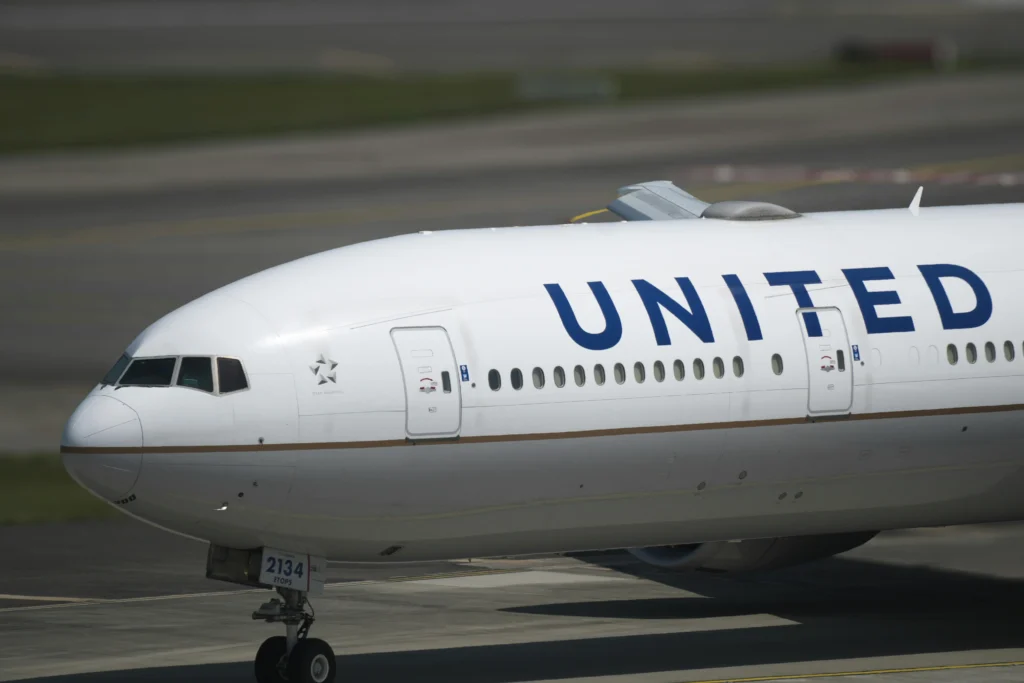
A mid-air security alert disrupted transatlantic travel when a United Airlines wide-body aircraft was forced to abandon its flight path over the Atlantic Ocean. The incident involved Flight UA236, a Boeing 767-400ER bound from Newark Liberty International Airport in New Jersey to Palma de Mallorca, Spain. The flight, carrying 190 passengers and 12 crew members, executed an emergency U-turn roughly an hour and a half into its journey after an onboard electronic device displayed a threatening network name.
Strict Protocols Triggered by Digital Threat Over the Atlantic
The diversion highlights the absolute zero-tolerance policy enforced by international aviation regulators regarding potential airborne threats. Federal aviation data indicates that the aircraft was cruising at 32,000 feet when a passenger noticed a discoverable Bluetooth signal broadcasting under the name “BOMB.” The passenger immediately notified the cabin crew, who escalated the matter to United Airlines’ corporate security operations center in Chicago.
Official reports from local port authority police confirmed that the flight crew issued multiple urgent public address announcements, giving travelers a strict ultimatum to disable all active Bluetooth connections. Despite these direct warnings, the unauthorized signal remained discoverable. Out of an abundance of caution and in compliance with federal transport security guidelines, the captain declared an international emergency—transmitting a standard “squawk 7700” emergency code—and turned the aircraft back toward the United States.
Remote Deplaning and Federal Law Enforcement Response
The aircraft landed safely back at Newark Liberty International Airport later that evening, where it was immediately met on the tarmac by a large contingent of local and federal law enforcement vehicles. In line with the Transportation Security Administration (TSA) protocols for potential explosive hazards, the aircraft was directed away from the main terminal gates to a isolated taxiway.
Under the supervision of federal agents and airport police officers, all 190 passengers were instructed to leave their carry-on baggage behind and evacuate the aircraft via mobile airstairs. Ground handling teams transported the passengers via shuttle buses back to the secure terminal area. According to airport operations statements, all travelers were required to undergo complete TSA rescreening to verify terminal security integrity while the aircraft, including its entire cargo hold, underwent a comprehensive sweep.
The Cost of Careless Device Management
An investigation by the Port Authority of New York and New Jersey revealed that the security panic was entirely ungrounded, stemming from the careless actions of a 16-year-old passenger. The teenager had renamed a personal wearable electronic device using the threatening term. Although the incident lacked criminal intent, the financial and logistical fallout severely impacted airport operations and passenger schedules.
The carrier accommodated the stranded travelers by organizing a replacement flight utilizing the same Boeing 767 aircraft after it received full security clearance. The rescheduled flight finally departed early the following morning, resulting in an overall arrival delay of more than nine hours for the passengers traveling to Spain.
In-Flight Technology and Personal Responsibility Regulations
This transatlantic flight security disruption underscores the growing operational challenges that personal electronics pose to modern commercial aviation. As international airlines increasingly add built-in Wi-Fi and Bluetooth-compatible features to their modern cabins, the boundary between consumer convenience and strict safety enforcement continues to narrow.
The Federal Aviation Administration (FAA) and international civil aviation bodies maintain strict legal guidelines regarding passenger behavior that interferes with crew duties or causes unnecessary flight diversions. Under federal statutes, individuals who initiate false threats or create conditions that mimic an emergency can face severe administrative fines, permanent placement on carrier restriction lists, and potential criminal prosecution.
Aviation safety experts emphasize that travelers must maintain strict digital hygiene while utilizing mobile networks onboard. This includes:
Adhering to Device Settings: Ensuring that all personal smartphones, tablets, and wearable technologies are kept in airplane mode as legally required from taxi to landing.
Network Naming Integrity: Keeping personal hotspots and Bluetooth discoverability names set to standard, factory-default configurations.
Immediate Compliance: Responding instantly to crew directives regarding electronic interference or connectivity shutdowns.
The operational response to Flight UA236 serves as a clear reminder that commercial airlines will always prioritize absolute safety over scheduling convenience. While the incident over the Atlantic caused significant travel disruptions for nearly 200 holiday bound passengers, the immediate deployment of emergency protocols demonstrates the rigorous nature of modern transport defense systems against any digital or physical vulnerability.
For more travel news like this, keep reading Global Travel Wire