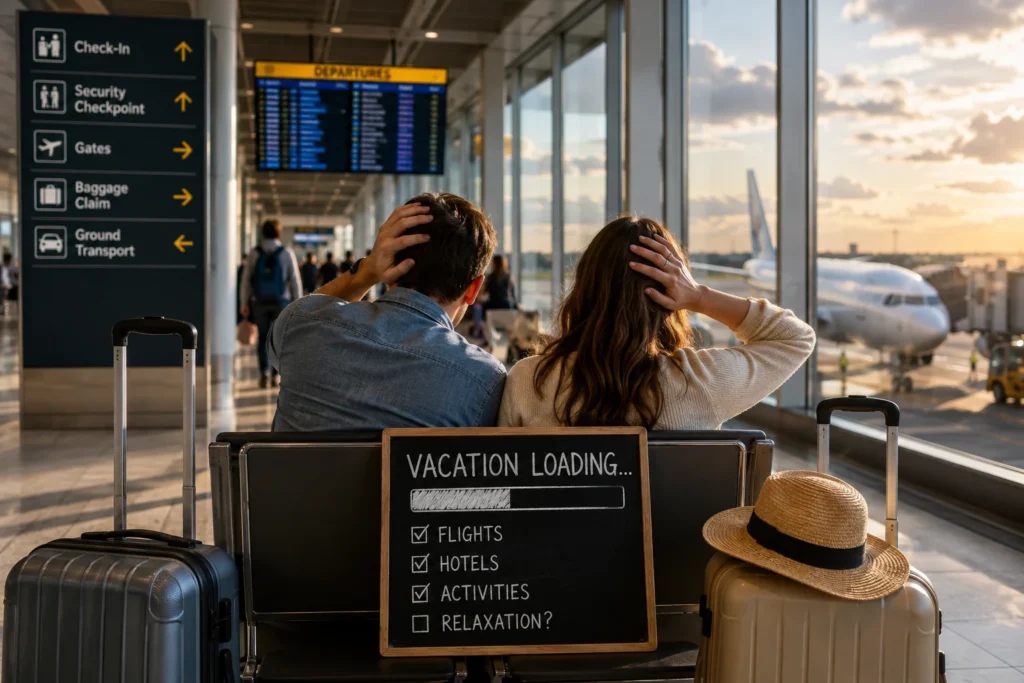
Holiday travel is supposed to be a time for rest, connection, and exploration. Yet, for many couples, navigating crowded terminals, strict security checks, and tight flight schedules causes unexpected friction long before reaching their destination. A viral phenomenon known as “airport divorce”—where couples temporarily separate at the gate or adjust their travel routines to handle pre-flight stress independently—has sparked widespread discussion about how air travel impacts personal relationships and overall trip satisfaction.
While the term sounds dramatic, industry experts and official tourism statistics reveal that peak travel stress is a very real challenge. Understanding the root causes of airport friction, along with adopting smarter travel strategies backed by official aviation and tourism recommendations, can turn a chaotic journey into a smooth start to any vacation.
Understanding the Friction: Why Airports Trigger Travel Stress
Airports present a unique combination of psychological and environmental pressures. Official transport data shows that global air passenger volume has steadily returned to record high levels, leading to busier terminals, longer check-in lines, and heightened security protocols. When individuals process high-stress environments differently, friction naturally occurs.
Several operational and psychological factors contribute to pre-flight friction between travel partners:
Differing Travel Temperaments: One partner may prefer arriving three hours early to wait quietly near the boarding gate, while the other prefers cutting it close to maximize time at home.
Navigational and Security Pressure: Adhering to strict baggage limits, liquid rules, and security screenings creates visual and cognitive sensory overload, heightening anxiety.
Financial and Time Pressure: Delays, flight changes, or unexpected airport expenses can strain budgets and test personal patience before the vacation officially starts.
Travel journalists and behavioral specialists note that the “airport divorce” concept is rarely about permanent separation. Instead, it serves as a humorous or tactical coping mechanism: couples divide tasks, split up to explore terminal amenities independently, or clear security at their own pace to preserve harmony for the rest of the journey.
Official Tourism Data: The Rise of Mindful and Hassle-Free Travel
Civil aviation authorities and national tourism boards continuously analyze passenger experience surveys to improve airport operations. Recent reports from global transport bodies highlight a rising consumer demand for seamless, low-stress transit options. Travelers are increasingly prioritizing convenience, wellness amenities, and streamlined digital processing to combat transit fatigue.
Official statistics from global airport operators show:
Increased Digital Adoption: Over 70% of modern travelers now utilize mobile boarding passes, biometric identification, and automated baggage drops to minimize time spent standing in terminal queues.
Demand for Quiet Zones: National aviation authorities report a sharp rise in passenger use of designated airport lounges, silent terminals, and wellness zones designed to reduce environmental noise and stress.
Growth in Pre-Booked Services: Passengers are booking fast-track security clearances, terminal parking, and airport lounge access well in advance to eliminate day-of-travel surprises.
These statistics underscore a broader evolution in consumer behavior. Travelers recognize that how they start their trip sets the tone for the entire holiday, prompting a shift toward proactive travel management.
Practical Strategies for Stress-Free Airport Travel
To avoid pre-departure turbulence and maintain harmony with your travel companion, aviation and tourism advisory boards recommend several straightforward, practical steps before arriving at the terminal.
1. Standardize Arriving and Packing Expectations
Discuss logistics at least 24 hours prior to departure. Agree on an exact departure time from home, double-check baggage size and weight restrictions set by your airline, and ensure all mandatory identity documents are organized in an easily accessible pouch.
2. Embrace Airport Separation
Taking a cue from the airport divorce trend, recognize that spending time apart in the departure lounge can be healthy. If one partner wants to browse duty-free shops while the other prefers reading quietly near the gate, splitting up for an hour allows both individuals to relax according to their personal preference.
3. Utilize Official Aviation Apps and Digital Tools
Download official airport and airline applications to receive real-time updates regarding gate changes, flight delays, and baggage tracking. Having immediate access to verified flight data eliminates confusion and prevents unnecessary arguments about gate locations or boarding times.
4. Build Buffer Time into the Itinerary
Scheduling tight layovers or rushing to make the final boarding call amplifies stress. Planning generous layovers gives travelers enough time to handle security re-checks, enjoy a meal without rushing, and deal with unexpected delays without panic.
Setting the Stage for a Seamless Journey
Air travel remains one of the fastest and safest ways to explore the globe, but modern airports require patience, planning, and mutual understanding. By acknowledging individual travel habits and leveraging modern digital travel tools, couples can navigate crowded terminals smoothly, leaving the turbulence behind and focusing on the shared adventures ahead.
For more travel news like this, keep reading Global Travel Wire