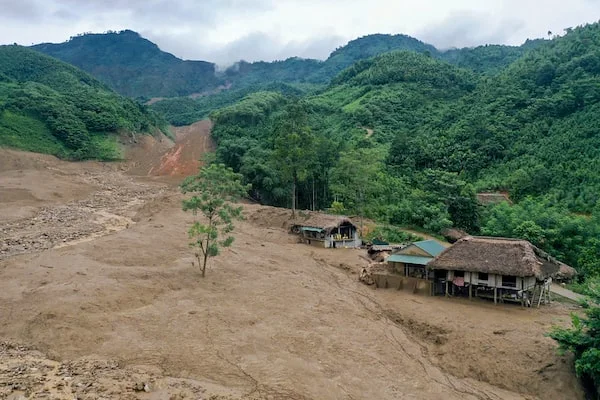
Vietnam has issued urgent flash flood and landslide warnings across northern mountain provinces, placing residents and holidaymakers on alert during the National Day travel period.
The National Center for Hydro-Meteorological Forecasting identified risks in Lai Châu, Lào Cai and Tuyên Quang. Additional warnings also covered Cao Bằng and Thái Nguyên, indicating a wider threat across northern Vietnam.
Heavy rainfall and rapid surface runoff could trigger flash floods, landslides and ground subsidence along steep slopes and small streams. These hazards may interrupt roads serving mountain villages, tourism areas and important regional transport corridors.
The warnings do not confirm province-wide transport closures. However, conditions can change quickly in mountainous terrain. Travellers should monitor official forecasts, confirm road access and avoid unnecessary journeys during intense rainfall.
The alert follows destructive flooding elsewhere in Asia, including Nepal, where extreme weather has demonstrated how rapidly mountain roads and communities can become isolated.
Lai Châu communities face immediate danger
Vietnamese forecasters identified several high-risk areas in Lai Châu. The list included Hồng Thu, Bình Lư, Dào San, Khổng Lào, Khun Há, Nậm Sỏ, Nậm Tăm and Tân Phong Ward.
Warnings also covered Pu Sam Cáp, Sin Suối Hồ and Tả Lèng. These areas contain steep terrain, streams and local roads vulnerable to sudden flooding or slope failure.
The risk is important for tourism because northern Vietnam attracts visitors for trekking, motorbike journeys, mountain scenery and community-based village stays. Routes passing through valleys or beside rivers can become dangerous with little warning.
A road that appears usable at the beginning of a journey may become blocked after further rainfall. Visitors should therefore ask accommodation providers, transport operators and local officials about conditions before departing.
Flash floods can transform routes rapidly
Flash floods differ from slower urban flooding because they can surge through narrow valleys and small waterways with exceptional speed. Runoff descending from steep ground may carry rocks, trees and mud.
Even shallow-looking water can hide damaged surfaces or powerful currents. Drivers and motorcyclists should never attempt to cross a flooded road, low-water crossing or overflowing stream.
Landslides create another serious threat. Saturated soil can lose stability and collapse across roads, homes or agricultural land. Ground subsidence may also weaken road edges, bridge approaches and slopes supporting transport infrastructure.
These hazards can isolate communities and delay emergency access. They can also disrupt bus services, private transfers and tourism itineraries across remote destinations.
Tuyên Quang strengthens emergency readiness
Tuyên Quang authorities have instructed provincial departments, local administrations and emergency agencies to strengthen preparations for heavy rain, floods and landslides.
The province has ordered teams to prepare personnel, vehicles, machinery, equipment and essential supplies before emergencies occur. Police and military units must remain ready to mobilise and support affected areas.
Authorities have also directed officials to review communities, buildings and transport routes facing flash flood, landslide, inundation or isolation risks. Evacuation plans must identify vulnerable households and safe relocation routes.
The provincial construction authorities are checking roads, bridges, culverts and other weak locations. Equipment and materials must remain available to clear blockages and support transport for evacuations or rescue operations.
Tourism facilities and attractions also fall within the preparedness programme. Relevant departments must review safety risks affecting visitor sites, communications, electricity, healthcare and essential supplies.
National Day journeys require flexibility
Vietnam’s National Day holiday traditionally encourages domestic travel, increasing traffic towards scenic areas and family destinations. In northern mountain provinces, severe weather could create local congestion when even one road becomes blocked.
Bus services may face delays, diversions or temporary suspensions. Travellers using cars and motorbikes could need to turn back while authorities inspect roads, bridges or unstable slopes.
Outdoor activities near waterfalls, rivers, valleys and mountain trails may also become unsafe. Tour operators should reassess itineraries and avoid sending groups into exposed locations while warnings remain active.
Hotels, resorts and homestays can support guests by providing current information about access routes. They should also review emergency procedures, maintain contact with local authorities and discourage risky independent journeys.
Visitors urged to respect safety controls
Travellers should keep mobile phones charged and carry power banks, drinking water, essential medicines and identification documents. Those entering rural areas should share their route and expected arrival time with another person.
Visitors must respect road barriers, warning signs and instructions from police, rescue personnel and local administrations. They should not fish, collect wood or undertake recreational activities in rivers during dangerous weather.
Anyone staying near an unstable slope, fast-rising stream or vulnerable road should be prepared to relocate immediately if officials issue an evacuation order.
Travellers planning journeys through northern Vietnam should confirm conditions shortly before departure rather than depending on earlier information. Flexible reservations and alternative routes can reduce disruption.
Vietnam’s expanding preparedness measures show that authorities are prioritising early action during a busy holiday period. For visitors, the message remains clear: monitor official weather updates, postpone unsafe journeys and never allow a holiday schedule to outweigh the need for a secure route home.
For more travel news like this, keep reading Global Travel Wire