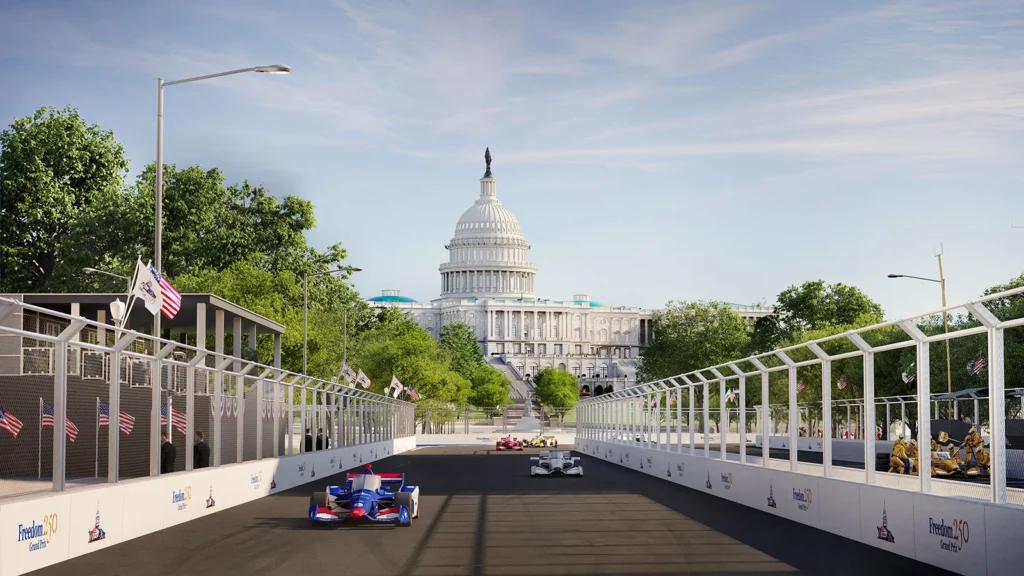
Washington DC travel disruption is continuing after the inaugural Freedom 250 Grand Prix transformed streets around the National Mall into an IndyCar circuit, leaving visitors and commuters facing temporary road restrictions after the race weekend.
The landmark motorsport event took place on August 22 and 23, 2026, with the main NTT IndyCar Series race held on Sunday, August 23. However, several traffic restrictions remain because temporary barriers, fencing and other race infrastructure must be removed before normal road operations can fully resume.
According to official Washington traffic plans, some significant vehicle closures are scheduled to remain through August 26. Other streets associated with construction and event recovery may remain closed or subject to emergency parking restrictions until September 3.
The continued restrictions are particularly important for tourists travelling around the National Mall, Pennsylvania Avenue and surrounding downtown districts.
Major streets remain affected after race weekend
Washington authorities introduced an extensive phased traffic plan before the Grand Prix to accommodate construction, security and race operations.
Among the streets scheduled for closure through August 26 are sections of Pennsylvania Avenue, Constitution Avenue and Independence Avenue, alongside several connecting downtown streets.
Restrictions also affect portions of 9th Street, 10th Street, 7th Street and other roads surrounding the National Mall.
Meanwhile, sections of 4th Street, Madison Drive and Jefferson Drive are scheduled to remain closed to general vehicle traffic through September 3, although limited access may be permitted for authorised deliveries or museum employees.
For visitors using taxis, ride-hailing vehicles or rental cars, these restrictions can create detours and longer journey times.
Freedom 250 made history in Washington
The Freedom 250 Grand Prix represented a major milestone for both Washington tourism and American motorsport.
The event became the first automobile race held around the National Mall and historic streets of the US capital.
IndyCar created a temporary 1.7-mile, seven-turn street circuit framed by some of Washington’s most recognisable landmarks.
The event formed part of celebrations surrounding the 250th anniversary of the United States and was free and open to the public.
By placing high-speed motorsport directly within Washington’s tourism core, organisers created an unusual combination of sporting entertainment, heritage attractions and destination promotion.
Visitors attending the race could also access nearby museums, monuments and cultural attractions, although altered traffic patterns required additional journey planning.
National Mall tourists face changing access routes
The National Mall remains one of Washington’s principal visitor districts, attracting travellers to the Smithsonian museums, national monuments and major government landmarks.
While attractions themselves can remain accessible, surrounding road closures may change the easiest way to reach them.
Tourists relying on private vehicles should expect temporary differences in drop-off points, parking availability and road access.
Walking and public transport may provide more predictable alternatives while dismantling work continues.
Because many National Mall attractions are concentrated within walking distance of one another, visitors can also reduce dependence on road transport once they reach the central area.
However, travellers carrying luggage or moving between hotels, transport terminals and attractions may need additional time.
Parking restrictions remain important for motorists
Emergency no-parking measures have formed another major part of the Grand Prix transport plan.
Temporary restrictions were introduced along sections of Pennsylvania Avenue, Constitution Avenue, Independence Avenue and nearby streets during the event preparation and recovery period.
Visitors unfamiliar with Washington parking regulations should pay close attention to temporary signage.
Vehicles parked in restricted areas may face enforcement or towing, creating additional inconvenience for travellers.
Hotels and tourism businesses in the surrounding area may also need to provide guests with updated arrival instructions until normal street access returns.
Tourism benefits came with mobility challenges
The Freedom 250 demonstrated the potential of major sporting events to attract additional visitors and strengthen Washington’s profile beyond its traditional political and cultural tourism identity.
Race spectators generated opportunities for hotels, restaurants, attractions and other visitor businesses while providing global exposure for the capital.
However, hosting a street race in a densely travelled urban centre also requires significant preparation.
Temporary circuits need safety barriers, fencing, operational compounds and traffic controls. Building and dismantling that infrastructure can affect normal mobility well beyond the actual race weekend.
For tourism authorities and event organisers, balancing visitor demand with everyday transport access remains a critical consideration.
Travellers should allow extra time in central Washington
Visitors travelling through downtown Washington over the coming days should continue checking current traffic information and allowing additional time for journeys.
Drivers should expect detours around remaining closed streets and should avoid assuming that routes used before the Grand Prix have already reopened.
Public transport and walking may be more convenient for reaching many central attractions until road conditions return to normal.
The most intensive race-weekend closures have ended, but restoration is taking place in stages.
For Washington tourism, the inaugural Freedom 250 Grand Prix showcased the capital as a major sporting-event destination while also demonstrating the logistical demands created when a global visitor event takes over some of a city’s busiest and most historic streets.
For more travel news like this, keep reading Global Travel Wire