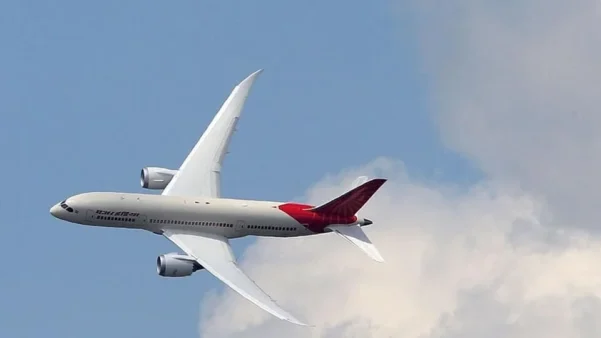
Etihad Airways has reviewed passenger communication procedures concerning Taiwan after wording used during a Mandarin inflight announcement on an Abu Dhabi-Taipei service generated concerns over how the destination was described.
The UAE national carrier apologised following the incident and revised the relevant announcement wording. The development highlights a growing operational challenge for international airlines serving politically sensitive markets while communicating with passengers in several languages.
The issue arose when passengers reportedly heard different terminology in the English and Mandarin arrival announcements. The English version referred to Taiwan, while the Mandarin announcement used the wording “Taiwan, China”.
Etihad currently operates direct flights linking Abu Dhabi with Taipei, providing an important aviation connection between the UAE and Northeast Asia.
Abu Dhabi-Taipei service strengthens tourism connectivity
Etihad launched its direct Abu Dhabi-Taipei service in September 2025, establishing another long-haul connection from its expanding Zayed International Airport hub.
The carrier currently offers nonstop travel between Taipei and Abu Dhabi, with a scheduled journey of around nine hours.
The route supports several passenger segments, including tourists, business travellers and passengers connecting through Abu Dhabi to Etihad destinations across Europe, the Middle East and other regions.
Taipei also has growing importance within Etihad’s Asian strategy.
Etihad maintains a strategic codeshare relationship with Taipei-based STARLUX Airlines. The partnership provides additional connecting opportunities through Taipei, including access to destinations in Japan.
In August 2026, the airlines expanded their relationship further through cooperation between the Etihad Guest and STARLUX COSMILE loyalty programmes.
Against that expanding commercial relationship, consistent passenger communication has become particularly important.
Mandarin announcement creates passenger concern
The controversy developed following an arrival announcement aboard the Abu Dhabi-Taipei flight.
A passenger questioned the terminology used in the Mandarin version and reportedly sought clarification from cabin crew. Crew members indicated that the announcement followed prepared onboard material.
Concerns were also raised about wording connected with Taiwan’s restrictions on bringing meat products into the destination.
Airline arrival announcements routinely cover immigration, customs, prohibited goods and other practical requirements. However, multilingual wording can become considerably more complicated when translations involve politically disputed terminology.
For international carriers, a phrase that appears routine within one corporate or regional system can have a very different interpretation among passengers in another market.
Etihad reviews inflight communication procedures
Following the concerns, Etihad apologised and reviewed the relevant passenger communication procedures.
The airline revised the announcement wording and indicated that Taiwan-related communications would receive additional attention to avoid misunderstandings.
The response places renewed focus on the importance of reviewing translated scripts before they are used onboard international flights.
Airlines operate extensive libraries of standard announcements covering safety, arrival regulations, connecting services and airport procedures.
Those announcements can be delivered in several languages on a single flight. Maintaining consistency across each version is therefore an increasingly significant part of passenger service.
Taiwan naming remains sensitive for global travel brands
The wider issue extends beyond Etihad Airways.
International airlines, hotels, booking platforms and tourism companies frequently operate across markets where governments and authorities use different terminology for the same destination.
Taiwan is one of the clearest examples of that challenge.
Travel companies must often manage regulatory requirements, local expectations and global passenger communications simultaneously.
As a result, destination naming can influence everything from website country selectors and booking systems to baggage tags, airport displays and inflight announcements.
The Etihad case demonstrates why translation within global aviation involves more than converting words from one language into another.
Context, consistency and local sensitivities can be equally important.
Digital platforms make communication errors more visible
Modern passengers can record and distribute their travel experiences almost immediately.
An announcement that once would have remained inside an aircraft cabin can now attract wider attention rapidly.
This creates additional pressure on global airlines to maintain consistent terminology across customer-facing channels.
The same standard increasingly applies to websites, mobile applications, automated notifications, airport screens, chat systems and customer-service platforms.
For carriers operating hundreds of international services, communication governance has therefore become closely connected with reputation management.
UAE aviation expands deeper into Asian markets
The communication issue comes as Etihad significantly expands its Asian network.
The airline is increasing services across mainland China while also strengthening connections through Taipei and other major Asian gateways.
Greater network diversity means Etihad serves passengers from an increasingly wide range of cultural and linguistic backgrounds.
For Abu Dhabi tourism, these connections are valuable because they provide direct access to new visitor markets while also supporting the emirate’s role as an international transfer hub.
Clear communication throughout that journey is consequently essential.
Accurate communication becomes part of travel experience
Etihad’s decision to revise the announcement demonstrates how seemingly small elements of airline operations can influence passenger confidence.
Flight reliability, cabin service and airport efficiency remain central to aviation. However, communication has become another important element of the international travel experience.
Passengers expect destination information to be clear and consistent regardless of the language used onboard.
As Etihad Airways strengthens connectivity between Abu Dhabi and Taipei, the episode provides a wider lesson for global aviation.
Airlines serving politically sensitive markets increasingly need robust multilingual review systems capable of balancing operational clarity, destination requirements and passenger expectations across every stage of the journey.
For more travel news like this, keep reading Global Travel Wire