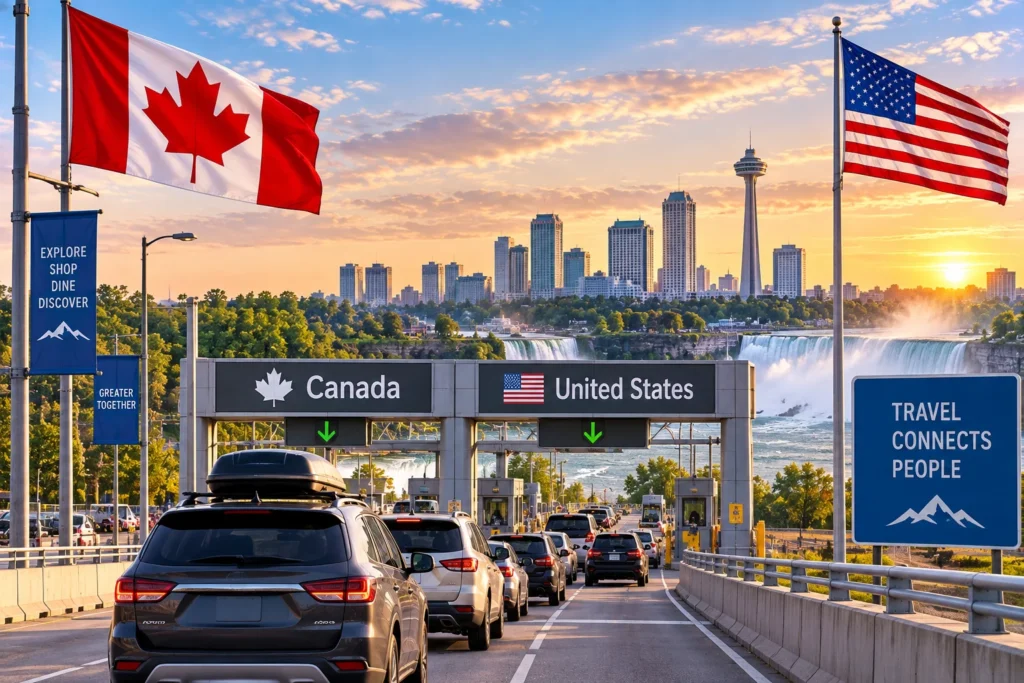
Official statistical releases on international entry indicators confirm that travel between Canada and the United States continued an upward trajectory during the summer period. Official public data published by national statistical agencies reveals that Canadian residents completed 2.6 million return trips from the United States in August, representing an 8.8 percent increase compared to the same month in the prior year.
This surge marks the fifth consecutive month of year-over-year operational growth for trans-boundary visitor flows. The positive movement in travel volume occurred despite broader macro-economic shifts, escalating tariff policies, and ongoing trade negotiations between national governments. Official statements from federal trade and diplomatic offices indicate that while commercial policy discussions remain complex, personal travel demand and cross-border tourism continue to demonstrate resilience across key land and air transit corridors.
Automobile Travel Leads Annual Growth Across Border Passages
Detailed transport data highlights that highway travel posted the strongest annual rebound among cross-border transit modes. Canadian return trips from the United States via automobile reached higher levels in August, growing by 9.9 percent compared to annual figures recorded during the same period in the previous year.
Land border infrastructure updates reveal significant utilization of major gateway bridges and border ports of entry:
New Infrastructure Operations: The newly opened Gordie Howe International Bridge recorded 134,900 Canadian-resident return trips by automobile in August, with same-day travel accounting for 56.7 percent of total crossings.
U.S. Inbound Land Border Crossings: U.S. residents completed 101,000 trips into Canada via the new bridge structure, with 52.2 percent representing same-day excursions.
Regional Traffic Redistribution: Traditional border crossings in the Detroit-Windsor transit corridor, including the Ambassador Bridge and Windsor-Detroit Tunnel, accommodated 348,000 total combined passenger vehicle entries, reflecting a shift in regional traffic routing toward updated border facilities.
Despite these annual gains, official transport statistics indicate that overall land cross-border tourism remains below historical pre-dispute benchmarks. Current highway passenger vehicle trips remain 27.4 percent lower than volumes recorded during the corresponding period two years prior, reflecting lingering structural adjustments in regional travel habits.
Air Travel Demand Expands Across Trans-Boundary Corridors
Commercial aviation metrics also demonstrated positive momentum throughout August. Canadian return trips from U.S. airports expanded by 3.6 percent year-over-year, supported by robust summer flight schedules and sustained demand for transcontinental leisure travel.
Inbound travel to Canada by U.S. residents similarly posted growth, rising by 2.4 percent overall to reach 2.4 million total trips. This performance represents the seventh consecutive month of annual growth for U.S. visitor entries into Canada. U.S. air travel into Canadian destinations experienced a notable 6.8 percent expansion, highlighting solid demand for trans-boundary commercial flight connections.
However, comparative historical metrics from national statistical releases indicate that air travel volumes continue their long-term recovery process. Total Canadian return flights from American destinations remain 22.7 percent lower than levels documented during the same month two years ago, signaling that while annual travel is expanding, total market recovery continues at a measured pace.
Strategic Outlook for Cross-Border Visitor Mobility
Official tourism statistics and federal border agency reports underscore the critical role of cross-border tourism in sustaining border-community economies, regional hospitality sectors, and international transportation networks. Civic tourism boards and regional development agencies emphasize that maintaining efficient, safe, and accessible border crossing procedures remains vital for supporting hospitality businesses on both sides of the frontier.
As federal agencies continue to track international passenger arrivals, official bulletins advise travelers to remain informed regarding customs procedures, passport validity requirements, and peak holiday travel periods to minimize delays at land ports of entry and international airport hubs.
For more travel news like this, keep reading Global Travel Wire