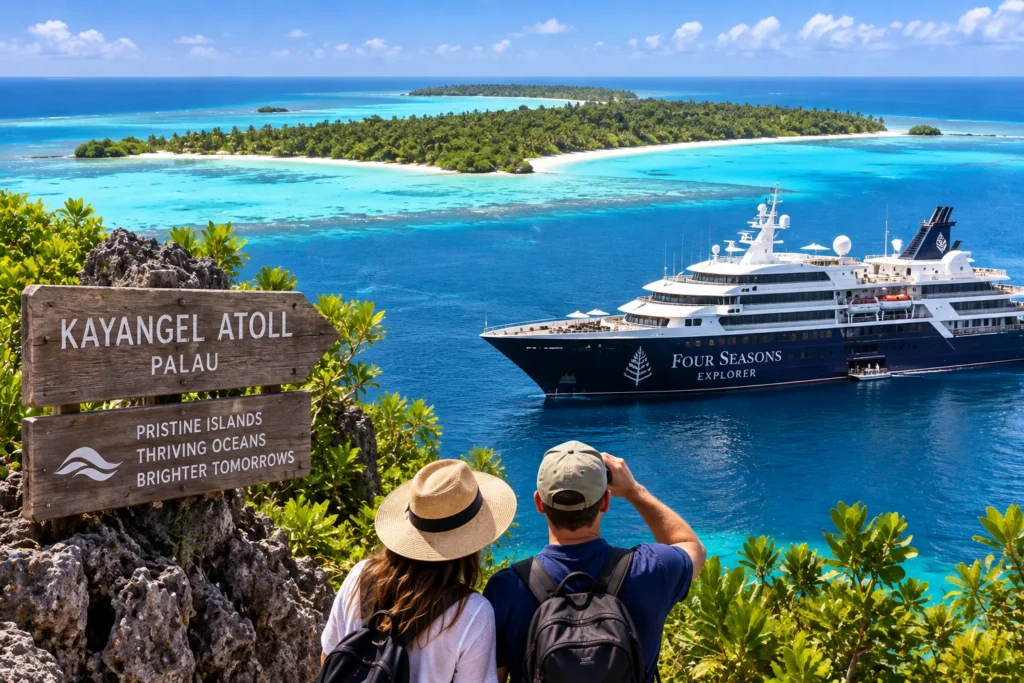
Palau’s national strategy to develop a high-value, low-impact tourism model reaches a key milestone with the expanded route deployment of Four Seasons Explorer into Kayangel Atoll. The tiny, pristine ring atoll at Palau’s northernmost boundary is increasingly taking center stage as a showcase for small-footprint, luxury marine exploration.
As the Pacific island nation continues aligning its destination management policies with strict natural preservation goals, the deployment of small-capacity, high-end expedition vessels serves as a practical model for generating robust economic yield while safeguarding fragile marine ecosystems.
Supporting National Priorities Through Low-Impact Luxury Travel
Official policy frameworks published by the Ministry of Human Resources, Culture, Tourism and Development, alongside strategic guidelines from the Bureau of Tourism, consistently emphasize a quality-over-quantity approach to national visitor arrivals. Rather than targeting high-volume mass tourism, Palau’s sustainable development plan focuses on attracting eco-conscious travelers who respect environmental regulations and contribute significantly to local economies.
The operational profile of Four Seasons Explorer reflects these government priorities. Measuring 39 meters in length across three decks, the vessel accommodates just 22 guests in 11 cabins. This ultra-low passenger density enables visitor access to pristine marine reserves without placing heavy demands on local land infrastructure or generating excessive carbon footprints.
By offering flexible embarkation schedules from Koror and utilizing small-scale tender operations, the vessel spreads guest activity across wide stretches of ocean, preventing overcrowding at high-profile dive locations and supporting destination resilience.
Kayangel Atoll: Balancing Strict Conservation with High-Yield Access
Kayangel Atoll encompasses roughly 1.4 square kilometers of land surrounded by expansive marine territory, vibrant coral reefs, and deep oceanic drop-offs. Traditionally accessible only through complex private boat charters, the atoll’s isolated position kept visitor numbers exceptionally low.
Integrating Kayangel into structured liveaboard itineraries allows Palau to unlock economic value from remote regions while enforcing strict carrying-capacity limits. Key features of the Kayangel experience highlight Palau’s unique natural assets:
Protected Marine Sanctuaries: Guests explore pristine outer reefs featuring pelagic marine life, sea turtle nesting zones, and untouched coral ecosystems under the guidance of certified dive experts.
Low-Impact Shore Excursions: Managed island visits incorporate small-group beach landings, sandbar walks, and cultural interactions that adhere strictly to local community guidelines and conservation codes.
Controlled Access Logistics: Ship-based accommodations remove the need to construct disruptive permanent resort structures on sensitive atoll environments.
This controlled access model ensures that Kayangel retains its pristine state while contributing directly to national tourism revenue through marine sanctuary fees and permit charges.
Expanding Beyond Diving into Broad Ecotourism Appeals
To diversify its traveler base, Palau’s official destination marketing focuses on expanding marine tourism beyond traditional scuba enthusiasts. Modern luxury expedition programs are designed as hybrid marine experiences catering to non-divers, families, and eco-minded adventure travelers.
Onboard programs offer guided snorkeling, stand-up paddleboarding, sea kayaking, and island wellness activities. Educational briefings on marine biology, reef restoration, and local heritage further reinforce Palau’s destination identity as an international leader in ocean stewardship.
Furthermore, flexible booking structures permit travelers to combine liveaboard sea voyages with stays at land-based accommodations in Koror, distributing financial returns across local hospitality businesses, tour guides, and transport providers.
A Model for Pacific Island Sustainable Tourism Development
As Pacific island nations confront global climate pressures and economic shifts, Palau’s focus on high-spend, low-volume tourism provides a valuable case study for regional destination management. Strategic initiatives like the Palau Pledge—which requires visitors to sign an environmental protection commitment upon entry—demonstrate how conservation enforcement can coexist with premium travel services.
The successful integration of boutique liveaboard operations into remote destinations like Kayangel demonstrates that luxury travel can directly support national conservation mandates. By balancing strict ecological limits with exceptional guest experiences, Palau continues to safeguard its marine heritage while building a resilient, sustainable tourism economy for future generations.
For more travel news like this, keep reading Global Travel Wire